
romp
verb romp
rɑːmp
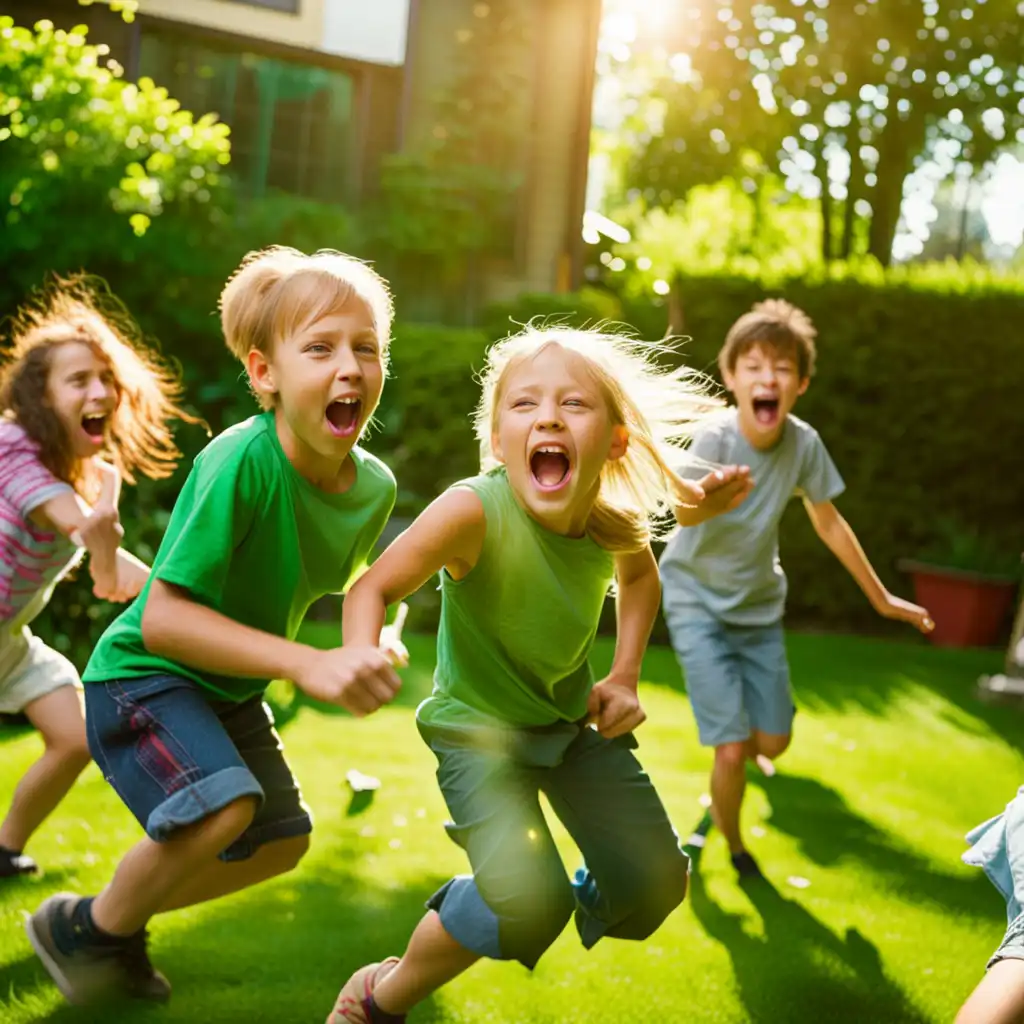
To play in a lively and rough way
The children were romping in the playground.
romp
rɑːmp
読み込み中…
rɑːmp
To play in a lively and rough way
The children were romping in the playground.

rɑːmp
To win easily in a game or competition
The team romped to victory with a score of 7-0.
rɑːmp
An act of playing in a lively and rough way
The children had a good romp in the backyard.

rɑːmp
A stylish, fun-loving woman
She was known as the romp of the town with her lively spirit.

rɑːmp
A book or movie dealing with light, amusing and often sexual topics
The new release is a romantic romp set in the French Riviera.
音声を読み込めませんでした。しばらくしてからもう一度お試しください。
The word 'romp' is usually used to describe a fun and playful activity or a lighthearted sexual encounter. For instance, you can say "The children enjoyed a romp in the park" or "They had a romantic romp on the beach". It is not a formal word and is generally used in informal settings like casual conversations or in entertainment media like books, movies, and TV shows.
Both caper and romp refer to lively, playful activity or behavior.
However, caper often has a mischievous or even criminal connotation, while romp suggests a sense of innocent fun. For example, a group of friends might go on a playful romp through the park, while a thief might engage in a daring caper to steal a valuable object.
Caper implies a more mischievous, potentially illegal activity, while romp suggests a more innocent and playful activity.
単語を開く: Caper →The words cavort and romp both refer to playful activity, but cavort usually means jumping or leaping around more energetically and with less control, while romp typically means playing in a more carefree and joyous way.
For example, a group of puppies might cavort around a backyard, bouncing and tumbling over one another, while children might romp through a park, playing games and laughing together.
Cavort is often used to describe more wild or exuberant behavior, while romp is usually associated with playful, easygoing fun.
単語を開く: Cavort →Dance typically refers to a rhythmic movement of the body that is often performed to music, and can involve intricate and precise steps.
In terms of their usage, dance is usually associated with more formal or structured settings, such as ballroom dances, classical ballet or traditional folk dances.
Dance is a more formal and structured activity involving precise movements, whereas romp is a more casual and playful activity involving energetic and carefree movement.
単語を開く: Dance →Both frolic and romp mean to play in a lively or carefree way, but there is a subtle difference in their usage.
Frolic suggests a more graceful, joyous, and whimsical type of play. For example, a group of children might frolic in a meadow, or a couple might frolic on the beach.
単語を開く: Frolic →Both gambol and romp refer to playing, but they have slightly different connotations.
Gambol implies a playful, carefree, often spontaneous activity or movement, such as someone happily prancing around a field with no specific goal.
Overall, both words can describe playful activities, but gambol is more associated with light-hearted movement and romp is more associated with energetic play.
単語を開く: Gambol →Both play and romp refer to engaging in physical activity, but play has a broader meaning and can include various activities such as sports, games, or imaginative play.
Romp typically refers to roughhousing, running around or jumping playfully in a playful, energetic way. It could be used to describe a child or a pet frolicking around excitedly.
Romp has a more energetic and enthusiastic connotation, while play can be more focused or relaxed depending on the specific activity.
Both words are applicable in situations where people or animals are engaging in physical activity, but romp specifically suggests a more boisterous and playful environment.
単語を開く: Play →Prance refers to a horse's bouncy and proud walk with its head and tail held high.
Prance is more graceful and elegant, while romp is more chaotic and playful.
単語を開く: Prance →“Skip” is also a verb that means to move lightly and quickly by hopping or bouncing, typically with alternating steps.
It is often used to describe a happy and carefree movement, such as when someone skips down the street while singing or holding hands with a friend.
For example, you might say, “The little girl skipped down the sidewalk, enjoying the warm sunshine and birdsong.”
In summary, “romp” suggests a playful and boisterous activity, while “skip” suggests a light and joyful movement.
単語を開く: Skip →Feeding Baby Orphaned...
YouTube で見る ↗Cricket has come to take centerstage among all sports in the country today and it is therefore no surprise that the organizers are romping in added attractions, to cheer the crowd, in a bid to pay value for their money.
WWII Orphan %\PIPE% National...
YouTube で見る ↗To romp along the connected rooftops and fire escapes of Chicago's second city of garages was my young life's passion.
Nature is the...
YouTube で見る ↗Beetlejuice' was a romp, man. 'Beetlejuice' was fun. I've never had so much fun in my life.
I thank Heaven every summer's day of my life, that my lot was humbly cast within the hearing of romping brooks, and beneath the shadow of oaks.
Acting has always been something for me that's been a romp. I just show up and I have a good time, and I hope that I get through the day and I can have lunch in the sun.
My books are comedies; I want to take my readers on a jet-setting romp, make them laugh, make them swoon at the beautiful settings, and maybe even make their mouths water at all the food.
Wearing underwear on the outside of your clothes can turn a tedious trip to the store for a forgotten carton of milk into an amusement park romp.
Riding and romping are easy enough. It's the costume changes that wear me out.
Getting close to books, and spending time by myself, I was obliged to think about things I would never have thought about if I was busy romping around with a brother and sister.
I'm not interested in going and doing a big, action-adventure romp with nothing to say about being a human being.