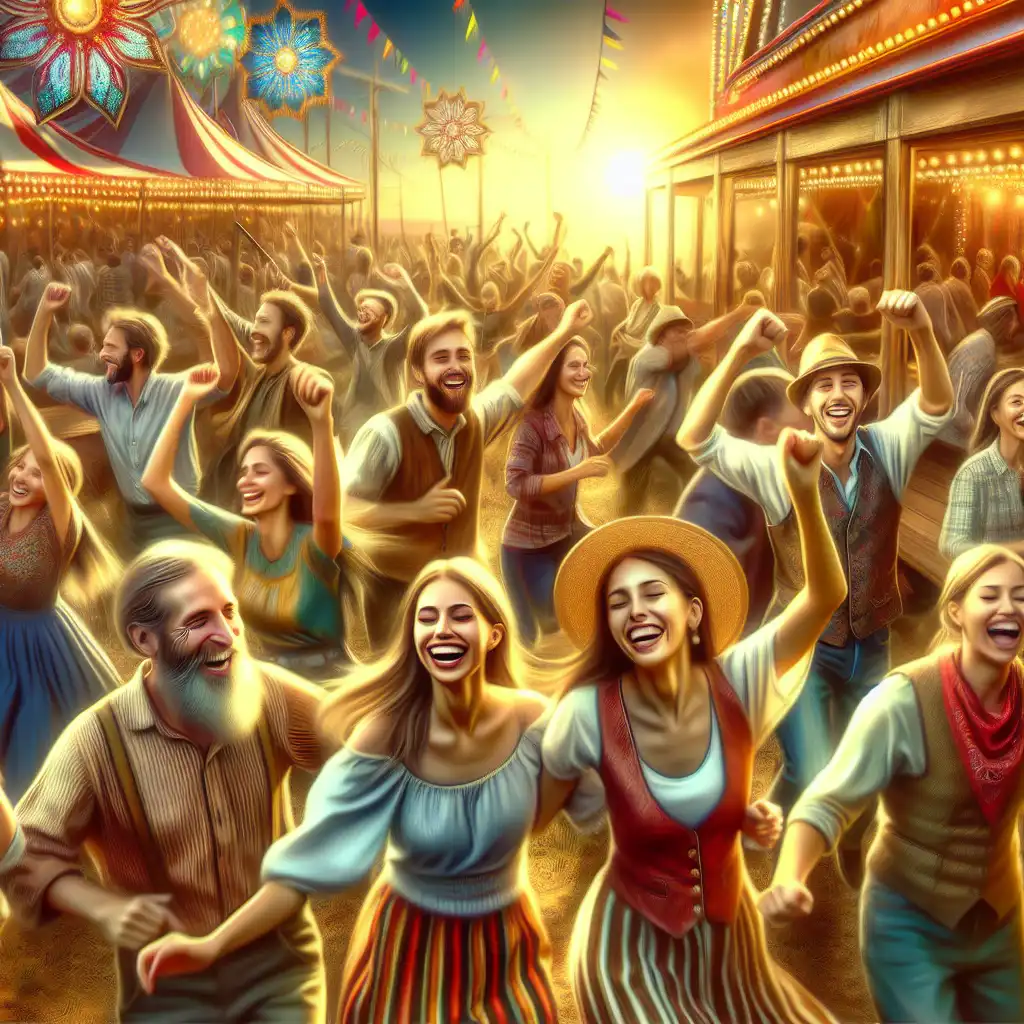
merrymaking
noun merrymaking
ˈmerimeɪkɪŋ
The simple pleasure of enjoying yourself by doing activities in a fun and cheerful way along with other people.
The fair was full of merrymaking with music, dancing, and games.
merrymaking
ˈmerimeɪkɪŋ
読み込み中…
ˈmerimeɪkɪŋ
The simple pleasure of enjoying yourself by doing activities in a fun and cheerful way along with other people.
The fair was full of merrymaking with music, dancing, and games.
音声を読み込めませんでした。しばらくしてからもう一度お試しください。
Merrymaking means enjoying yourself with others, usually at a party or celebration. It is a happy and joyful activity where people come together to have a good time. Merrymaking can happen during holidays like Christmas and New Year's Eve, or at weddings, birthdays, and other social occasions. It is a time when people relax and have fun with friends and family, often with food, drinks, and music. The word merrymaking can also be used to describe a joyful and festive atmosphere.
Amusement generally refers to something that provides entertainment, enjoyment or pleasure.
Amusement is a general term for anything that entertains or makes us happy, while merrymaking denotes a festive celebration or party with a lot of energy and activity.
単語を開く: Amusement →Carouse refers to recklessly drinking alcohol and behaving in a loud or boisterous manner. It's usually associated with a lack of self-control and can result in excessive drinking and reckless behavior.
Carouse describes excessive and reckless behavior while drinking, while merrymaking describes a joyful celebration.
単語を開く: Carouse →Celebrate means to honor and rejoice in a special event, person, or occasion.
It can be used for occasions such as birthdays, weddings, graduations, and other important life events. Celebrations generally involve activities that mark the significance of the event, such as having a party, gathering with family and friends, or exchanging gifts.
Merrymaking, on the other hand, implies a more lively and boisterous kind of celebration. It is associated with activities such as dancing, singing, and excesses of eating and drinking.
Merrymaking is often associated with holiday events, like New Year's Eve, Christmas, and other seasonal celebrations.
Celebrate is a broad term that can be used to mark any kind of special occasion, while merrymaking applies to more festive and wild celebrations.
単語を開く: Celebrate →Festivity and merrymaking are both related to having fun and enjoying oneself, but they have slightly different connotations.
Festivity refers to the celebration of a special occasion or event, such as a festival or holiday. It involves organized activities and often has a cultural or traditional aspect to it.
Festivities are usually planned in advance and may involve decorations, music, and food.
Festivity is more structured and planned, while merrymaking is more spontaneous and carefree. Festivity is applicable during certain occasions, while merrymaking can happen anytime.
単語を開く: Festivity →Jollity and merrymaking both refer to festivities or celebrations, but jollity is more focused on the feeling of being cheerful and festive, while merrymaking refers to the actual activities involved in the celebration.
For example, if someone says, "the atmosphere in the room was full of jollity," they mean that people were happy, laughing, and generally having a good time.
Jollity is more about the feeling of joy and happiness, while merrymaking is about the activities and external aspects of a celebration.
単語を開く: Jollity →Merriment refers to a happy and lighthearted mood, while merrymaking refers to the celebration or festivity that creates such a mood.
Merriment can be applied to any situation where people are joyful and having fun, such as a family gathering, a picnic, or a day at the beach.
Essentially, merriment is a feeling, while merrymaking is an activity.
単語を開く: Merriment →Merrymaking and rejoice both refer to experiences of happiness, but in different ways. Merrymaking is typically associated with festive celebrations, such as parties, carnivals, or other occasions where people are gathered together and having fun.
Rejoice usually means to feel gladness, joy, or pleasure in one's heart or spirit. It does not necessarily involve a particular event or gathering, but can come from a sense of accomplishment, gratitude or good news.
Merrymaking is applicable when there is a specific event or celebration, while rejoice can be applicable in any situation that brings happiness or pleasure.
単語を開く: Rejoice →Both merrymaking and revelry refer to a lively celebration or party.
Revelry is a bit more intense and wild. It describes an event where people are often excessively drinking and indulging in reckless behavior.
The main difference between the two words is the level of wildness and out-of-control behavior. Merrymaking implies innocent fun, while revelry suggests a more wild and crazy celebration.
単語を開く: Revelry →