gyroscopic
adjective gyroscopic
ˌdʒaɪrəˈskɑːpɪk
Related to a gyroscope or its principles
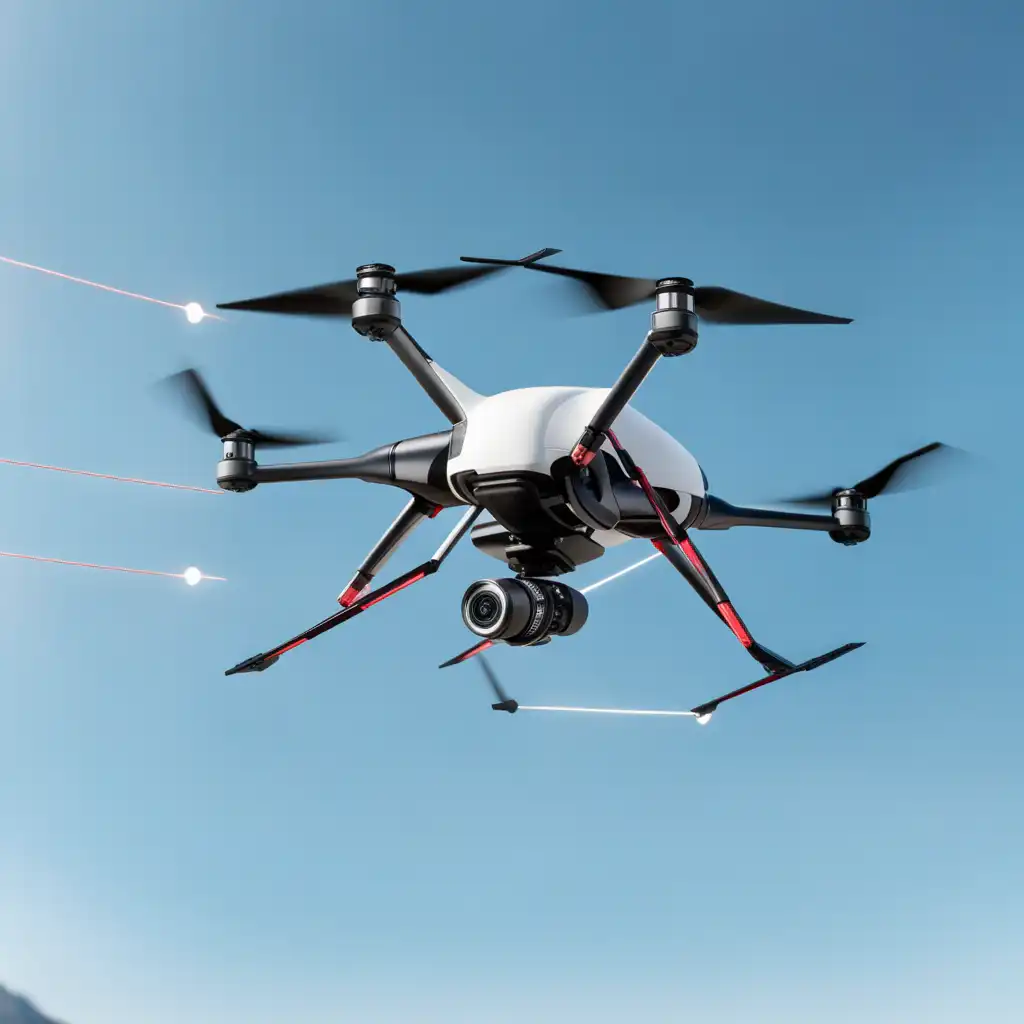
The drone has a gyroscopic stabilization system to keep it balanced.
gyroscopic
ˌdʒaɪrəˈskɑːpɪk
불러오는 중…
ˌdʒaɪrəˈskɑːpɪk
Related to a gyroscope or its principles
The drone has a gyroscopic stabilization system to keep it balanced.

ˌdʒaɪrəˈskɑːpɪk
Using rotation to resist change in motion
In spinning tops, gyroscopic motion prevents them from falling over.
오디오를 불러오지 못했어요. 잠시 후 다시 시도해 주세요.
The word 'gyroscopic' refers to the property or ability of an object to maintain its balance and orientation even while in motion. It is often used when describing the movement of objects that spin or rotate around a fixed axis, such as a gyroscope or helicopter rotor blades. For example, a gyroscope is a device that utilizes gyroscopic properties to maintain stability and balance during movement, and gyroscopic effects are also used in various applications ranging from navigation systems to sports equipment.
Angular refers to the measurement of the speed or rate of change of an object's rotational motion or angle. It is applicable in physics and engineering when studying the movement of objects that rotate or spin, like wheels or planets.
This property is due to the angular momentum of the spinning object. Gyroscopic effects are noticeable in objects such as gyroscopes, compasses, and helicopters.
In simpler terms, angular relates to the speed of rotation, while gyroscopic relates to the stability of an object's rotation.
단어 열기: Angular →Revolve simply means to move in a circular or rotational motion around a central point. This can apply to a wide range of objects, from planets and moons in the solar system to gears and wheels in machinery.
Gyroscopic refers specifically to the stabilizing force generated by an object's rotation, while revolve refers to the circular motion itself.
단어 열기: Revolve →Roll refers to the act of rotating an object around its central axis. It's often used to describe the movement of a ship or airplane as it tilts to one side or the other.
Gyroscopic refers to the stability of an object while roll refers to the movement of an object around its axis.
단어 열기: Roll →This often applies to objects like spinning wheels or gyroscopes used in navigation systems.
Spin refers to the act of rotating or turning around a fixed axis, often used to describe the movement of objects like planets, balls, or tops.
In simpler terms, gyroscopic refers to the property of an object to resist external forces and maintain its direction of rotation, while spin refers to the act of rotating or turning around a fixed axis.
단어 열기: Spin →Turn refers to the action of changing direction or orientation. This can be done by an object rotating, pivoting, or steering.
Turn is a more general term and can be used in many situations such as driving a car, playing a sport, or doing a dance move.
단어 열기: Turn →Twirl refers to a specific type of movement where an object spins or rotates rapidly around a central point.
It is often used to describe the movement of objects such as dancers, batons, and ribbons. Twirl is applicable in situations where a rapid and showy motion is desired.
단어 열기: Twirl →Whirl describes a spinning or turning motion that is not necessarily stable. For example, a tornado or hurricane is often described as a whirlwind due to the chaotic motion of the wind.
Similarly, a person may experience dizziness or a feeling of being "whirled" around when spinning quickly.
Gyroscopic refers to a stable spinning motion, while whirl refers to a less stable or chaotic spinning motion. Each term is applicable in different contexts, depending on the level of stability and control required.
단어 열기: Whirl →