polyphony
noun polyphony
pəˈlɪfəni
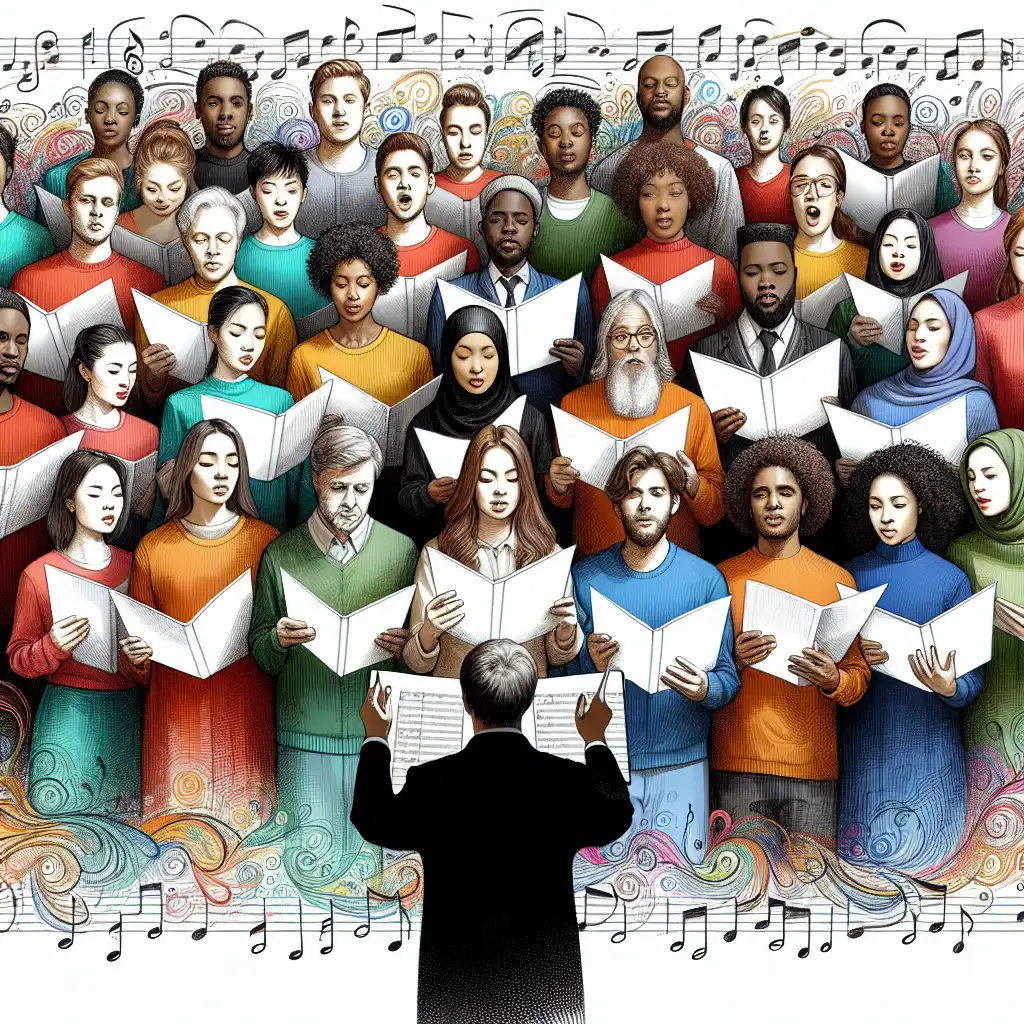
In music, the state of having multiple sounds or voices at the same time
The composer's use of polyphony in this piece makes it rich and complex.
polyphony
pəˈlɪfəni
Loading…
pəˈlɪfəni
In music, the state of having multiple sounds or voices at the same time
The composer's use of polyphony in this piece makes it rich and complex.

pəˈlɪfəni
In linguistics, the ability of a single phoneme to produce several distinct phonetic variants.
Polyphony in a single language can be challenging for non-native speakers.

pəˈlɪfəni
In literature, the use of many different voices or perspectives in a single work
The polyphony in the novel gives us various viewpoints and enriches the plot.
Audio could not be loaded. Please try again later.
Polyphony is a musical term that refers to music that has more than one melody playing at the same time. It’s like having multiple voices singing different things at once. Polyphony is often used in classical music, but it can also be found in other genres like folk and pop music. When you listen to music with polyphony, try to identify the different melodies and how they interact with each other.
The term baroque refers to a style of music that was popular in Europe during the 17th and early 18th centuries. It is characterized by ornate and elaborate melodies, and the use of intricate forms and structures.
Baroque music is often associated with the works of famous composers like Bach, Vivaldi, and Handel.
Both terms are applicable in different ways – baroque music is a specific style that can describe music from a particular period, while polyphony is a broader concept that can apply to music from any period or style that uses multiple parts.
Open word: Baroque →Choral refers to music that is sung by a group of people together, usually in a harmonized fashion. This could be a choir singing a hymn or an ensemble of singers performing a pop song.
Choral refers to music that is sung by a group in harmony, while polyphony refers to music that has multiple melodies or parts happening at the same time.
Open word: Choral →Contrapuntal and polyphony are both terms used in music to describe the way different melodies or parts are combined.
Contrapuntal refers to the technique used to create polyphonic music.
It's a method of combining melodies so that they form a harmonious whole. In a contrapuntal piece of music, the different melodies are crafted to work together in a way that emphasizes their unique qualities while also creating a larger, cohesive sound.
Polyphony is the overall style of music that uses multiple melodies, while contrapuntal is the specific technique used to create that music.
Both terms can be applied to various types of music, but if you're specifically talking about how the different parts of a piece are combined, you would use the term "contrapuntal."
Open word: Contrapuntal →Both counterpoint and polyphony refer to the combination of multiple musical lines, but they are different in significant ways.
Counterpoint refers to the relationship between two or more melodic lines that are played concurrently. In counterpoint, the different lines are distinct and independent, but they also interact with each other in interesting ways.
Counterpoint is often used to create harmonic complexity and to provide depth and interest to a musical composition.
Polyphony refers to the combination of multiple musical voices or parts that are all equally important. Unlike in counterpoint, where the different lines may have different roles, in polyphony, each part is equally important and contributes to the overall sound.
Counterpoint refers to the relationship between distinct and independent melodic lines, while polyphony refers to the combination of multiple equally important musical parts or voices.
Open word: Counterpoint →Fugue is a type of musical composition that consists of multiple "voices" (or musical lines) that continuously weave in and out of each other in a structured and organized way.
It can be found in many different types of music, from classical to folk to pop. Polyphony doesn't necessarily have a set structure or specific rules like fugue but is simply a way of creating harmonic complexity and texture in music.
Fugue is a type of structured composition that features multiple voices weaving in and out in a specific order, while polyphony is a more general term that refers to any music that has multiple independent melodies or voices happening at the same time.
Open word: Fugue →Harmony refers to the combination of different notes or chords that sound pleasing together. It is the overall sound created by the different voices or instruments playing together.
Harmony is often used in popular music, jazz, and classical music.
Harmony refers to the overall pleasing sound created by different notes played together, while polyphony refers to multiple independent melodies played simultaneously.
Harmony is used in a wider variety of music genres, while polyphony is mostly used in classical and choral music.
Open word: Harmony →Medieval refers to the time period of the Middle Ages, which lasted from approximately the 5th to 15th century.
Polyphony refers to a style of music in which multiple melodies are sung or played at the same time. It is applicable to any time period, including the medieval period, but is not limited to it.
Medieval is a term related to a specific time period, while polyphony is a term related to a musical style.
Open word: Medieval →Polyphony refers to a style of music where two or more melodies are played or sung at the same time. This style of music can be used in various musical periods, not just the Renaissance.
The Renaissance is a specific historical period in Europe that lasted from the 14th to the 17th century. During the Renaissance, there was a revival of classical culture, art, and music.
Renaissance music often featured polyphony, but not all polyphonic music is from the Renaissance. Polyphony is a musical technique, while the Renaissance is a specific time period.
Open word: Renaissance →Michael Tilson Thomas:...
Watch on YouTube ↗As for sacred polyphony, there is no reason to be afraid of it.
Music and emotion...
Watch on YouTube ↗With Orff it is text, text, text - the music always subordinate. Not so with me. In 'Magnificat,' the text is important, but in some places I'm writing just music and not caring about text. Sometimes I'm using extremely complicated polyphony where the text is completely buried. So no, I am not another Orff, and I'm not primitive.
In my piano concerto I developed this polyphony to much higher complexity.
I'm trying to make paintings like giant musical chords, with a polyphony of colours that is nuts but works.
In a soundtrack, you are in a way always relating with... a combination of different languages. It has to have the same path and same rhythm. Sometimes it's a polyphony of languages that have to work together in some way. With musical projects alone, you can be more free.
All modern MIDI synthesizers are capable of polyphony, which means they can play more than one note at a time and more than one instrument at a time.
For me, anything can be music! I can get huge enjoyment and be moved totally by the purity and perfection of some Renaissance polyphony, but equally I can feel emotion in the expectant hum of a big old guitar amp just before the strings are hit.