
misanthrope
noun misanthrope
ˈmɪsənθrəʊp
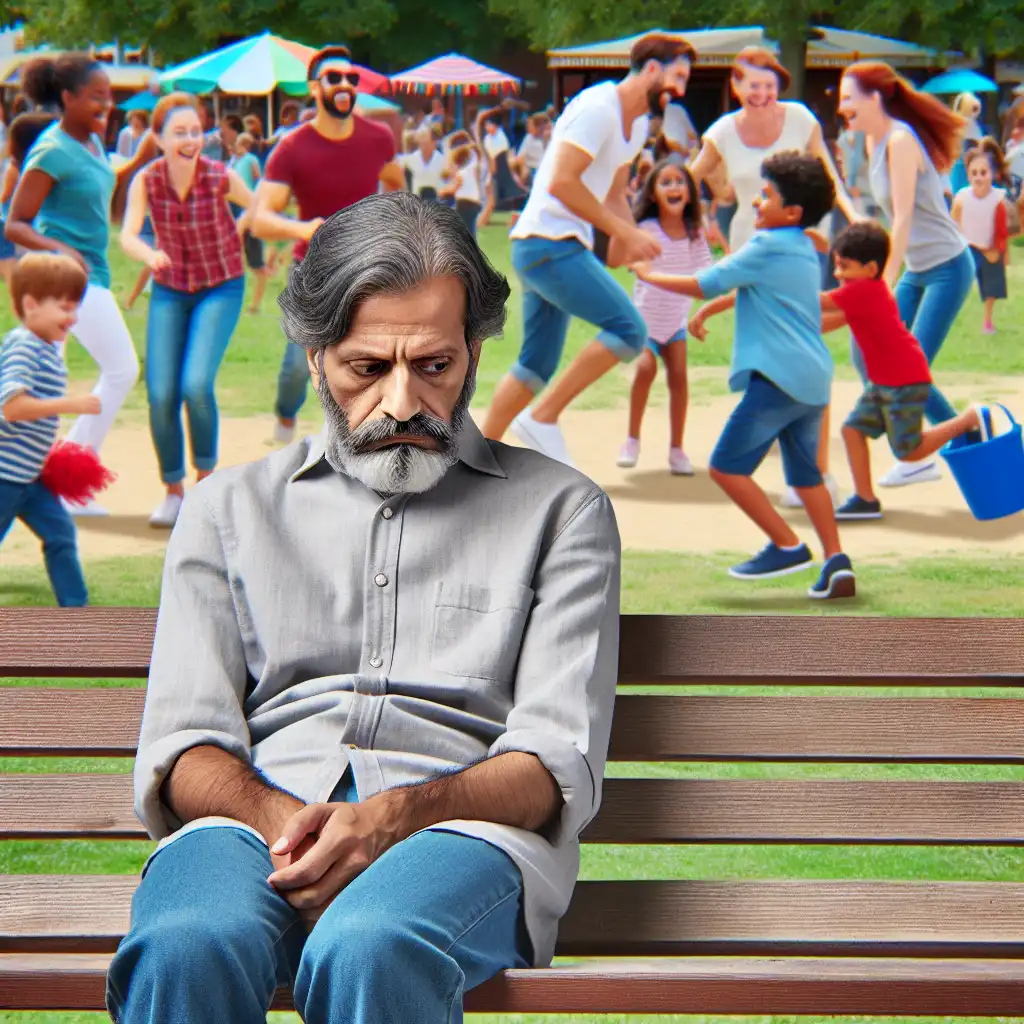
A person who dislikes or avoids other people.
She was labelled as a misanthrope because she stayed away from social gatherings.
misanthrope
ˈmɪsənθrəʊp
Đang tải…
ˈmɪsənθrəʊp
A person who dislikes or avoids other people.
She was labelled as a misanthrope because she stayed away from social gatherings.
ˈmɪsənθrəʊp
A person who holds a pessimistic view of human nature and often shows contempt for human beings.
His misanthropic views were evident by his cynical remarks about mankind’s potential.
Không tải được âm thanh. Vui lòng thử lại sau.
Misanthrope is a noun that describes a person who dislikes or distrusts humanity and generally avoids social interaction. You can use this word to describe someone who has a negative attitude towards people and prefers to be alone. For example, if someone is always grumpy and avoids people, you may describe them as a misanthrope. It's important to note that this is not a positive trait, and it's often seen as a negative personality trait.
A curmudgeon is a person who is grumpy, ill-tempered, and dislikes change. They are often seen as old-fashioned and set in their ways.
Curmudgeons can be difficult to deal with because they are easily annoyed and can be unwilling to listen to new ideas.
A curmudgeon is someone who is difficult to get along with because of their personality, while a misanthrope dislikes everyone regardless of personality.
The term curmudgeon might be more applicable to someone who is grumpy or inflexible, while misanthrope might be used to describe someone who has a deep-seated distrust of others.
Mở từ: Curmudgeon →A cynic is someone who generally distrusts or doubts the motives of others and may believe that people are inherently selfish or dishonest.
Cynics tend to be skeptical and critical of others, whereas misanthropes tend to reject human interaction altogether. Cynics may still engage with others, but with a guarded attitude.
Both words describe negative attitudes towards human nature, but cynics tend to have a more nuanced view of others whereas misanthropes reject humanity altogether.
Mở từ: Cynic →A grouch is someone who is often in a bad mood or complains a lot.
A grouch may be applicable in situations where someone is grumpy or irritable, but it is not necessarily a deep-seated personality trait.
Mở từ: Grouch →A hermit is a person who lives alone and avoids contact with others. They may isolate themselves for personal or spiritual reasons, but they do not necessarily have negative feelings towards others.
A misanthrope is someone who dislikes, distrusts or hates humanity. Unlike a hermit, they often have a negative view of society and people in general.
A hermit is someone who prefers to be alone, while a misanthrope has a general disdain for others.
A hermit may still value certain relationships and social interactions, but a misanthrope tends to have a more negative and pessimistic outlook on humanity.
Mở từ: Hermit →Malcontent refers to someone who is dissatisfied or unhappy with the current situation or state of things. This could be because of personal reasons or because of a larger societal issue.
Malcontent is applicable in situations where someone is complaining or expressing discontentment, but doesn't necessarily hate or dislike people in general.
Mở từ: Malcontent →A pessimist is a person who tends to see the worst in situations or people and has a negative outlook on life.
Pessimist is applicable when a person tends to have a negative attitude towards life and usually expects the worst outcome of every situation.
A misanthrope hates people while a pessimist sees the world in a negative light.
Mở từ: Pessimist →A recluse is someone who chooses to live a solitary life. They may or may not have a dislike for people, but they prefer to be alone and away from society.
A misanthrope avoids people because they dislike them, while a recluse chooses to live a solitary life for personal reasons.
Mở từ: Recluse →A skeptic is someone who is doubtful, suspicious or disbelieving of something or someone until they have evidence to prove otherwise.
Skeptics often use critical thinking and scientific evidence to make informed decisions and conclusions.
Both words have different applications. Misanthrope describes someone's personality or behavior. Skepticism is usually used in regards to questioning beliefs or concepts that haven't been proven or tested yet.
For example, a person is a misanthrope if they avoid social gatherings or refuse to trust others. A person is skeptical when they question evidence that hasn't been backed up by scientific proof.
Mở từ: Skeptic →Nicholas Christakis: How...
Xem trên YouTube ↗Real misanthropes are not found in solitude, but in the world; since it is experience of life, and not philosophy, which produces real hatred of mankind.
My brother asked me once, 'Are you a misanthrope?' And I said, 'No, I just find people irritating.
Christmas time! That man must be a misanthrope indeed, in whose breast something like a jovial feeling is not roused - in whose mind some pleasant associations are not awakened - by the recurrence of Christmas.
There are very few misanthropes, thank goodness!
I'm still a recluse. I still hate everyone. I'm still a misanthrope.
I don't think that genius goes hand in hand with being socially inept or being a sociopath or being a misanthrope, but I do think that it is a mind that can think so differently - so beyond how one is supposed to think.
I don't have many friends. It's not because I'm a misanthrope. It's because I'm reserved. I'm self-contained. I get all my adventures in my head when I'm writing my books.
If you're a misanthrope you stay at home. There are certain writers who really don't like other people. I'm not like that, I don't think.
February is for curmudgeons, whinge-bags, and misanthropes. You can't begrudge us one month of the year or blame us for being even crabbier, it's so short. There is nothing good about it, which is why it's so great.
A man may make a misanthrope of himself, but he is never one by nature.