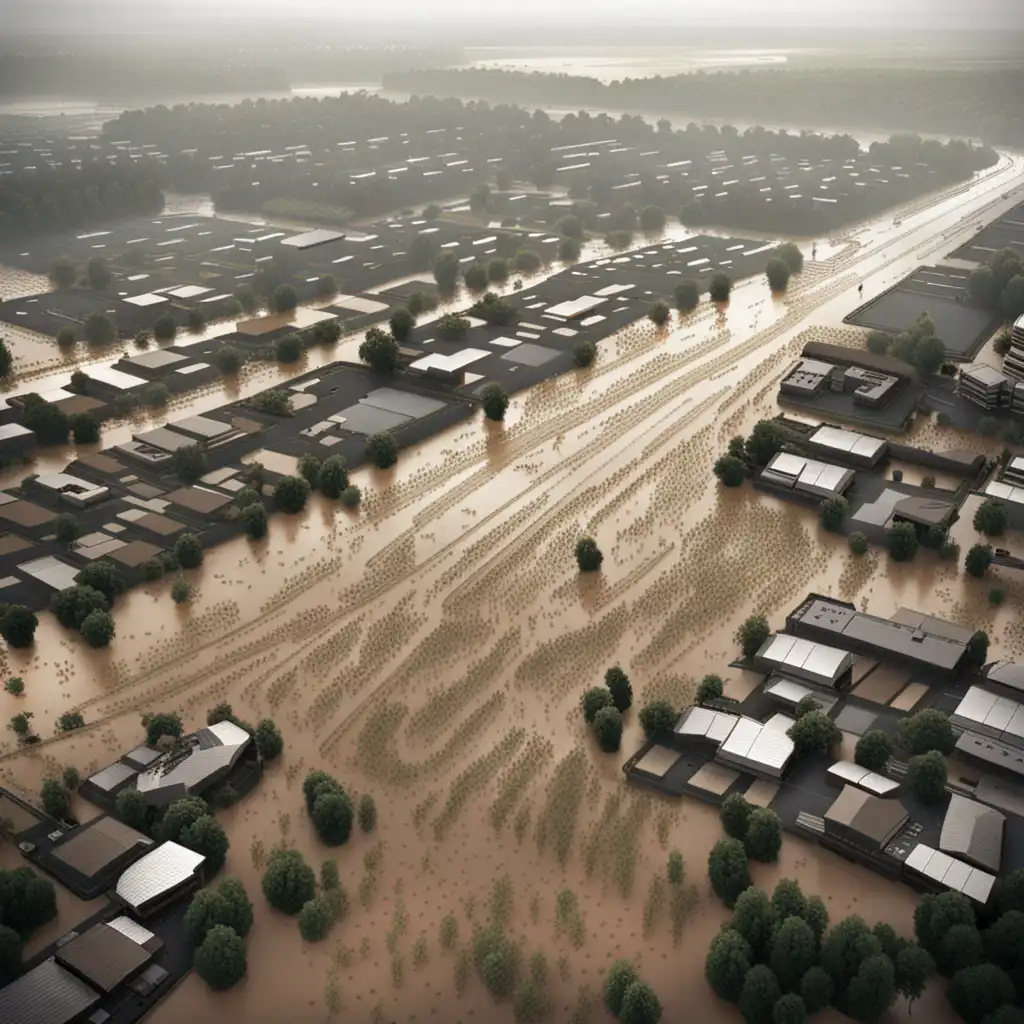
rainfall
noun rainfall
ˈreɪnfɔːl
The amount of rain that falls in a certain area in a certain period of time.
Due to the heavy rainfall last night, the roads are all flooded.
rainfall
ˈreɪnfɔːl
Loading…
ˈreɪnfɔːl
The amount of rain that falls in a certain area in a certain period of time.
Due to the heavy rainfall last night, the roads are all flooded.
ˈreɪnfɔːl
The action of rain falling.
The soft rainfall outside created a peaceful environment.
Audio could not be loaded. Please try again later.
Rainfall is a word that describes the amount of rain that falls from the sky over a specific period of time in a particular area. It's measured using a tool called a rain gauge, and it's typically expressed in inches or centimeters of water. Rainfall is often talked about in weather reports or agricultural reports, as it can affect crop growth and water levels in rivers and lakes. It's important to know how much rainfall an area receives, as it can help people prepare for floods or droughts.
Deluge refers to a sudden and severe flood of water or rain, while rainfall refers to the amount of rain that falls in a particular area over a certain period of time.
For example, if there is heavy rain that causes floods and damage to buildings or roads, it could be described as a deluge.
Deluge describes a particularly intense or overwhelming amount of water or rain, while rainfall is more of a quantitative term that describes the amount of precipitation that a certain area receives.
Open word: Deluge →A downpour is a sudden and heavy rain that falls for a relatively short period of time, usually lasting for a few minutes or hours, but can result in a lot of water.
In terms of usage, downpour is more applicable when describing a sudden and intense rain event while rainfall is more commonly used when discussing the accumulation of rain over a longer period of time.
- The picnic was spoiled by a sudden downpour of rain.
Open word: Downpour →Drizzle refers to light raindrops falling slowly and steadily.
It can be heavy or light and can result in a lot of water on the ground. Drizzle is applicable when there is light and slow precipitation, while rainfall describes any precipitation that falls from the sky, whether it's light, heavy, or intermittent.
Open word: Drizzle →Mist refers to a collection of tiny water droplets in the air, that form when humid air cools down. Mist is lighter than rain and can often be seen in the early morning or late evening.
Mist can cause hazy visibility and dampness.
Rainfall can range from light drizzles to heavy downpours. It is more common than mist and can occur anywhere in the world.
Mist is a collection of tiny water droplets that create hazy conditions, while rainfall is drops of water that fall from clouds due to condensation.
Mist is lighter and more localized, while rainfall is heavier and can occur anywhere.
Open word: Mist →Pour refers to the action of a large amount of liquid being poured quickly from a container.
Pour refers to the action or description of heavy rain, while rainfall refers to the amount of rain that has fallen.
Open word: Pour →Precipitation refers to any form of moisture that falls from the atmosphere to the Earth's surface, which includes rain, snow, sleet, and hail.
So, while rainfall is a type of precipitation, not all types of precipitation can be considered rainfall. For example, if it's snowing or hailing, there is precipitation, but not rainfall.
The term precipitation is more commonly used in scientific discussions of weather and climate, while rainfall is a more everyday term that people use to describe how wet or dry it is outside.
Open word: Precipitation →A shower refers to a brief period of rain that lasts for a short duration of time, usually less than an hour.
Rainfall is more commonly used to describe the overall amount of rain that has occurred in a particular area, whereas shower is typically used to describe a sudden burst of rain.
For example, you might talk about the rainfall in your area during the month of July, but you would describe the weather today as having a few scattered showers.
Rainfall is a more formal and technical term, while shower is more casual and colloquial.
Open word: Shower →Sprinkle refers to the act of raining lightly or in scattered drops.
Rainfall refers to the total amount of rain that falls, while sprinkle refers to a light and scattered rain.
Open word: Sprinkle →not only hold water but also slow it down this simply means that during heavy rainfall water doesn't flow as quickly into rivers which helps prevent them
Watch on YouTube ↗Only one of the many life support systems on which we depend - soils, aquifers, rainfall, ice, the pattern of winds and currents, pollinators, biological abundance and diversity - need fail for everything to slide.
that desertification is only occurring in arid and semi-arid areas of the world, and that tall grasslands like this one in high rainfall are of no consequence.
Watch on YouTube ↗As a result of the carbon-dioxide enrichment of the Earth's atmosphere, plants are now growing faster. Furthermore, global warming lengthens the growing season and increases net rainfall.
History’s first empire rose out of a hot dry landscape, without rainfall to nourish crops without trees or stones for building. In spite of all this its inhabitants built the world’s first cities,
Watch on YouTube ↗The West begins where the average annual rainfall drops below twenty inches. Water is important to people who do not have it, and the same is true of control.
revealing a landscape not as lifeless as it might first appear. Deserts are often defined as areas of land that receive less than 10 inches of rainfall each year. These regions are low in humidity and can even be moisture-deficient,
Watch on YouTube ↗The tropical rain forests are a telling example. Once cut down, they rarely recover. Rainfall drops, deserts spread, the climate warms.
we're learning that this is affecting regional rainfall this is affecting air pollution it's affecting economies with feedbacks back into the global market it is every finance ministers concern of keeping biomes in a stable state in a globalized world this
Watch on YouTube ↗Economies are embedded inside ecosystems. Companies dependent on tourism, for example, are affected by low rainfall - there's less snow for skiers, and forest fires are more intense.
because they're very sensitive to temperature and climate they don't move very far during their lifetime so they're a very good indicator of relative humidity rainfall things like that
Watch on YouTube ↗Farmers and agricultural authorities must take account of climate change and the prospect of increased rainfall in designing strategies to mitigate the effects of nutrient pollution.
year of below normal rainfall that was unprecedented it's hard to attribute specific events to climate change but an increase in extreme events life draft is what we are expecting from climate change a lot of the blame made by
Watch on YouTube ↗I spend a lot of time in L.A., and when it rains there you get the entire rainfall for the year in two days, raindrops the size of mangoes. And in Barcelona, the Mediterranean storms come up from the sea, thunder and lightning; it's like the end of the world.
Such a limited rainfall, and highest colorful life flourished in these areas. You won't find water in this slide. But it is invisible. Somewhere a stream or a rivulet
Watch on YouTube ↗As seventh graders, my classmates and I would make rockets to see what made them fly and models of remote-controlled motor boats because Palanpur had heavy rainfall.
intersect with clouds and rainfall patterns? How does pollution which you can see in the white wisps of sulfate pollution in Europe, how does that affect the temperatures at the surface and the sunlight that you get at the surface? We can look at this across the world.
Watch on YouTube ↗Once we start deliberately messing with the climate systems, we could inadvertently shift rainfall patterns (climate models have shown that rainfall in the Amazon might be particularly vulnerable), causing collapse of ecosystems, drought, famine, and more.
Now scientists can take this information about the rainfall and the vegetation and use it to understand what areas on Earth are in danger of a famine or a drought and provide that information to aid organizations
Watch on YouTube ↗The Climate Risk Managers can be trained in the science and art of managing uncertain rainfall patterns leading to drought or flood.