
executive
noun executive
ɪɡˈzekjətɪv
Person or group in charge of managing a company or organization.
The board of executives made the final decision on the company's direction.
executive
ɪɡˈzekjətɪv
読み込み中…
ɪɡˈzekjətɪv
Person or group in charge of managing a company or organization.
The board of executives made the final decision on the company's direction.

ɪɡˈzekjətɪv
Relates to making decisions and managing businesses, or suitable for people with important jobs in business.
The executive committee will handle the issue.
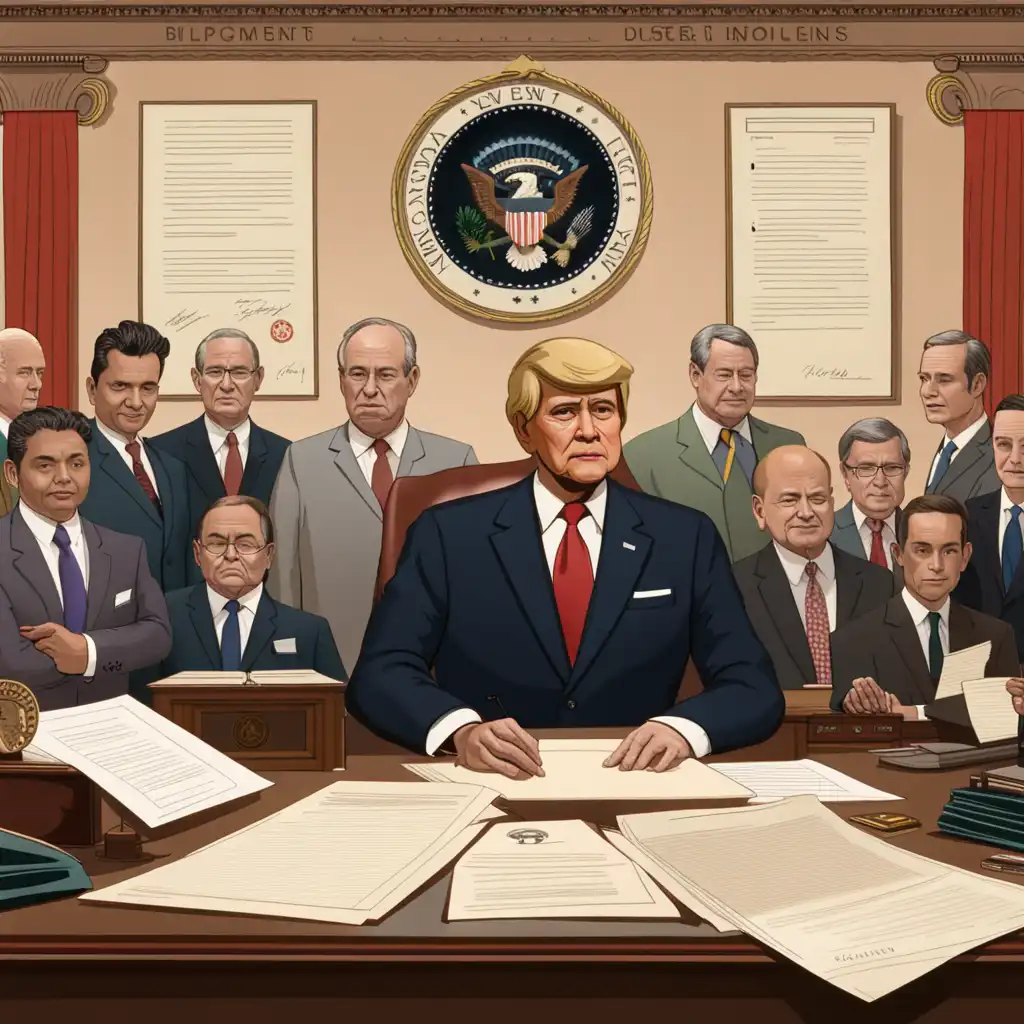
ɪɡˈzekjətɪv
The part of a government responsible for implementing, or carrying out, the law.
The executive branch of the government includes the president and the departments under him or her.
音声を読み込めませんでした。しばらくしてからもう一度お試しください。
"Executive" is a word that describes someone who has a high-level job in a company or organization. They have a lot of power and responsibility and make important decisions. You might hear this word used in business settings, like talking about the executive team at a company. It can also be used to describe luxury things, like an executive suite at a hotel. Overall, "executive" means something or someone that is important and in charge.
An administrator is someone who manages or oversees a system, organization or group of people. They are responsible for making sure things are working properly and efficiently.
Administrators are commonly found in schools, hospitals, and government offices.
The main difference between an administrator and an executive is the scope of their responsibility. Administrators manage a system, organization or group of people, while executives run an entire company or organization.
単語を開く: Administrator →A boss typically refers to someone who is in charge of a group or department within a company, who oversees day-to-day operations, and who gives orders and directions to their subordinates.
So while both terms refer to people in positions of authority within a company, boss tends to be more specific to an individual's immediate team or area of responsibility, while executive implies a higher level of responsibility and impact on the company as a whole.
単語を開く: Boss →Director usually refers to a person who is in charge of a department or a specific area of a company or organization.
A director is more focused on the day-to-day operations of a specific department, while an executive is more focused on the big picture and the long-term goals of the company as a whole.
単語を開く: Director →Head can be used in a number of different contexts, but it generally refers to the person who is in charge of a particular department or area within a company or organization.
For example, there might be a head of marketing, a head of IT, or a head of HR.
Executive is a more general term that refers to high-level leaders within a company, while head is a more specific term that refers to the person who is in charge of a particular department or area.
単語を開く: Head →A leader is someone who inspires and motivates others towards a common goal or objective.
Leaders can be found in a variety of contexts, such as sports teams or community organizations.
They do not necessarily have to hold a position of authority or power to be considered a leader.
In general, executives are more concerned with the business aspect of running an organization, while leaders focus on people and relationships.
However, it is possible for someone to possess qualities of both an executive and a leader, and successful organizations often require both types of individuals to thrive.
単語を開く: Leader →Executive refers to someone who is in a higher position of authority in a company or organization, such as a CEO or a senior manager.
Manage refers to the act of overseeing day-to-day operations of a company or organization. This can include tasks such as managing employees, resources and budgets, and ensuring that deadlines are met.
In general, executives are responsible for making big-picture decisions and setting overall goals, while managers are responsible for carrying out those decisions and ensuring that the day-to-day operations run smoothly.
However, the specific roles and responsibilities of executives and managers can vary depending on the organization and industry.
単語を開く: Manage →Officer usually refers to someone who is in charge of a specific area or function within a company or organization.
For example, a 'marketing officer' would be responsible for promoting the company's products or services, while a 'finance officer' would be responsible for managing the company's finances.
Both terms are applicable within a business setting, but executive implies a higher level of responsibility and decision-making power, while officer implies a more specific and focused area of responsibility.
単語を開く: Officer →A supervisor is responsible for overseeing the work of a team or group of employees. They often work in the same department as the employees they supervise and are responsible for ensuring that work is completed on time, according to quality standards, and within budget.
Supervisors typically have less experience and authority than executives, but they play a critical role in ensuring that work is completed efficiently and effectively.
In summary, executives are responsible for managing the overall operations of an organization, while supervisors are responsible for managing the work of a specific group of employees.
単語を開く: Supervisor →in order to expand or contract their power. Others determine the extent to which legislation should be enforced. And sometimes a president may use an executive order to clarify and help implement a policy that needs to be easily defined.
YouTube で見る ↗Executives owe it to the organization and to their fellow workers not to tolerate nonperforming individuals in important jobs.
is so neglected, is because the people inside the developing world with money, don't need it. I was at the World Economic Forum not long ago talking to corporate executives who have massive businesses in the developing world and I was just asking them,
YouTube で見る ↗Concentration of executive power, unless it's very temporary and for specific circumstances, let's say fighting world war two, it's an assault on democracy.
the man's children they said everybody someone as old as you want to participate want to learn to read I'm making an executive decision
YouTube で見る ↗I'm a good leader. I'm a good executive. I've been outside the U.S. a few times, and I've done a little bit of foreign policy. But most importantly, I'm smart enough to be in charge of this country.
of the Galapagos you may have heard of the Galapagos for its stunning wildlife but it still holds secrets and on one shoot the crew stumbled across something that none of them had seen before I'll let the executive producer Johnny
YouTube で見る ↗I was the editor of the 'News of the World;' I was the editor of the 'Sun' and chief executive.
impostor because everyone else on the executive team is brilliantly articulate and I'm not now there was a time when I would have said to her oh I'm sure you're brilliantly articulate but now I know that wouldn't have served her so
YouTube で見る ↗I'm a really big believer in chief executives not staying forever.
and potentially strengthened the dorsolateral prefrontal cortex. This is the part of the brain that plays a large role in executive function problem solving switching between tasks, and focusing while filtering out irrelevant information.
YouTube で見る ↗If the studios paid the artists, how would they ever be able to afford the executives?
And two out of every three don't have an executive who's from a minority. And most of the minorities that are at that sort of level are non-executive board directors. So their influence isn't that great. I've told you a bunch of terrible things.
YouTube で見る ↗My feeling about executive bonuses is that any candidate for a chief executive job who even raises the issue of bonuses should be dismissed out of hand.
The third principle is the purpose of the corporation is not merely to enrich shareholders. The greatest grift in contemporary economic life is the neoliberal idea that the only purpose of the corporation and the only responsibility of executives
YouTube で見る ↗In years of interviewing presidents, prime ministers and chief executives all over the world, I can remember only a handful of times in which a leader has said: 'I don't know' in answer to a question. Perhaps everyone I have ever interviewed knows everything about everything, but I doubt it.
And how is that even possible? We couldn't have done that, that couldn't have happened five years ago even. It's a brand new world. The power is now in the hands of the creator, as I'm sure you guys would agree, as opposed to the big record company executive
YouTube で見る ↗It's often said that the most important qualities in a chief executive are character and judgment.
These appointed helpers assist the President in making important decisions within their area of expertise, such as defense, the treasury, and homeland security. The executive branch also appoints government officials, commands the armed forces, and meets with leaders of other nations.
YouTube で見る ↗If you can help an employee get to that extra level of skill, you have a great executive.