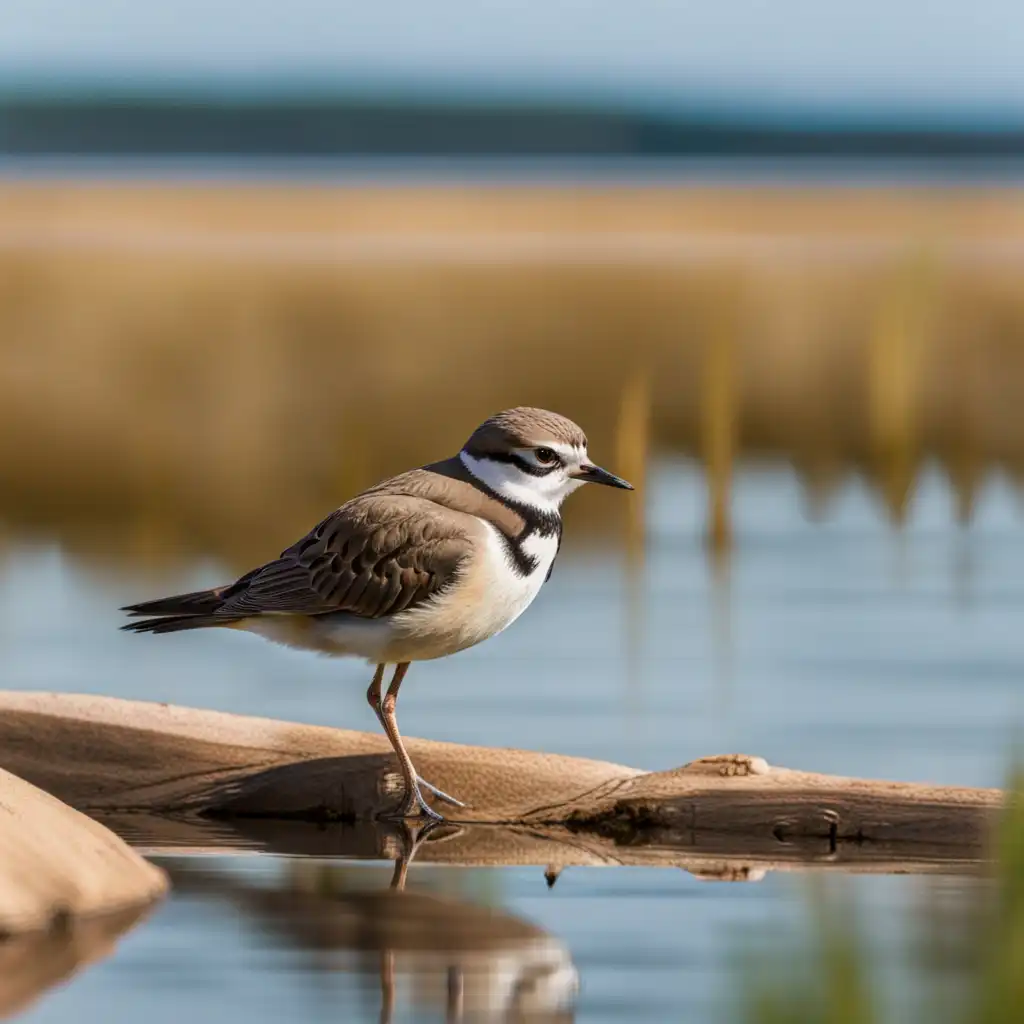
plover
noun plover
ˈplʌvər,ˈpləʊvər
A type of bird that lives near water
I saw a plover near the lake today.
plover
ˈplʌvər,ˈpləʊvər
लोड हो रहा है…
ˈplʌvər,ˈpləʊvər
A type of bird that lives near water
I saw a plover near the lake today.
ऑडियो लोड नहीं हो सका। कृपया बाद में फिर कोशिश करें।
A plover is a type of bird that is usually found near bodies of water like beaches or rivers. It has a small body and long legs, with a distinctive pattern of spots or stripes on its feathers. You might see a plover running along the sand or shallow water, looking for food like small insects or crustaceans. The word "plover" can be used to refer to any of several species of this bird, such as the common ringed plover or the snowy plover.
Curlew and plover are both types of wading birds, but they differ in their physical characteristics and habitat.
A curlew is a larger bird with a long, curved beak that is used to probe through mud and sand for food such as worms and mollusks.
In summary, curlews are larger wading birds with curved beaks found in coastal areas and wetlands, while plovers are smaller wading birds with straight beaks found along shorelines.
शब्द खोलें: Curlew →Both lapwings and plovers are small to medium-sized birds with long legs and slender bills.
1. Appearance: Lapwings are larger than plovers, with a distinct crest on their head and a longer, fuller tail. Plovers have a more streamlined body shape, with shorter tails and rounder heads.
2. Habitat: Lapwings are usually found in open fields and meadows, while plovers prefer coastal areas, such as beaches and mudflats.
3. Behavior: Lapwings are known for their distinctive display flight, where they swoop and tumble in the air, making a loud, distinctive call.
In summary, lapwings are larger birds found in open fields and meadows, and they have a distinctive crest and tail. Plovers are smaller birds found in coastal areas, and they have a more streamlined body shape and distinctive alarm call.
शब्द खोलें: Lapwing →Plovers and sandpipers are both types of shorebirds, but they are different in several ways.
Sandpipers are smaller, more slender birds with longer bills and thinner legs. They feed on small invertebrates such as worms, snails, and crustaceans found in mudflats, tidal pools, and other shallow water habitats.
In summary, plovers are larger-bodied birds that live on sandy or rocky shores and feed on insects and small animals, while sandpipers are smaller, more slender birds that live in mudflats and shallow water habitats and feed mostly on invertebrates.
शब्द खोलें: Sandpiper →Plover and snipe are both types of birds, but they have different physical characteristics and habitats. Plovers are typically larger with shorter bills and live in open habitats like beaches, salt flats, and grasslands.
Snipes are smaller with longer bills and live in wet, marshy areas. They are also known for their distinctive zigzag flying patterns.
If you see a small bird with a long bill near the water, it's likely a snipe. If you see a larger bird with a shorter bill out in the open, it's likely a plover.
शब्द खोलें: Snipe →A wader is a type of bird that is specifically adapted to live in wetland habitats, such as marshes, swamps, or shallow freshwater areas.
Waders have long, thin legs and beaks that are designed to help them probe the muddy bottoms of ponds and rivers for food.
The name wader comes from the fact that these birds typically wade through the water as they hunt.
So to sum it up, plovers are usually found on beaches, while waders are found in wetland habitats. Plovers have short beaks and plump bodies, while waders have long, thin legs and beaks for probing muddy bottoms.
शब्द खोलें: Wader →Legends of Kingfishers,...
YouTube पर देखें ↗Only in my 40s did I become a person whose heart lifts whenever he hears a grosbeak singing or a towhee calling, and who hurries out to see a golden plover that's been reported in the neighbourhood, just because it's a beautiful bird, with truly golden plumage, and has flown all the way from Alaska.
As millions of people know, one of the great pleasures of walking in areas of the uplands managed for grouse is to see and hear large numbers of curlew, lapwing and golden plover - all ground-nesting birds largely absent or in rapidly declining numbers elsewhere.