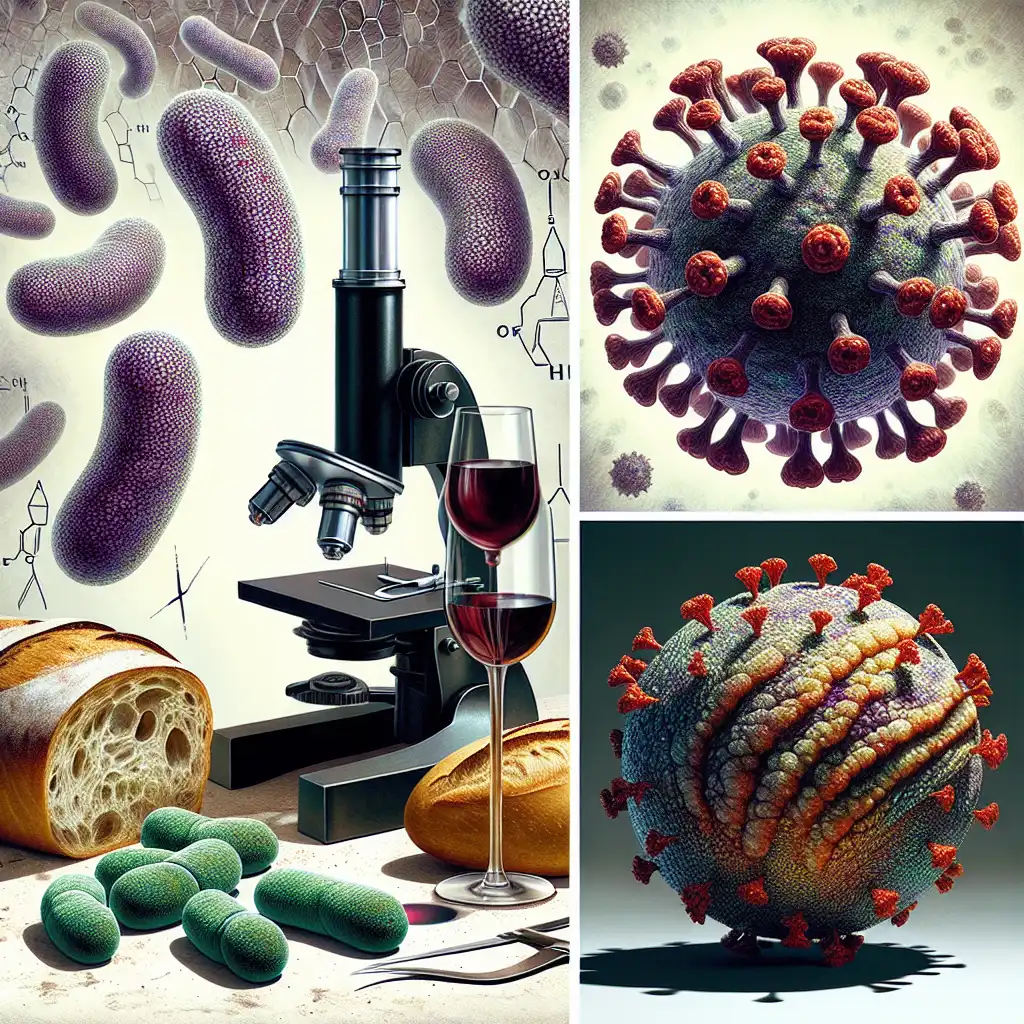
A very tiny living thing that can be seen only under a microscope. They can be harmful causing diseases or beneficial helping in processes like fermentation
A microorganism is a tiny living thing that is too small to be seen with the naked eye. They are found everywhere, such as in soil, water, and air. Some microorganisms are helpful, like the ones that aid in digestion or break down waste. Others are harmful, like the ones that cause infections or diseases. Microorganisms can also be used in the production of food, medicines, and other products. Scientists study microorganisms to better understand them and their impact on the world around us.
Bacteria are a type of microorganism, but not all microorganisms are bacteria. Microorganisms are tiny living organisms that are too small to see with the naked eye, such as bacteria, viruses, fungi, and protozoa.
Bacteria are one specific type of microorganism that are unicellular and have a simple cell structure without a nucleus.
Other microorganisms have different structures and can have different effects on the environment and living organisms. The term microorganism is a broader term that includes various types of living organisms that are too small to see, while bacteria specifically refer to a particular type of these living organisms.
Fungus refers to a type of organism that includes things like mushrooms and mold. They are typically larger and more complex than other microorganisms.
Fungus is applicable when referring to a specific type of organism, while microorganism is a more general term that encompasses many different types of tiny organisms.
Germ usually refers to a pathogenic microorganism, such as a bacteria, virus or fungi, that can cause disease in humans or animals.
Germ is typically used more commonly in layman terms and is associated with “germ theory,” which is the principle that microorganisms can cause infectious diseases.
Both these terms are used in different contexts. Germ is more used in the context of disease causation while Microorganism is a broader term used in biology to describe a wide range of living things.
Both microbe and microorganism refer to small living organisms that are not visible to the naked eye.
However, microbe is used to refer specifically to bacteria, fungi, and viruses, while microorganism is a broader term that includes protozoa, algae, and other small organisms in addition to bacteria, fungi, and viruses.
Microbe is a more specific term, while microorganism is a more general term.
A parasite is an organism that lives on or in another organism (host) and benefits at the host's expense.
Parasites can cause harm or illness to the host, and they require the host to survive.
While all parasites are microorganisms, not all microorganisms are parasites.
Microorganisms can have various interactions with their hosts, whereas parasites are always harmful to the host.
Microorganisms can be found in many different environments, from the air we breathe to the food we eat. Parasites are typically found in specific hosts, such as ticks, lice, and mosquitoes.
A pathogen is a specific type of microorganism that can cause disease. Not all microorganisms are pathogens, but all pathogens are microorganisms.
Therefore, microorganisms are applicable in various fields such as microbiology, ecology, and biotechnology, while pathogens are usually studied in the field of medicine, as they are the cause of many diseases.
Microorganism is a broad term used to describe tiny living things that can only be seen under a microscope. This term can apply to many different types of organisms, including bacteria, viruses, fungi, and protozoans.
Protozoans refer specifically to a type of single-celled organism that can move independently through the use of small hair-like structures called cilia or flagella.
Protozoans are found in various environments, such as water or the intestines of animals.
So, while all protozoans are microorganisms, not all microorganisms are protozoans. The term microorganism is more general, while protozoan is more specific to an individual type of single-celled organism.
A virus is not considered a microorganism because it is not technically "alive." It is a small infectious agent that can only replicate inside the living cells of other organisms.
Viruses basically hijack the host cell's machinery to reproduce and spread throughout the body. They are responsible for many diseases, from the common cold to more serious illnesses like COVID-19.
In summary, microorganisms are living organisms too small to be seen with the naked eye, while viruses are non-living agents that require a host cell to reproduce.
Microorganisms can be helpful or harmful, while viruses are typically harmful and responsible for many diseases.
I actually found contracting malaria in the Congo fascinating. Observing your body under attack from this microorganism and seeing how it responds is simultaneously fascinating and awful but maybe that's just because I'm a former biology teacher.
People don't even understand that every bit of our food was once alive. We take another creature, plant, animal, microorganism, tear it apart in our mouths. And incorporate those molecules into our own bodies. We are the Earth in the most profound way.