
phlegm
noun phlegm
flem
Thick liquid produced in your nose and throat especially when you're sick.
She coughed up some phlegm.
phlegm
flem
लोड हो रहा है…
flem
Thick liquid produced in your nose and throat especially when you're sick.
She coughed up some phlegm.
flem
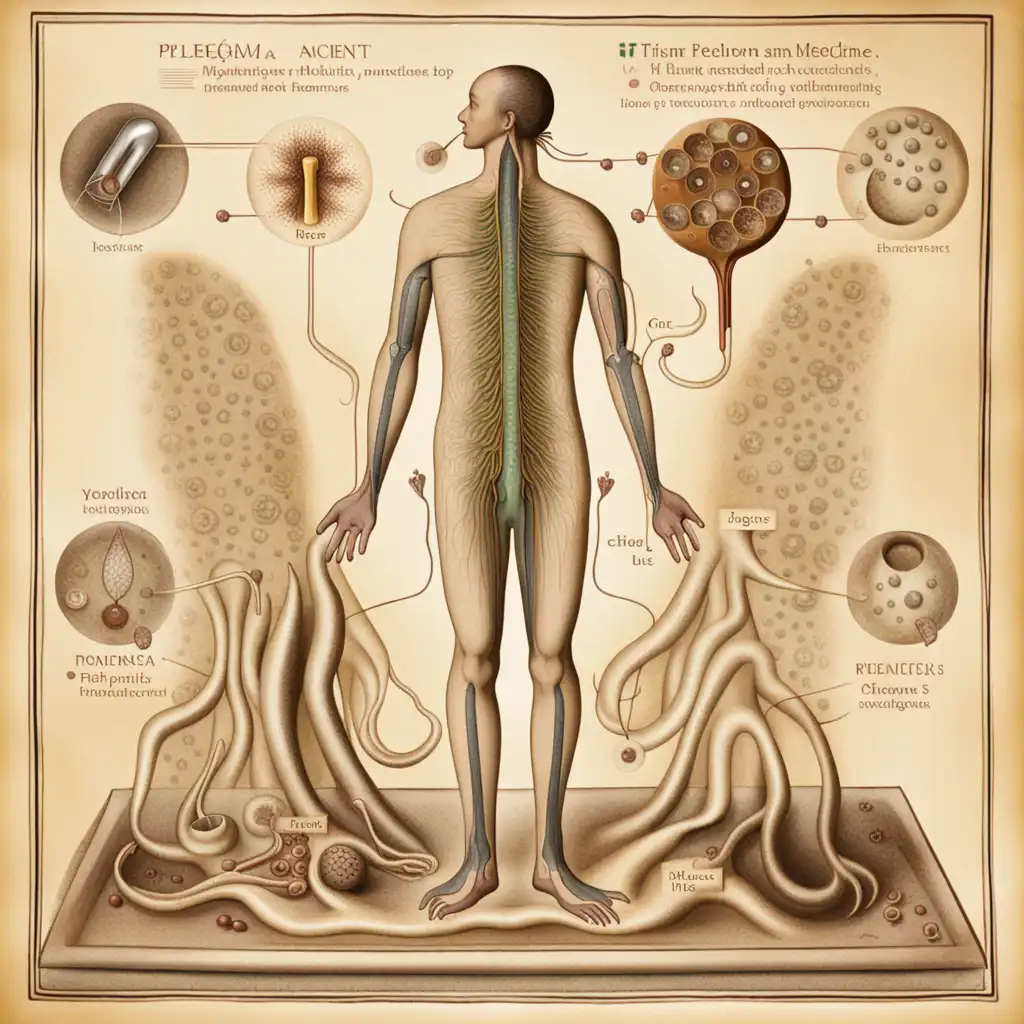
In ancient and medieval medicine, phlegm is one of the four main body fluids that affects a person's health and mood.
In medieval medicine, it was believed that an excess of phlegm in the body could cause diseases.
ऑडियो लोड नहीं हो सका। कृपया बाद में फिर कोशिश करें।
Phlegm is a word used to describe the thick and sticky substance that can come up from your throat and lungs when you have a cold, flu or other respiratory illness. You might cough it up or have to clear your throat to get rid of it. It's important to cover your mouth when you cough or sneeze to prevent the spread of germs. You might also hear the word used in medical settings, such as when a doctor is examining your lungs and asks if you are producing any phlegm.
Catarrh and phlegm are both respiratory symptoms, but they refer to different conditions. Catarrh is a term used to describe the inflammation and excess mucus production in the nasal cavity and throat, often associated with colds and allergies.
It is often associated with infections such as pneumonia and bronchitis. Catarrh is more applicable to conditions that affect the nasal and throat regions, while phlegm is relevant to lung-related issues.
शब्द खोलें: Catarrh →Expectorate means to cough up and spit out mucus or saliva from the throat or lungs. It is applicable when someone is clearing their throat or coughing up phlegm.
Expectorate is the action of getting rid of phlegm, while phlegm is the substance that is being removed.
शब्द खोलें: Expectorate →Mucus and phlegm are both substances produced by the body's respiratory system, but they differ in location and consistency.
Mucus is a thick, slippery fluid that lines the respiratory tract and other organs, such as the nose and throat. It helps trap dust, bacteria, and other particles to prevent them from entering the body.
Mucus is usually clear or white and can become thicker or sticky when someone has a cold or allergies.
Mucus is found in the upper respiratory tract and is typically clear or white, while phlegm is produced in the lower respiratory tract and is typically thicker and discolored.
शब्द खोलें: Mucus →Phlegm and sputum are both words used to describe thick mucus that is coughed up from the respiratory tract, but their usage depends on the specific location of the mucus.
Sputum describes mucus that is produced in the bronchial tubes and lungs. This often has a frothy consistency and may contain traces of blood.
Phlegm describes mucus produced in the upper respiratory tract, while sputum describes mucus produced in the bronchial tubes and lungs.
शब्द खोलें: Sputum →and the purpose of the territory mocking is not only to demarcate against other females but also to advertise to males you'll see male lipids I'll stick their faces in and their it noses into the urine and they were tested and tested Jacobson organ with that phlegm and grimace which will then allow for him
YouTube पर देखें ↗But in this Second Work if thou extract our Air and our Fire with the phlegm water, they will the more naturally and easily be drawn out of their infernal prison, and with less losse of their Spirits, than by the former way before described.