
impairment
noun impairment
ɪmˈpermənt
The state of being damaged or weakened in some way.
Due to his vision impairment, he needs glasses to read.
impairment
ɪmˈpermənt
불러오는 중…
ɪmˈpermənt
The state of being damaged or weakened in some way.
Due to his vision impairment, he needs glasses to read.

ɪmˈpermənt
A reduction in the value of an asset over time, due in particular to wear and tear.
The company suffered a significant impairment in the value of its assets.
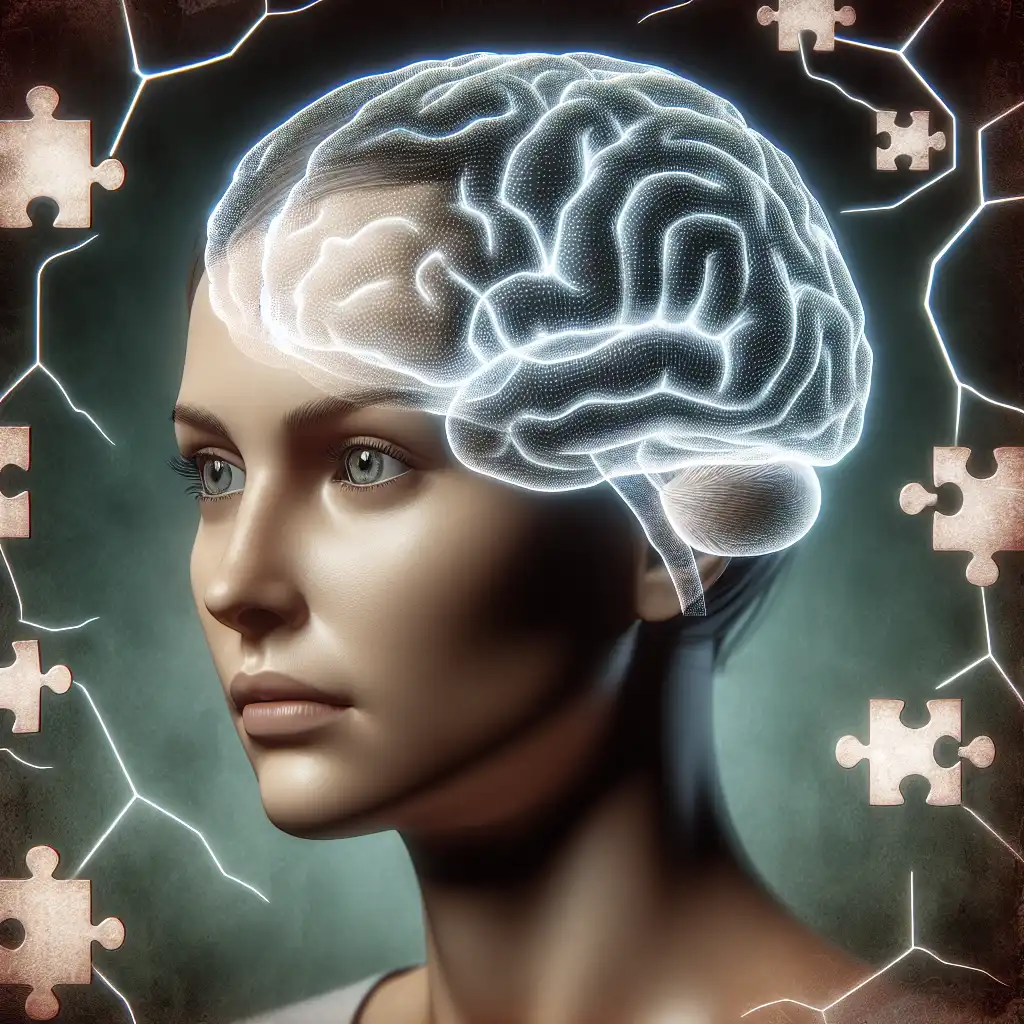
ɪmˈpermənt
A break in the normal function of a tissue or organ.
Brain impairment can cause memory loss and difficulty in speech.
오디오를 불러오지 못했어요. 잠시 후 다시 시도해 주세요.
The word 'impairment' means that something is weakened or damaged. It can be used to describe a physical or mental condition that affects a person's ability to do things that others can do easily. For example, someone with a hearing impairment may have difficulty hearing or understanding what others are saying. It can also refer to a damaged object that is no longer functioning properly. It is important to keep in mind that 'impairment' is a serious word and is often used in a medical context.
Ability refers to someone's skill or talent to do something successfully, while impairment refers to any condition or factor that limits one's ability to function normally.
For example, if someone has the ability to play the piano, they are able to play the musical instrument well. In contrast, if someone has an impairment such as a broken arm, they may have difficulty playing the piano to the best of their ability because of their limited mobility.
Ability is used in a positive context to describe a person's capabilities and strengths, while impairment is used in a negative context to describe a person's limitations or challenges.
단어 열기: Ability →Damage generally means harm or injury caused to something, which may or may not be permanent. It usually refers to physical harm, such as when a car is damaged in a crash or a building is damaged in a storm.
Damage is a form of harm, while impairment is a form of reduction or decrease in quality or ability. Both can be applied to physical and non-physical scenarios, but damage generally implies a more severe form of harm.
단어 열기: Damage →Deficiency refers to something that is lacking or missing. For example, if someone has a Vitamin B12 deficiency, it means they don't have enough of that vitamin in their body.
Both words are used to describe a person's physical or mental condition. Deficiency usually refers to a lack of something, whereas impairment refers to a hindered ability to do something.
단어 열기: Deficiency →Impairment refers to a particular condition that affects the body or the mind in some way, such as losing the ability to see or hear, or having a learning disability.
Disability refers to the limitations that a person experiences because of their impairment. For example, being unable to walk, write, or understand verbal communication.
Disabilities are the barriers imposed on people by social, physical or economic factors that prevent them from doing things that most people can do.
So in simple terms, an impairment is a condition that affects a person's abilities, while a disability is the limitations or barriers that result from that impairment.
단어 열기: Disability →Both words refer to a limitation or difficulty faced by a person, but they are used in different contexts. Handicap usually refers to a barrier or obstacle that prevents a person with a disability from participating fully in society or completing a task.
For example, a wheelchair user may face a handicap if a building does not have accessible entrances or ramps.
Handicap is related to external barriers or societal limitations, while impairment is related to personal limitations or challenges.
단어 열기: Handicap →Impediment refers to any obstacle or barrier that prevents or hinders someone from achieving a goal or completing a task.
For example, a language barrier might be an impediment for someone trying to communicate in a foreign country.
Impairment refers to a personal limitation, while impediment refers to a situational limitation.
단어 열기: Impediment →Limitation refers to a boundary or restriction that exists regardless of ability. For example, limitations may be physical, like the inability to fly without a plane or mental, like only being able to remember a certain amount of information at once.
Impairment typically refers to a specific loss of function or ability, while limitation refers to a broader boundary or restriction.
Impairment can affect how well someone can do something, while limitation refers to what they can do.
단어 열기: Limitation →Loss means that something no longer exists or is gone. It refers to the disappearance or removal of something.
For example, if someone experiences a loss of vision, they cannot see at all anymore.
Impairment means weakened or damaged, while loss means completely gone. Impairment is applicable when something is still present but not working at full capacity, while loss is applicable when something is no longer present.
단어 열기: Loss →Weak refers to a lack of strength or power.
It can refer to physical weakness like being unable to lift heavy objects, or mental weakness like lacking confidence or willpower.
Impairment is more of a medical or functional term, while weak is more of a descriptive term for physical or mental abilities.
Both can be applicable in various contexts, but impairment is more commonly used in medical and disability-related contexts, while weak is used more generally to describe a lack of strength or power.
단어 열기: Weak →Rick Guidotti: From...
YouTube에서 보기 ↗The mere suggestion that not speaking for a day can give you an appreciation of the social isolation that comes with the experience of disability, particularly those whose impairments prohibit them from communicating verbally, is insensitive at best.
How much of what you see...
YouTube에서 보기 ↗Researchers consistently find that most older volunteers, when compared to older nonvolunteers, have fewer functional and physical impairments, overall better health, higher life satisfaction and less depression. In addition, they attend religious services more frequently and belong to more social organizations.
Snowmobile Sobriety Test...
YouTube에서 보기 ↗Portraying visual impairment is difficult. I can see what's going on, but I have to act like I can see nothing. And this can be quite a challenge.
Accessible fart machines...
YouTube에서 보기 ↗I would love to switch on my TV and see a disabled person talking about something they are genuinely interested in or acting out a part that doesn't just focus on their impairment.
A hilarious celebration...
YouTube에서 보기 ↗Congress acknowledged that society's accumulated myths and fears about disability and disease are as handicapping as are the physical limitations that flow from actual impairment.
Todd Kuiken: A...
YouTube에서 보기 ↗Below seven hours of sleep, there are objective impairments in the body. Eight hours are recommended.
Michael Merzenich:...
YouTube에서 보기 ↗Gender injustice is a social impairment and therefore has to be corrected in social attitudes and behaviour.
A friendly autonomous...
YouTube에서 보기 ↗I got interested in the emotions after studying patients who had lost the ability to emote and feel under certain circumstances. Many of those patients also had major impairments in their ability to make decisions.
Anil Seth: How your...
YouTube에서 보기 ↗With anything you do and you dedicate yourself to and you dedicate thousands and thousands of hours, eventually you're gonna get a little bit better at it unless there's some innate impairment preventing that.
Mads Tang-Christensen:...
YouTube에서 보기 ↗The Faustian trade of the 20th century was, we got 30 years of additional life, but in return we got heart disease, cancer, stroke, Alzheimer's and sensory impairments. The question is: What Faustian trade are we making now, as we go after heart disease, cancer, stroke and Alzheimer's?