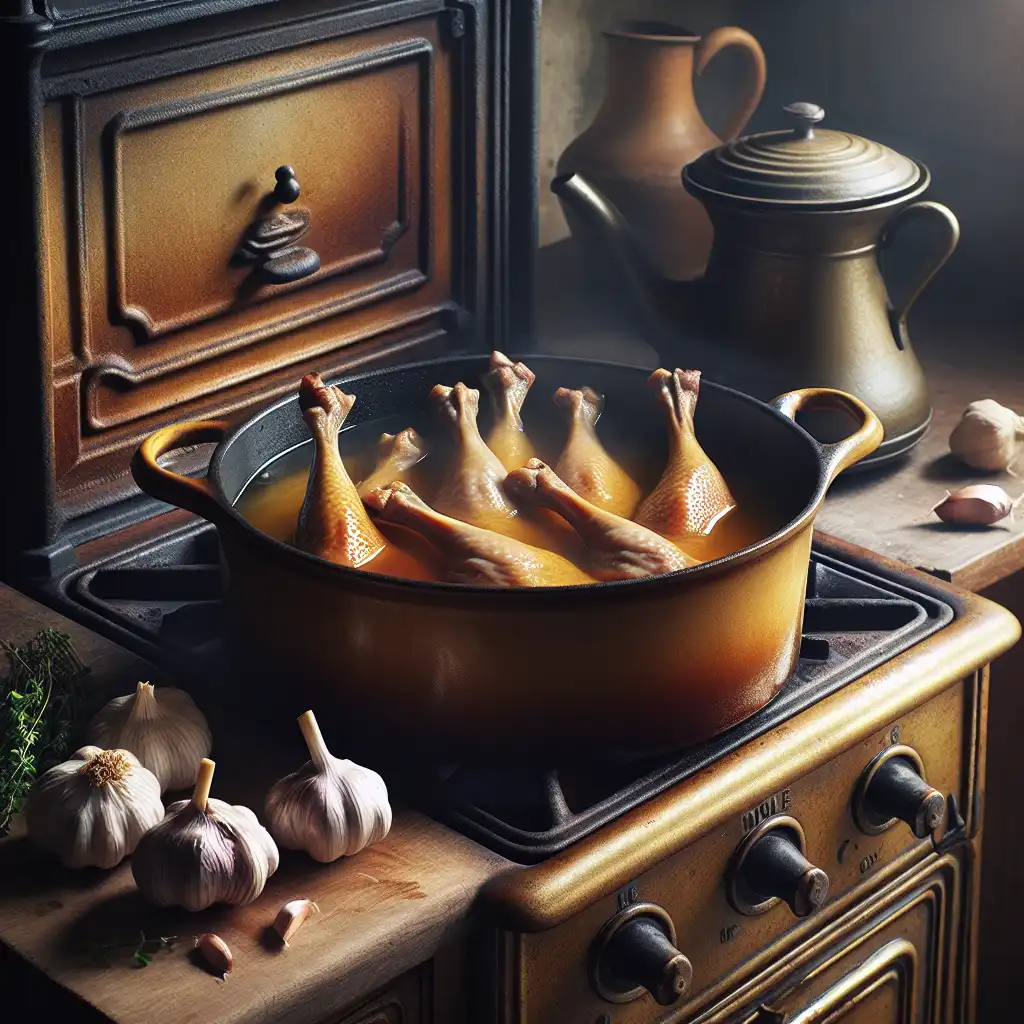
confit
noun confit
ˈkɔːnfi
A method of cooking and preserving food where it is slowly cooked in its own fat or oil.
Duck confit is a popular French dish.
confit
ˈkɔːnfi
Cargando…
ˈkɔːnfi
A method of cooking and preserving food where it is slowly cooked in its own fat or oil.
Duck confit is a popular French dish.
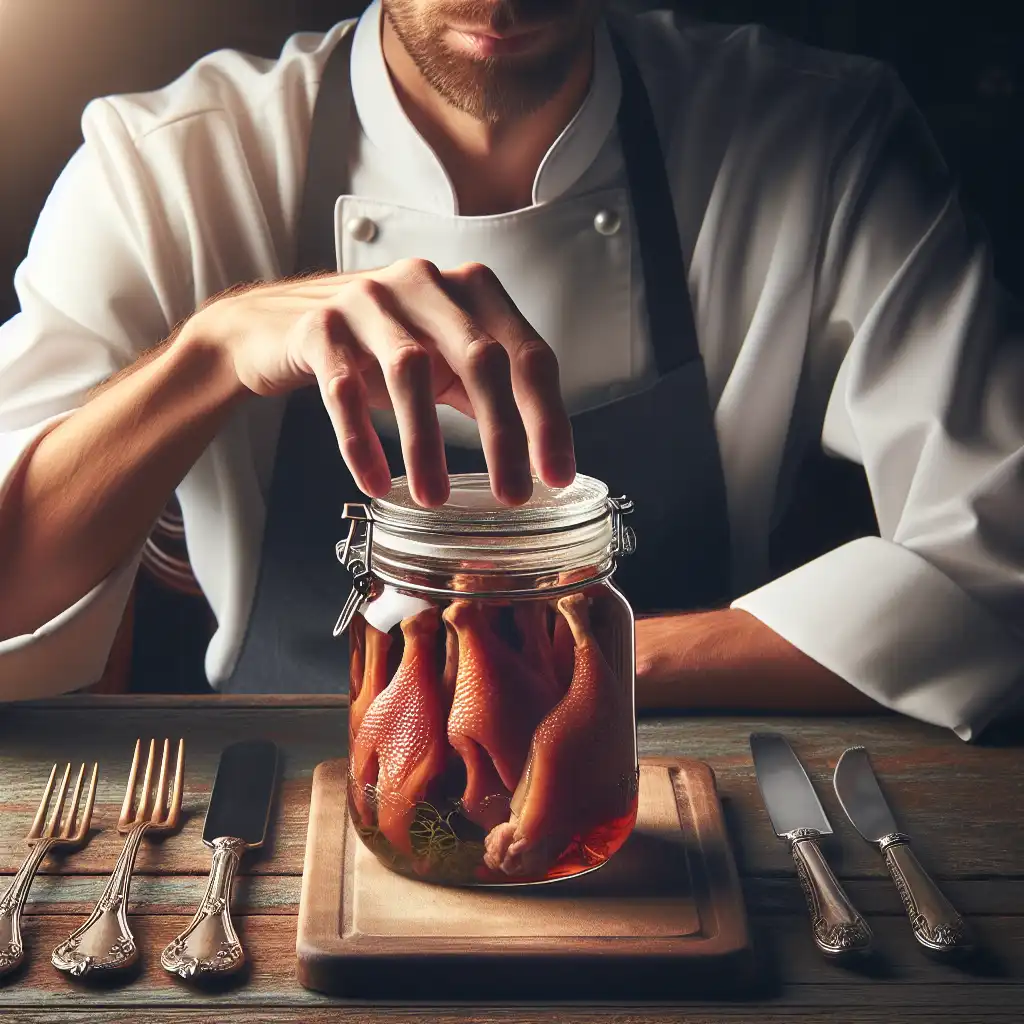
ˈkɔːnfi
The food prepared by the confit method.
The restaurant specialises in varieties of confit.

ˈkɔːnfi
To cook and preserve a food in its own fat or oil
He decided to confit the duck for dinner.
No se pudo cargar el audio. Inténtalo de nuevo más tarde.
The word 'confit' is often used in the context of cooking, particularly in French cuisine. It refers to a method of cooking and preserving food, usually meat, in its own fat. This involves slow cooking the meat in the fat until it becomes tender and the flavors are infused, and then storing it in the fat to prevent spoilage. Confit is often used for duck, chicken, or other meats, but can also be applied to vegetables or fruits. It is a popular cooking technique for making flavorful and long-lasting dishes.
Bottle refers to a container used for storing liquids, especially beverages like water, soda or juice.
Bottle is applicable for storing liquids or other substances while confit is applicable for slow cooking meat in its own fat for enhanced flavor.
Abrir palabra: Bottle →Confit and conserve are both words used in cooking, but they refer to different things. Confit refers to the method of cooking meat (usually duck, goose or pork) in its own fat for a long time, until it is very tender and flavorful.
Conserve is a type of jam made with whole or chopped fruit, sugar, and sometimes added spices or flavors. The fruit is cooked slowly until it breaks down into a soft, spreadable texture, and the sugar helps to preserve it.
Conserves can be made from a wide variety of fruits, and are usually eaten as a sweet spread on bread or crackers.
Confit is a cooking method for meat, and conserve is a type of fruit jam.
Abrir palabra: Conserve →Cure is a technique that involves preserving meat by adding salt (and sometimes other ingredients like sugar or spices) to it and letting it rest for a period of time.
Curing is typically used for making items like bacon, ham, or pastrami.
Confit involves slow-cooking meat in its own fat to create a tender and flavorful dish that is then preserved. Cure involves adding salt (and sometimes other ingredients) to meat to preserve it and create a particular flavor profile.
Abrir palabra: Cure →Pickle is a process where produce or other foods are preserved in an acidic solution (usually vinegar, water, and salt) to extend its shelf life and add flavor.
Pickles can range from sweet to sour and can be made from vegetables, fruits, and sometimes meats.
The key difference between the two is that confit is a cooking method that is used to make meat tender and flavorful, while pickling is a preservation method used to preserve the freshness of produce and add flavor.
Abrir palabra: Pickle →Preserve refers to a broader category of food preservation techniques that includes things like canning, pickling, and drying.
Abrir palabra: Preserve →Confit refers to a cooking method where food (usually meat) is cooked slowly in fat, such as duck confit. Store means to keep something in a specific place for future use, like storing food in a pantry or clothing in a closet.
Confit is applicable when cooking meat and store is applicable when keeping something for future use.
Abrir palabra: Store →Dan Barber: A surprising...
Ver en YouTube ↗I use the confit principle for chicken thighs. I season them with herbs and garlic, let them marinate, and then cook them in chicken fat.
Elevating simple...
Ver en YouTube ↗I have smuggled so many ingredients across so many borders, like shallot confit from Thailand, or a new sauce from New Orleans not approved by the FDA.
Confit is the ultimate comfort food, and trendy or not, it is dazzling stuff.
Confit is not something that comes to mind for summer. Usually it means duck confit, made by cooking the legs and thighs in duck fat to preserve them for winter.