
clodhopper
noun clodhopper
ˈklɑːdhɑːpər
A person who is clumsy or awkward
He felt like a clodhopper when he tripped over his own feet.
clodhopper
ˈklɑːdhɑːpər
読み込み中…
ˈklɑːdhɑːpər
A person who is clumsy or awkward
He felt like a clodhopper when he tripped over his own feet.
ˈklɑːdhɑːpər
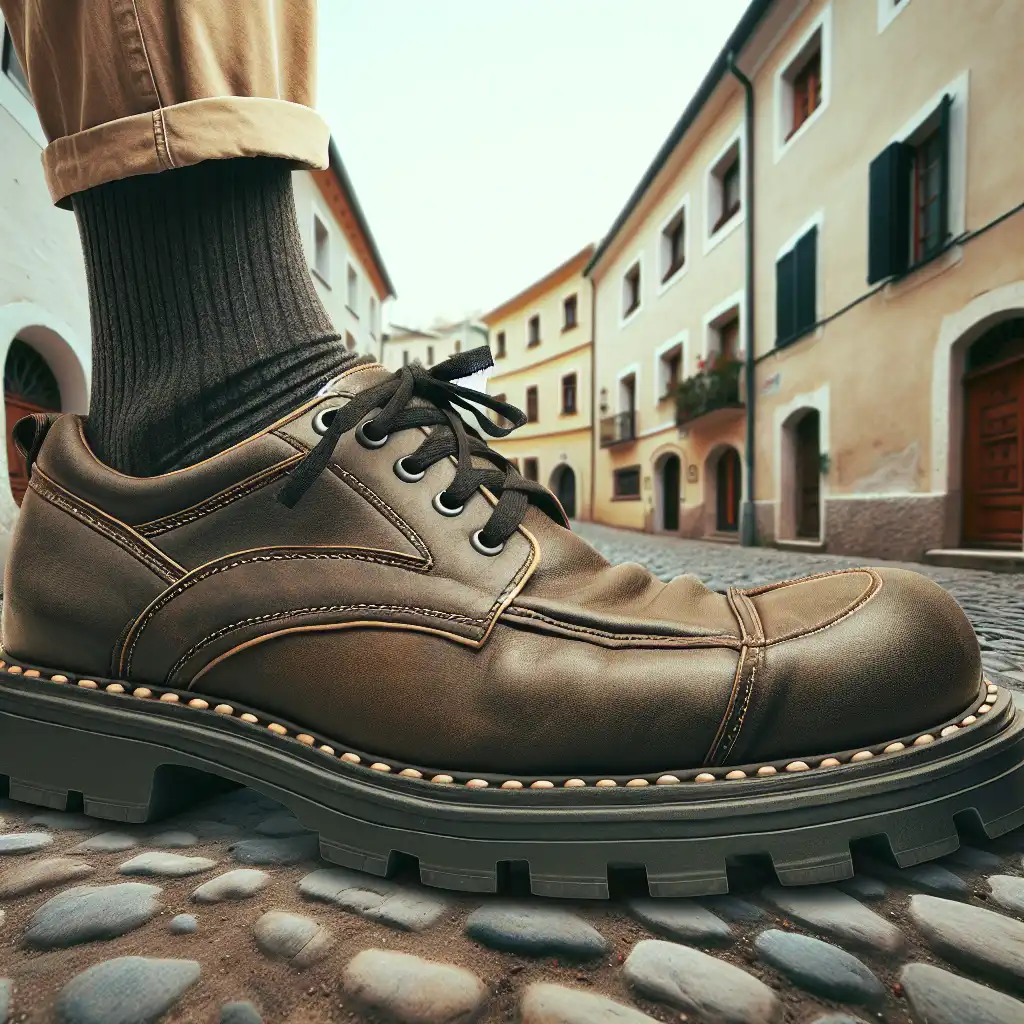
A large, heavy and uncomfortable shoe
He wore clodhoppers that made a loud noise every time he took a step.

ˈklɑːdhɑːpər
A clumsy, unsophisticated rural person
He was a clodhopper from the countryside with no knowledge about the city.
音声を読み込めませんでした。しばらくしてからもう一度お試しください。
"Clodhopper" is a word used to describe someone who is clumsy or awkward, especially when it comes to their movements or their social skills. It can be used as an insult, so it's important to use it carefully and only when it's appropriate. For example, you might use the word "clodhopper" to describe someone who trips over their feet a lot or who seems to have trouble navigating a social situation. But you wouldn't want to use it to describe someone in a professional setting or to someone you don't know well.
Both boor and clodhopper are often used to describe someone who is rude or uncultured, but there are subtle differences.
A boor is usually described as someone who is ill-mannered, insensitive, or crude in their behavior or speech. It's often used to describe someone who is socially awkward or lacks refinement.
However, boor is more commonly used to describe someone's behavior, while clodhopper is more commonly used to describe someone's physical presence or capabilities.
単語を開く: Boor →However, bumpkin is typically used to describe someone from a rural or small-town area who lacks urban sophistication, while clodhopper usually refers to someone who is clumsy or awkward in their movements or behavior.
If you were describing someone who comes from a small town but is generally well-behaved, you might call them a bumpkin, but if they are also clumsy or awkward in their behavior, you might use the term clodhopper.
単語を開く: Bumpkin →It is often used to describe someone who is unrefined or unsophisticated. Countryman refers to someone who comes from the countryside or lives in a rural area.
It is often used to describe someone who has a connection to, and knowledge of, the land and agriculture. While clodhopper implies a negative connotation, countryman does not.
単語を開く: Countryman →The words clodhopper and hick are both used to describe someone who is seen as unsophisticated or uncultured.
However, clodhopper tends to refer more specifically to someone who is clumsy or awkward, while hick often suggests someone who is from a rural or small-town area and may be considered ignorant or backwards by urban dwellers.
単語を開く: Hick →Lout, on the other hand, tends to refer to someone who behaves in a rude or aggressive way.
単語を開く: Lout →Clodhopper and peasant are both terms used to describe people who are considered unsophisticated or unrefined, but there are some differences in their usage.
A peasant is typically used to describe someone who is of a lower social class and works in agriculture. Peasants often live in rural areas and may have a simple way of life compared to those living in more urban areas.
The term peasant can also carry negative connotations of ignorance or lack of education, but it generally does not carry the same connotations of physical clumsiness or awkwardness that clodhopper does.
Clodhopper is more focused on physical awkwardness, while peasant is more focused on social status and occupation.
単語を開く: Peasant →Rustic describes something that is simple and unsophisticated, but also charming and quaint.
Clodhopper is a more negative word, while rustic is more positive.
単語を開く: Rustic →Yokel specifically refers to someone who comes from a rural area and is considered unsophisticated or uneducated.
So, while both words are used to describe country people, clodhopper is more focused on physical awkwardness or lack of refinement, while yokel is more focused on lack of education or cultural exposure.
単語を開く: Yokel →