
accusation
noun accusation
ˌækjuˈzeɪʃn
The act of saying that someone has done something wrong or illegal
He made serious accusations against his employer.
accusation
ˌækjuˈzeɪʃn
読み込み中…
ˌækjuˈzeɪʃn
The act of saying that someone has done something wrong or illegal
He made serious accusations against his employer.
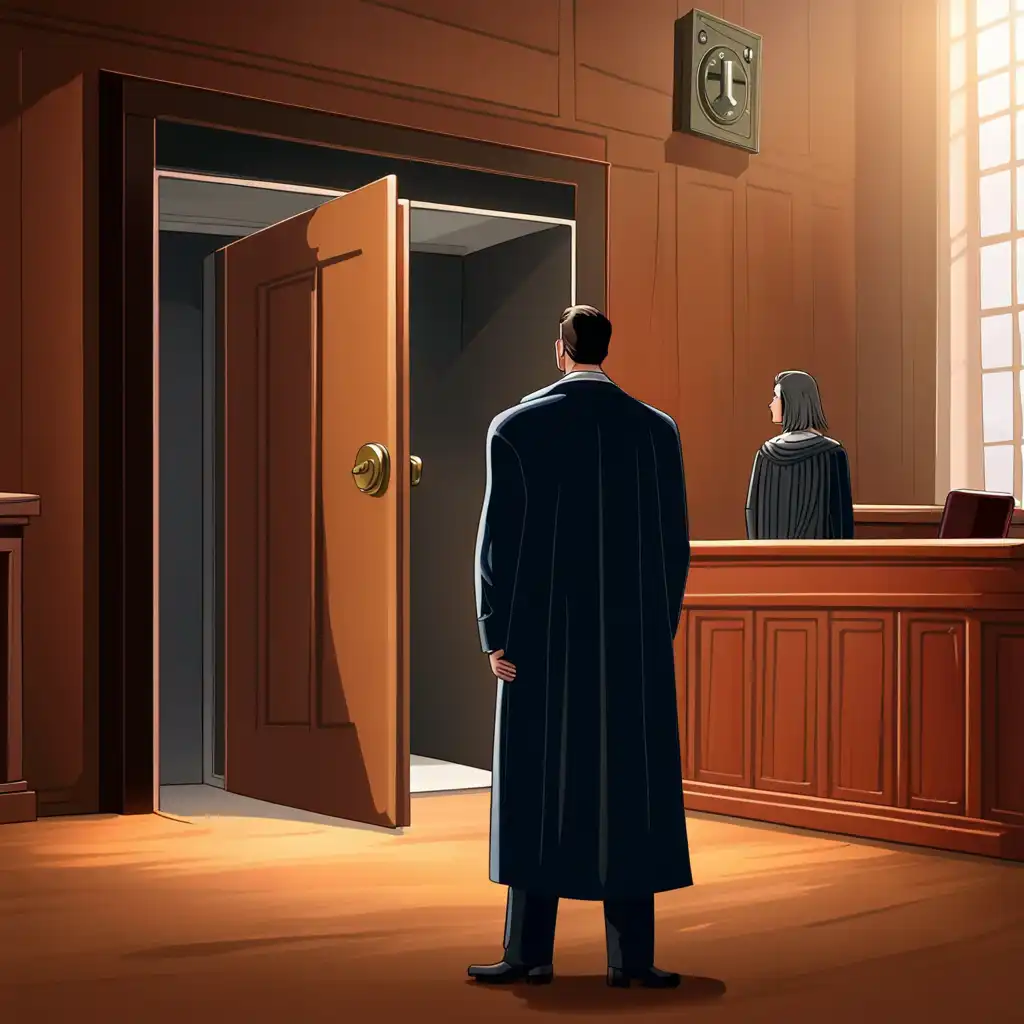
ˌækjuˈzeɪʃn
A statement saying that someone is guilty of a crime or of doing something wrong
The accusations of theft were proven to be false.
音声を読み込めませんでした。しばらくしてからもう一度お試しください。
Accusation is a word that describes the act of blaming someone for something that they have done wrong. It is used when someone thinks or believes that another person has done something bad or illegal, and they accuse them of it. For example, if someone says "I accuse you of stealing my wallet," they are making an accusation against the person they believe took their wallet. Accusation is usually used in serious situations, and it is important to have evidence to support the accusation before making it.
An allegation is a statement or claim about something that is not yet proven. It is an assertion or accusation made without proof or evidence.
Allegations can be made by anyone, regardless of whether or not they have the authority to do so.
An accusation is a formal charge of wrongdoing, while an allegation is a claim that may or may not be true. Accusations have legal weight, while allegations do not necessarily have evidence to back them up.
単語を開く: Allegation →Both words accusation and blame refer to holding someone accountable for something wrong or bad.
Blame: refers to identifying who is responsible for a negative outcome or mistake.
It can be formal or informal, and is often used in day-to-day conversation. For example, if a student fails a test, their teacher may blame their lack of preparation, while the student may blame the difficulty of the questions.
Blame, on the other hand, is often used to point out someone's mistake or responsibility in a less serious situation.
単語を開く: Blame →Censure refers to strong disapproval or criticism of someone's behavior or actions.
Accusation pertains to accusing someone of wrongdoing, while censure pertains to expressing strong disapproval or criticism of someone's actions.
単語を開く: Censure →Both accusation and charge refer to an allegation of wrongdoing, but they have different applications in law.
A charge is a formal accusation that is made by the government or another authority.
A charge means that the authorities have decided that there is enough evidence to bring a case against a person and that person has to defend themselves in a court of law.
For example, if the police charge your friend with theft, they are formally accusing them of committing a crime.
So, accusations are made by individuals, while charges are made by authorities. Accusations are informal and may or may not lead to legal action, while charges are formal and must be defended in court.
単語を開く: Charge →Accusation is a formal charge of wrongdoing, while denunciation is a public condemnation of someone or something.
Denunciation is a more informal way of expressing disapproval or condemning someone or something.
Denunciation is usually a public statement, meant to influence public opinion and bring attention to an issue.
Accusation involves formal charges and legal action, while denunciation involves public condemnation and raising awareness.
単語を開く: Denunciation →An accusation is a claim that someone has done something wrong or illegal, while to impeach is to formally charge a public official with wrongdoing, typically in a political context.
Impeachment is applicable in political contexts, particularly when an elected official is accused of serious wrongdoing, such as violating their oath of office.
Impeachment is a formal process that can lead to the official being removed from office if found guilty.
単語を開く: Impeach →An indictment is a formal accusation against someone by a grand jury, which indicates that there is sufficient evidence to move forward with a criminal trial.
An indictment is a more serious charge and can lead to legal consequences. For example, if someone is indicted for robbery, they can be arrested and prosecuted in court.
An accusation is just a claim or statement made by someone, whereas an indictment is an official charge brought by a grand jury.
Accusations can be made in everyday life, while an indictment is a legal action taken against someone who is suspected of committing a crime.
単語を開く: Indictment →A rebuke is a more formal and serious expression of disapproval or criticism. It involves presenting evidence or reason for why someone's actions were wrong or inappropriate.
A rebuke is often given in order to help someone learn from their mistakes or to prevent them from doing something again.
For example, "she rebuked him for his disrespectful behavior."
Overall, accusations are typically made without solid evidence and may be seen as more personal attacks, while rebukes are often supported by evidence and offered as constructive criticism.
単語を開く: Rebuke →or the world? That's where impeachment comes in. Impeachment isn't the same as actually removing someone from office. Like an indictment in criminal court, it's only the formal accusation that launches a trial,
YouTube で見る ↗Accusations fit on a bumper sticker; the truth takes longer.
I'm not saying that in all of you there's a secret sexist or racist or ageist lurking within waiting to get out. That's not what I'm saying. We all have our biases. They're the filters through which we see the world around us. I'm not accusing anyone, bias is not an accusation.
YouTube で見る ↗I suppose for whatever reason I actively welcome being put down, something which perhaps goes back to my upbringing - that accusation of not being worthy which could be laid at one's door.
their adult children are throwing away their lives and not using their talents in the way that they were pursuing before they became involved kibble oi and the kingdom appeared to be very open about these accusations and said they
YouTube で見る ↗Who wants to live a life full of fights, blackmails and accusations?
the last thing you would do is take those secrets and give them to journalists and ask journalists to publish them, because it makes those secrets worthless. People who want to enrich themselves do it secretly by selling secrets to the government, but I think there's one important point worth making, which is that accusation comes from people in the U.S. government,
YouTube で見る ↗The attempts to distort the truth and to hide the facts behind blanket accusations have been undertaken at all stages of the Ukrainian crisis.
These days I look at how women are treated the world over, and anger in particular seems like a perfectly reasonable response. But back then, I worried about the tone people used when suggesting I might be a feminist. The feminist label was an accusation,
YouTube で見る ↗I wish I had said 'some athletes here are competing unfairly.' It was my opinion, never an accusation.
but all the way to ethnic cleansing and genocide, and that has been adjudicated in the highest war crimes court in the world. So we know what we were seeing. Trying to tell the world what we were seeing brought us accusations of bias,
YouTube で見る ↗Guilt has very quick ears to an accusation.
hope and courage in every corner of the world unconscious bias is not the same as conscious discrimination I'm not saying that in all of you there's a secret sexist or racist or urges like lurking within waiting to get out bias is not an accusation rather it's something that
YouTube で見る ↗I fear no accusations.
Yet alleged witches usually women children and elderly persons are still routinely attacked banished and killed. And I've made it part of my life's mission to end witchcraft accusation and witch persecution in Africa.
YouTube で見る ↗I don't take accusations of selling out lightly.
Well this is bad cop. Juveniles are more suggestible and susceptible to social influence, like the intense pressure accusations and suggestions coming from authority figures in interrogations. More than 70 percent of the teens in our study said
YouTube で見る ↗Accusations are useless.
for our shared but increasingly endangered democratic values? After all the absence of a duty of care within many professions can all too easily amount to accusations of negligence, and that being the case can we be really comfortable with the thought that we're in effect being negligent in respect of the health of our own societies
YouTube で見る ↗People love as self-recognition what they hate as an accusation.