billabong
noun billabong
ˈbɪləbɔːŋ
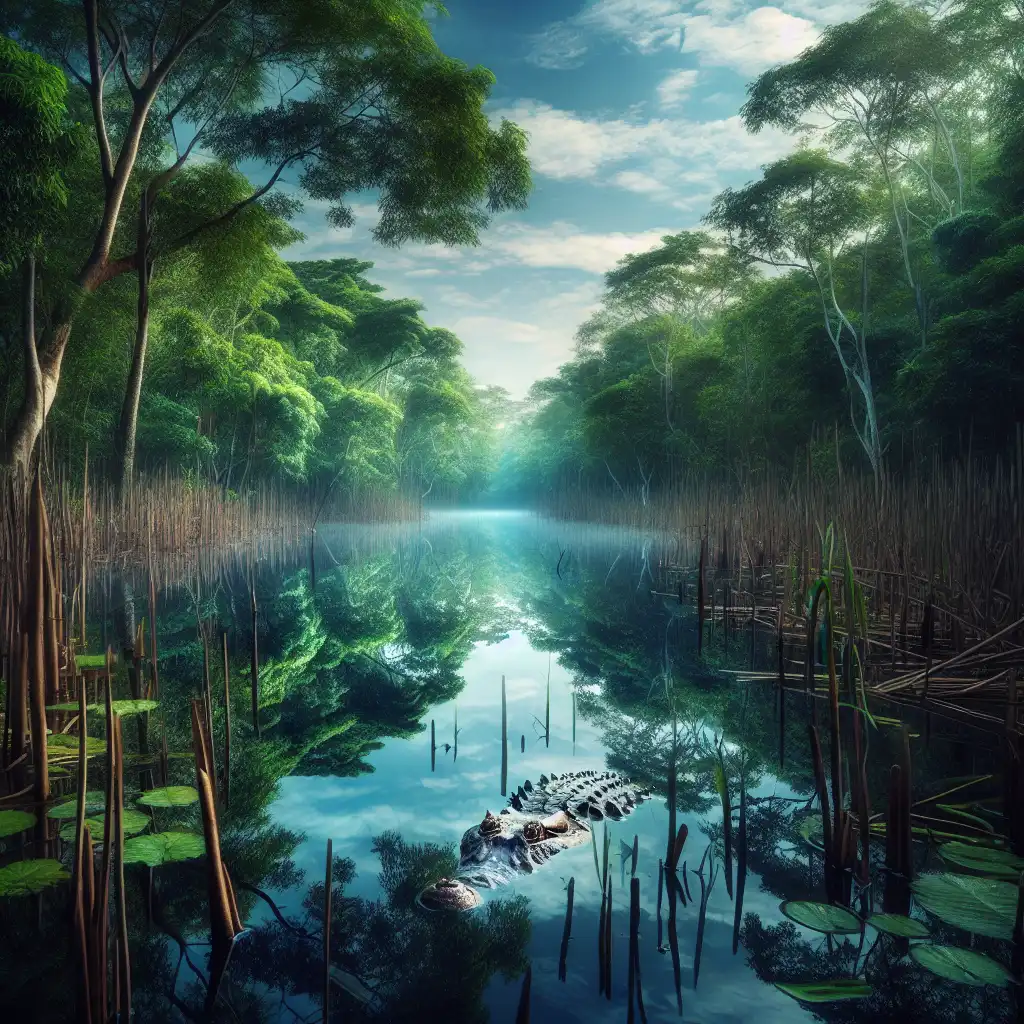
A branch of a river forming a backwater or stagnant pool, made by water flowing from the main stream during a flood.
The crocodile was lurking in the billabong waiting for its prey.
billabong
ˈbɪləbɔːŋ
Đang tải…
ˈbɪləbɔːŋ
A branch of a river forming a backwater or stagnant pool, made by water flowing from the main stream during a flood.
The crocodile was lurking in the billabong waiting for its prey.

ˈbɪləbɔːŋ
A brand of clothing and accessories popular among sports enthusiasts, especially surfers
He's wearing a Billabong t-shirt and shorts today.
Không tải được âm thanh. Vui lòng thử lại sau.
"Billabong" is a word used in Australia to describe a small body of water that forms when a river or stream changes course. It's usually isolated from the main water source and can sometimes dry up during the hot season. You might come across this word in books, movies or conversations about Australia.
Backwater and billabong are both words used to describe bodies of water, but they have different meanings and are used in different contexts.
A backwater refers to a part of a river or stream where the water is slower moving or stagnant, often found behind obstructions like dams or sandbars.
A backwater is a slow-moving or stagnant part of a river/stream, while a billabong is a branch of a river or a stagnant pool that forms after floods in Australia.
Mở từ: Backwater →An estuary is a partially enclosed coastal body of water where freshwater from a river meets and mixes with saltwater from the ocean.
Estuaries are typically found at the mouths of rivers and can be found on coasts all around the world.
A billabong is a small stagnant pool that forms when a river changes course, while an estuary is a larger coastal body of water where a river meets the sea.
Mở từ: Estuary →A lagoon is a shallow body of water that is separated from the sea by a narrow strip of land. It is found in coastal areas and is usually permanent, meaning it retains water all year round.
The main difference between billabongs and lagoons is their location and permanence. Billabongs are seasonal and found inland, while lagoons are permanent and found in coastal areas.
Mở từ: Lagoon →A pond is a body of water that is created artificially or naturally by a variety of factors, such as rainwater or glacial melt.
Ponds can be found in any part of the world, including urban, suburban and rural areas. The main difference between a billabong and a pond is that a billabong is formed naturally due to a change in the course of a river, while a pond is created through various means.
Mở từ: Pond →A pool is a small or large artificial body of water that is typically found in residential or recreational areas, such as in a backyard or at a swimming pool facility.
A billabong is a naturally occurring body of water formed off a river or creek, while a pool is an artificial body of water created for recreational purposes.
Mở từ: Pool →A reservoir is a large artificial lake that is created by building a dam to hold water for various purposes, like drinking water or hydroelectricity.
Reservoirs are man-made and are usually located in populated areas. They are used to store water for various purposes like drinking, irrigation, and generating electricity.
The main difference between the two is that billabongs are small in size, naturally occurring, and mostly used for recreation, while reservoirs are larger in size, man-made, and serve a specific purpose.
Mở từ: Reservoir →A slough is a stagnant or slow-moving watercourse or swamp, usually with muddy or slimy or muddy bottoms.
Sloughs can be found in various places around the world, from wetlands to swamps to marshes, and they are typically considered to be less desirable.
A slough is a muddy or swampy watercourse that can be found in various wetland areas around the world.
Mở từ: Slough →Walking Alone in the...
Xem trên YouTube ↗