No se pudo cargar el audio. Inténtalo de nuevo más tarde.
Cómo se usa
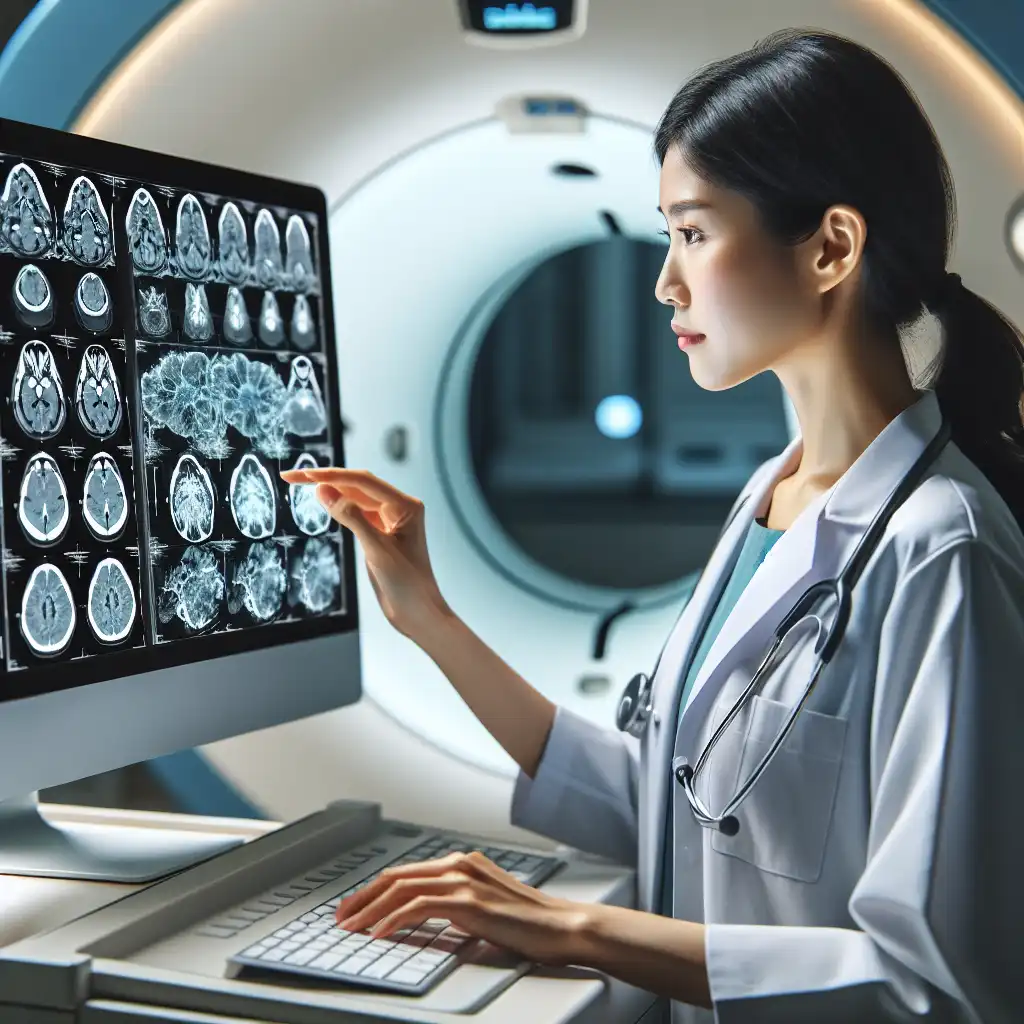
Imaging refers to the creation of an image or picture in your mind, or the use of technology to create visual representations of objects or ideas. In medical contexts, imaging usually refers to the use of technology like X-rays or CT scans to see inside the human body. It can also refer to the use of cameras to create images, like in photography or videography. Overall, imaging is a way to visually represent something, whether that be an idea, a piece of art, or the inside of a body.
Conception refers to the formation or creation of an idea or a plan in your mind. It is when you imagine something in your head and come up with a concept.
Conception is applicable when you are coming up with an idea or plan, while imaging is applicable when you want to create a visual representation of something.
Dream is used to refer to a series of thoughts, images, and sensations that occur in a person's mind while they are sleeping.
Dreams can be vivid and realistic or strange and surreal.
To sum up, dreaming refers to an unconscious experience during sleep, while imaging is a conscious process of creating mental images, often for specific purposes.
Envision means to form a mental picture or to imagine something that may happen or exist in the future. It is applicable when you are thinking about or imagining possibilities or outcomes.
Envision is used when imagining possibilities, and imaging is used when creating visual representations of things that actually exist.
Both fantasize and 'imagine' involve thinking about something that is not real or present in front of us. The main difference between the words is that fantasize usually refers to thinking about something unrealistic or impossible, while 'imagine' can refer to thinking about something that could potentially exist in reality.
For example, you might imagine what it would be like to live on Mars, but you wouldn't fantasize about having superpowers because that is impossible.
Fantasize is also sometimes used to describe sexual or romantic thoughts, while 'imagine' is more general and can be applied to any type of thought or idea.
Fantasize is more restricted to unrealistic or impossible thoughts, while 'imagine' is broader and can include both realistic and unrealistic thoughts.
Imagine means to form a mental image or picture in your mind.
For example, if someone asks you to imagine a beach, you will try to create a mental picture of a beach in your mind.
Imagine is a verb used to describe creating a mental image in one's mind, while imaging is a noun used to describe the process of creating a visual image or representation.
Visualization is the process of creating a mental image or picture in your mind, or creating a physical representation of data or information to make it easier to understand or analyze.
Both imaging and visualization are useful in different contexts. Imaging is important in the medical field to diagnose and treat illnesses, while visualization is beneficial in fields such as science, engineering, and business for analyzing data and presenting information in a clear way.
who learn a secondary language by filtering it through their primary language. Because all types of bilingual people can become fully proficient in a language regardless of accent or pronunciation, the difference may not be apparent to a casual observer. But recent advances in brain imaging technology
The most important thing in imaging for me is the dynamic range. The dynamic range means the tones that you can capture from highlights to dark and the bits, the depth of color that you can capture.
Now we found sodium and magnesium. What this tells you is this is the concentration of these two materials at the time the solar system was formed, so we learned things about which materials were there when the planet was made. Of course one of the important elements is the imaging.
Some people say they use images to help them remember intricacies. Others say they just remember. If they are able to form an image of the face, it is because they remember how it was: it is not that an image guides memory, but that memory produces an image, or the sense of imaging. We have no agreed way to talk clearly about such things.
really think all we are is a bunch of tissue it shouldn't matter I always during her life wanted to improve our cutting improve our imaging now I've got to do what I
it completely up to the external world the answer is no we've shown that how you remember time is modulated by your internal world your own interpretation of the events that are unfolding so we've done these same kinds of tasks using brain imaging and what we can do
Modern medicine uses imaging 'windows' such as magnetic resonance imaging scanners to bring into view otherwise unseen vital information that skilled physicians can use for the benefit of their patients.
thanks to the brain's continuous efforts to prune itself and remove unused or faulty neural connections. This process is important because our neural pathways serve as a map for everything we do. Using functional magnetic resonance imaging,
When someone takes their existing business and tries to transform it into something else - they fail. In technology that is often the case. Look at Kodak: it was the dominant imaging company in the world. They did fabulously during the great depression, but then wiped out the shareholders because of technological change.
These neurons are important for learning and self-awareness. For example watching someone do something physical, like knitting or putting on lipstick, can help you do those same actions more accurately. Neuroimaging studies using fMRI functional magnetic resonance imaging,
The same stimuli in the world can be inducing very different experiences internally and it's probably based on a single change in a gene. What I am doing is pulling the gene forward and imaging and doing behavioural tests to understand what that difference is and how reality can be constructed so differently.
Unfortunately such emotion-related facial blood flow changes are too subtle to detect by our naked eye. So to help us reveal people's facial emotions, we have developed a new imaging technology we call "transdermal optical imaging."
and we get to observe different parts of the image. The imaging algorithms we develop fill in the missing gaps of the disco ball in order to reconstruct the underlying black hole image. If we had telescopes located everywhere on the globe -- in other words the entire disco ball -- this would be trivial.
and see the world not at a million or a billion, but one trillion frames per second. I present to you a new type of photography, femto-photography, a new imaging technique so fast
in magmastatic pressure very difficult. But volcanologists are constantly exploring new technology to conquer this rocky terrain. Advances in thermal imaging have allowed scientists to detect subterranean hotspots. Spectrometers can analyze gases escaping magma.
When I first was putting out music, I was like, 'I don't want to be overly sexy or do too much with the imaging or show too much skin, and I want to make sure my lyrics are balanced.