yak
noun yak
jæk
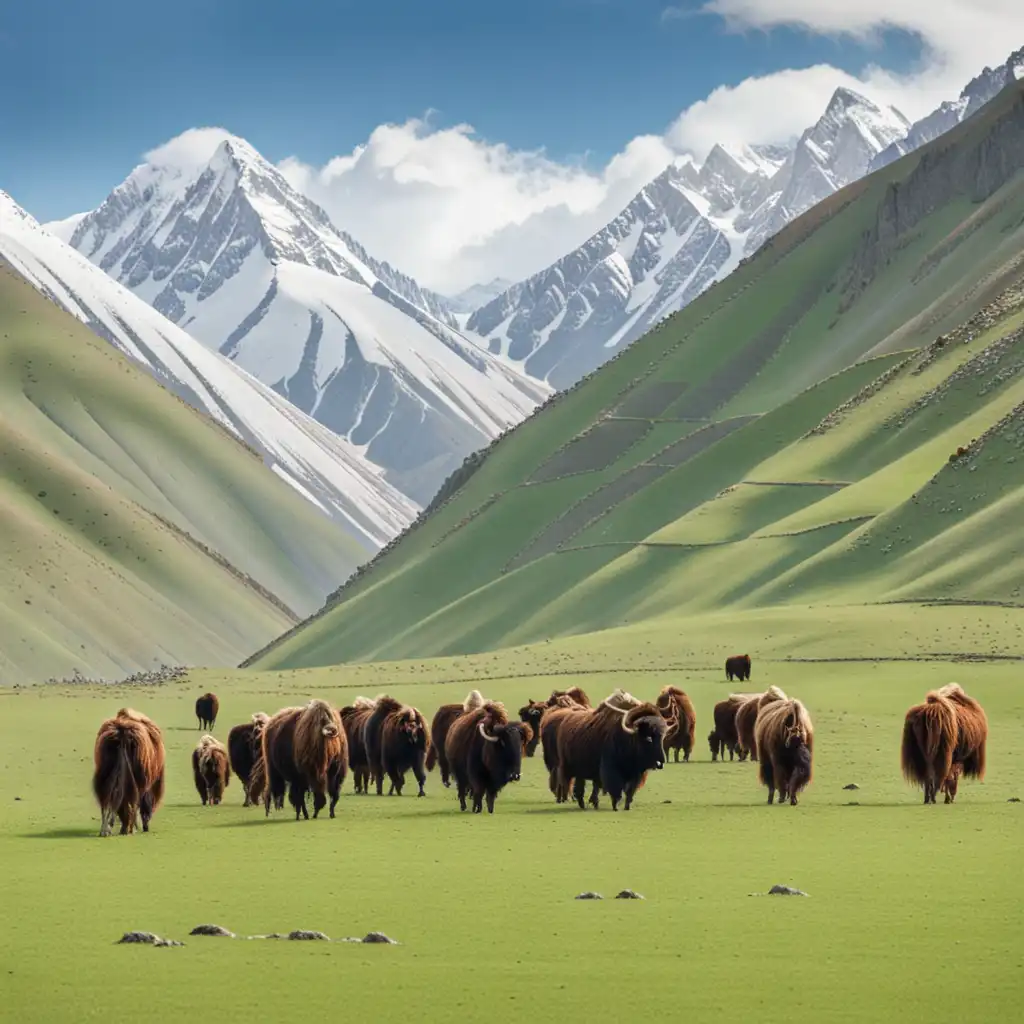
A type of mammal, similar to a cow, but with long hair. They live in the mountains in central Asia.
They saw a herd of yak in the vast green pastures of Tibet.
yak
jæk
Loading…
jæk
A type of mammal, similar to a cow, but with long hair. They live in the mountains in central Asia.
They saw a herd of yak in the vast green pastures of Tibet.

jæk
To talk continuously or unnecessarily for a long time, often about trivial or boring things.
I met Bob at the cafe and he just yakked on about his hobbies for hours.
Audio could not be loaded. Please try again later.
The word 'yak' can refer to a type of large furry animal that is similar to a cow and found mainly in Tibet and Central Asia. It is also used informally to mean talking continuously about unimportant things or gossiping. For example, "She would not stop yakking about her new dress." or "The yaks grazed peacefully in the meadow."
Beast is a general term used to describe any type of animal, typically one that is wild and fierce. The term can be used to refer to a wide range of animals, including tigers, lions, wolves, and bears.
Beast is a general term for any type of animal, while yak specifically refers to a domesticated animal from Central Asia.
Open word: Beast →Bison and Yak are both large mammals, but bison are found in North America while yaks are found in Asia. Bison are commonly called buffalo, and they have a shaggy and dark brown coat.
Bison were once abundant in North America but were hunted almost to extinction. They are now protected and can be found in national parks and private ranches.
Bison meat is often used for food, and their hides are used for leather.
In conclusion, bison are native to North America and are mainly used for food and leather, while yaks are from Asia, are domesticated, and are primarily used for milk, meat, and wool.
Open word: Bison →Bovine refers to cattle, which includes cows, bulls, and oxen, that are commonly found on farms and used for milk and meat production.
Bovine refers to domesticated cattle whereas yak is a wild or domesticated species of animal found in mountainous regions.
Open word: Bovine →Buffalo and yak are two different species of animals. Buffalo are native to Africa and Asia, while yaks are native to Central Asia.
Buffalo have short, curved horns and a large, muscular build.
On the other hand, yaks have long, straight horns and a sturdy, shaggy coat. Yaks are often used for their milk, meat, and wool, while buffalo are used for meat and as work animals.
Buffalo are more commonly seen in Africa and South Asia, while yaks are more common in colder, mountainous regions like Tibet and Mongolia.
Open word: Buffalo →The main difference between a cow and a yak is that cows are found all over the world while yaks are primarily found in Asia, especially in the Himalayan region.
Additionally, yaks have a shaggy coat to keep them warm in cold mountain environments and are often used as pack animals, while cows have a smoother coat and are typically used for dairy and meat production.
Open word: Cow →Creature refers to any living being, whether it is an animal or a human being. It is a general term that can describe any living thing.
So while creature can refer to any living thing, yak specifically refers to a type of animal.
Open word: Creature →Mammal is a broad term that refers to a type of animal that has hair or fur, gives birth to live young, and produces milk to feed their offspring.
Yak, on the other hand, is a specific type of mammal that is native to the Himalayan region of Asia. Yaks are known for their shaggy coats, large horns, and ability to live in high-altitude, cold environments.
Mammal is a general term that describes a wide variety of animals, while yak is a specific type of mammal found in a particular region of the world with unique characteristics and uses.
Open word: Mammal →Ox and yak are both types of animals, but they are different in a few key ways:
1. Physical Characteristics: Oxen are usually larger and stronger than yaks. They have longer legs, wider hooves, and a wider body. Yaks have a shaggy coat and curved horns.
2. Geographical Location: Oxen are more commonly found in Europe and Africa, while yaks are more commonly found in Asia (particularly in high-altitude areas like the Himalayan mountains).
3. Uses: Oxen have been domesticated for thousands of years and are often used for plowing fields and pulling carts. Yaks are typically used for milk, meat, and transportation in some regions.
In summary, oxen and yaks are both strong, powerful animals, but they come from different parts of the world and have different physical characteristics and uses.
Open word: Ox →and even cats, males can also lactate. Milk drinkers worldwide consume dairy from buffalo, goats, sheeps, camels, yaks, horses, and cows. Almost all of these species are ruminants,
Watch on YouTube ↗The rush of a herd of bellowing yaks at a wild gallop, waving their huge tails, is a grand sight.
where people grow potatoes herd yaks. There aren't a lot of other options for making an income besides the mountain. Running a tea-house running a lodge those are kind of the dreams. A lot of people save up their money to start up a tea-house so they won't have to keep working in the mountains. Life is really quiet and slow in these places.
Watch on YouTube ↗In the past, I have approximated the look of monkey fur and yak hair with human hair because it's inexpensive, and it lasts a long time.
But he gave me a cup of tea. And I understood that his surprise was my protection. So I have been walking and traveling, by horses by yak by truck by hitchhiking, from Iran's border
Watch on YouTube ↗Mild autism can give you a genius like Einstein. If you have severe autism, you could remain nonverbal. You don't want people to be on the severe end of the spectrum. But if you got rid of all the autism genetics, you wouldn't have science or art. All you would have is a bunch of social 'yak yaks.
somebody figured out how to cross a yak with a cow and get an animal called the zopi oh which looks you know kind of like a yak and kind of like Cal but it can carry much more weight it has a much better disposition and most importantly
Watch on YouTube ↗Most languages spoken by a few thousand people are so complicated they make your head swim; a Siberian yak herder's language is much more complicated than a Manhattan bond trader's.
landscapes and so that helps us understand better the organisms that we're studying in the context of the landscape in terms of the ability to respond to climatic changes different species have different capacities for response to use a local example purebred yaks can
Watch on YouTube ↗I want to figure out a way to not be stupid with money, then make a whole bunch of it, then I want to move to Outer Mongolia. I want to milk a yak. Maybe I'll just settle for a cow.
pretty much forever they've tinted yaks goats sheep and other livestock every now and then a snow leopard would kill one and that was a major blow because those animals are key to the family's survival so when snowbirds killed livestock people responded by hunting
Watch on YouTube ↗I fed my yak on my spare Cadbury chocolate 21,0000ft up Everest. It was a blonde, very sweet female yak. I made it my pet after that.
and it could be a lifesaver this climb will expose me to an invisible killer altitude sickness the yaks are built for this mountain air their blood can hold three times more oxygen than regular
Watch on YouTube ↗I want to figure out a way to not be stupid with money, then make a whole bunch of it, then I want to move to Outer Mongolia. I want to milk a yak. Maybe I'll just settle for a cow. Can you milk a bison?
by the oxygen that the oceans provide. Census scientists worked in the rain they worked in the cold, they worked under water and they worked above water trying to illuminate the wondrous discovery, the still vast unknown, the spectacular adaptations that we see in ocean life. So whether you're a yak herder living in the mountains of Chile,
Watch on YouTube ↗My first yak was fairly quiet and looked a noble steed with my Mexican saddle and gay blanket among rather than upon his thick black locks. His back seemed as broad as that of an elephant, and with his slow, sure, resolute step, he was like a mountain in motion.
giving way to a wide variety of new harder cheeses. And though some conservative food cultures rejected the dairy delicacy, many more embraced cheese and quickly added their own local flavors. Nomadic Mongolians used yaks’ milk to create hard sundried wedges of Byaslag.
Watch on YouTube ↗ice axe to give a sense of scale to find any footprints at such high altitude was simply inexplicable so high above the treeline and so high above any human habitation they didn't look like the footprints of a man a bear or a yak the
Watch on YouTube ↗