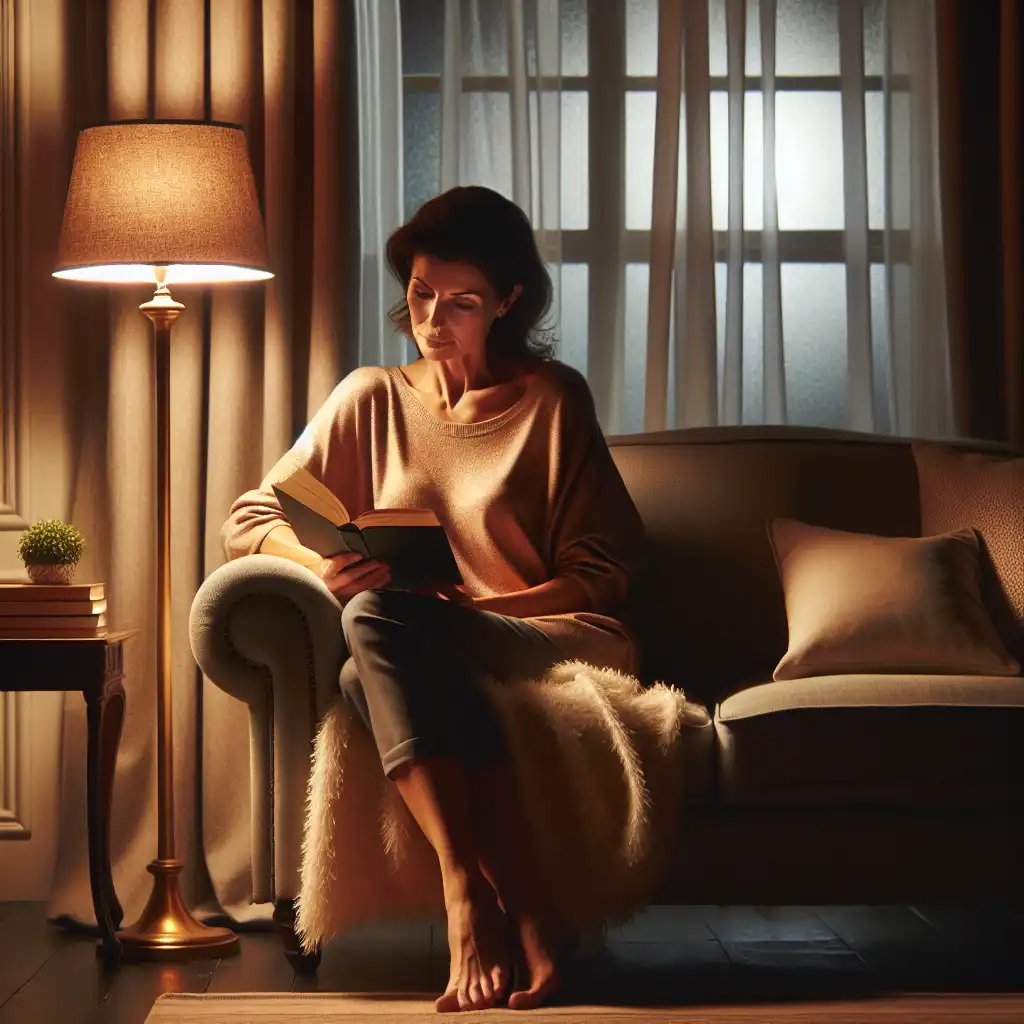
introversion
noun introversion
ˌɪntrəˈvɜːrʒn
The state of being focused on one's inner thoughts and feelings rather than outside things.
Her introversion made her prefer quiet nights at home to partying with friends.
introversion
ˌɪntrəˈvɜːrʒn
불러오는 중…
ˌɪntrəˈvɜːrʒn
The state of being focused on one's inner thoughts and feelings rather than outside things.
Her introversion made her prefer quiet nights at home to partying with friends.

ˌɪntrəˈvɜːrʒn
In psychology, a personality trait characterized by a focus on internal feelings rather than on external sources of stimulation.
Studies suggest that introversion is a factor in mental health and emotional well-being.
오디오를 불러오지 못했어요. 잠시 후 다시 시도해 주세요.
Introversion refers to a personality trait where a person tends to be quieter, more reserved, and prefers spending time alone rather than being in large groups or socializing with many people. It is important to use this word in the context of personality traits, and understanding that it is a natural way of being for some people, and not something that needs to be changed or fixed. It is also important to use the word respectfully and without judgment, as introverts can be just as successful and fulfilled in life as extroverts.
Inward refers to the direction towards the inside or the interior of something. It is applicable to describe something that is turning or moving towards the inside or the center of something.
For example, a flower blossoming inwards means that the petals are folding towards the center of the flower rather than outward.
Introversion relates to a person's personality while inward relates to a direction or movement towards the inside of something.
단어 열기: Inward →Quietude refers to a state of peacefulness or stillness, usually associated with a quiet environment. It is applicable when describing a peaceful or tranquil atmosphere, such as a serene nature setting or a quiet library.
In summary, introspection refers to a personality trait, while quietude refers to a peaceful environment.
단어 열기: Quietude →Reserve refers to the act of holding back or keeping something in reserve.
단어 열기: Reserve →Reticence refers to a person's reluctance or hesitation to speak or communicate their thoughts and feelings.
Both introversion and reticence describe characteristics of a person's personality, but they have different applications.
Introversion refers to one's social behavior and preferences and how they interact with others, while reticence refers to how one communicates and expresses themselves with others.
단어 열기: Reticence →Introversion and shyness are two different things.
On the other hand, shyness is a feeling of discomfort or nervousness in social situations. People who are shy may avoid social situations or feel nervous and uncomfortable in them.
They may fear being judged or rejected by others. Shyness can be overcome with practice and exposure to new social situations.
Both introversion and shyness are normal human traits, and neither is better or worse than the other.
단어 열기: Shy →Solitude refers to the state of being alone or isolated from others, either by choice or circumstance.
Introversion and solitude are related in that introverted people may seek out solitude to recharge or find peace, but they are not the same thing.
Introversion is a personality trait that affects how a person interacts with the world around them, while solitude is a state of being physically alone.
단어 열기: Solitude →Timidity refers to a person's fear or shyness in social situations.
Introversion is applicable when describing someone who is more reserved or introspective by nature, whereas timidity is applicable when describing someone's tendency to become nervous or shy in social situations.
단어 열기: Timidity →Withdrawal is often associated with symptoms of depression, anxiety or trauma, where a person pulls away from social interactions and activities they usually enjoy.
Introversion is a preference for alone time while withdrawal is a symptom of emotional distress. Introversion is applicable in understanding someone's personality, while withdrawal indicates that someone may need support and help to manage their mental health.
단어 열기: Withdrawal →The power of introverts...
YouTube에서 보기 ↗A widely held, but rarely articulated, belief in our society is that the ideal self is bold, alpha, gregarious. Introversion is viewed somewhere between disappointment and pathology.
The power of introverts...
YouTube에서 보기 ↗Often confused with shyness, introversion does not imply social reticence or discomfort. Rather than being averse to social engagement, introverts become overwhelmed by too much of it, which explains why the introvert is ready to leave a party after an hour and the extravert gains steam as the night goes on.
Blueprint for a quiet...
YouTube에서 보기 ↗While there are relatively few extreme introverts or extroverts, most of us lean in one direction or the other. If we lean more toward introversion, we'll generally prefer less social activity than more extroverted people. One inclination is not 'better' than another, but our culture can make it seem as if extroverts have a social advantage.
I'm an introvert, but I disguise my introversion by being an extrovert. If I don't have to be around people, I'm not. If I'm around people, I'm gonna do my thing. But I'm not really with the fake kickin' it - everything's organic, everything's natural.
I'm caught somewhere between introversion and extroversion. Performance is natural to me, joyful, but it is also exhausting. I can feed on it, but the expense is high, too, like being a carnivore: I have to chase down my meals.
Writing is a tribute to solitude. It is choosing introversion over extroversion, lonely hours/days/weeks/years over fun and sociability.
All personality traits have their good side and their bad side. But for a long time, we've seen introversion only through its negative side and extroversion mostly through its positive side.
When it comes to our relationship with loneliness, specifically, it's important to understand how our relative introversion or extroversion informs our preference for social interaction.
Originally, technology was pretty clearly on the side of introversion. It allowed introverts to connect with people, to express their ideas in a less stimulating way: you're sitting alone behind a computer. But I'm starting to think that the pressure to self-present constantly online is becoming so extreme.
The bias against introversion leads to a colossal waste of talent, energy, and happiness.