
ducat
noun ducat
ˈdʌkət
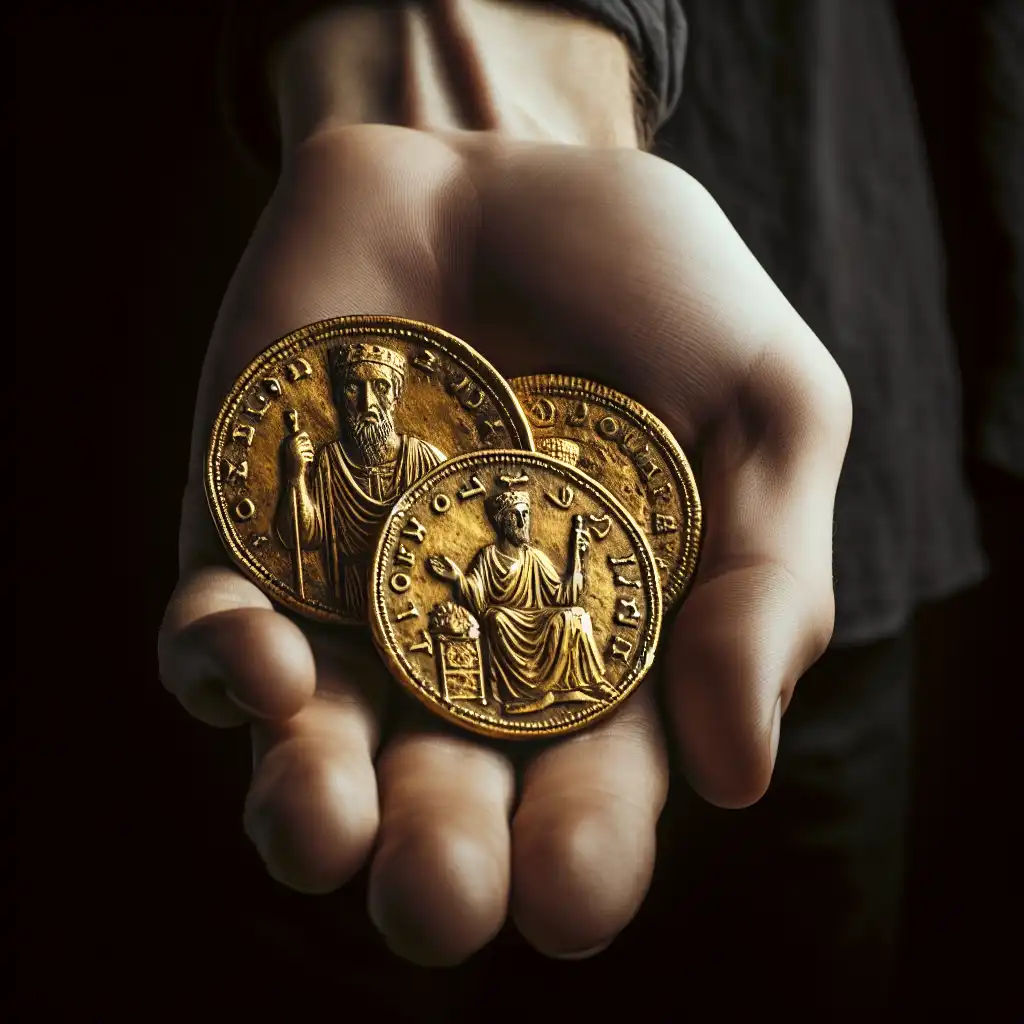
A coin used in the past in various European countries.
They gave him fifty ducats for his work.
ducat
ˈdʌkət
Chargement…
ˈdʌkət
A coin used in the past in various European countries.
They gave him fifty ducats for his work.
ˈdʌkət
A unit of currency used in various countries, now mostly obsolete.
It costs three ducats.
Impossible de charger l’audio. Réessayez plus tard.
The word 'ducat' is an old-fashioned word that was used to refer to a type of gold coin. It is not commonly used in modern English, except in historical or literary contexts. If you come across this word in a book or movie set in the past, it means a piece of money that was worth a specific amount of gold. It's not a word that you need to use in everyday conversation, but it's good to know what it means if you encounter it in your reading or studies.
Coin is a general term for any small, flat, round piece of metal that is used as currency. This includes pennies, nickels, dimes, and quarters in the United States.
Coin can also refer to currency from other countries, like Euros, British pounds, or Japanese yen.
Ducat is a specific type of coin that was used in Europe during the Middle Ages and Renaissance periods. It was first issued in the 13th century in the Republic of Venice and was made of gold.
Today, the word ducat is mostly used to refer to a historic or commemorative gold coin rather than as everyday currency.
A coin is a general term used for currency worldwide, while ducat is a specific historic gold coin used in Europe.
Ouvrir le mot: Coin →Doubloon and ducat are both types of gold coins, but they come from different parts of the world and have different histories.
A doubloon is a gold coin that was originally used in Spain and Spanish colonies in the Americas, like Mexico and Peru.
It was first minted in the 16th century, and it had a distinctive design featuring two pillars and a coat of arms. Doubloons were a popular form of currency for pirates and treasure hunters in the 17th and 18th centuries.
Today, both doubloons and ducats are mostly considered historical artifacts rather than actual currency.
Ouvrir le mot: Doubloon →Both ducat and florin are gold coins that were used in Europe during the Middle Ages and the Renaissance. The difference between the two is that the ducat was used in Italy, while the florin was used in other parts of Europe, particularly in the Netherlands.
The florin was first minted in Florence in the 13th century and was used in other parts of Europe, particularly in the Netherlands.
It was also made of gold and was valued at about 3.5 grams. The florin was used in Europe as a way to pay for goods and services, and it was also used as a trade currency.
In summary, both ducat and florin were gold coins used in Europe during the Middle Ages and Renaissance, but they were used in different regions.
Ducat was used in Italy, while the florin was used in other parts of Europe, particularly in the Netherlands.
Ouvrir le mot: Florin →Ducat and sovereign are both types of gold coins, but they come from different countries and have different values.
A sovereign is a gold coin that was first minted in England in the 16th century. It was primarily used as a type of commemorative coin and was not used for everyday transactions.
A sovereign typically weighs about 7.98 grams and is made of 22 karat gold. It was often given as a gift to important people, such as monarchs or other influential figures.
A ducat was a type of gold currency used in Europe during the Renaissance while a sovereign was a commemorative gold coin primarily used in England.
Ouvrir le mot: Sovereign →