iconography
noun iconography
ˌaɪkəˈnɑːɡrəfi
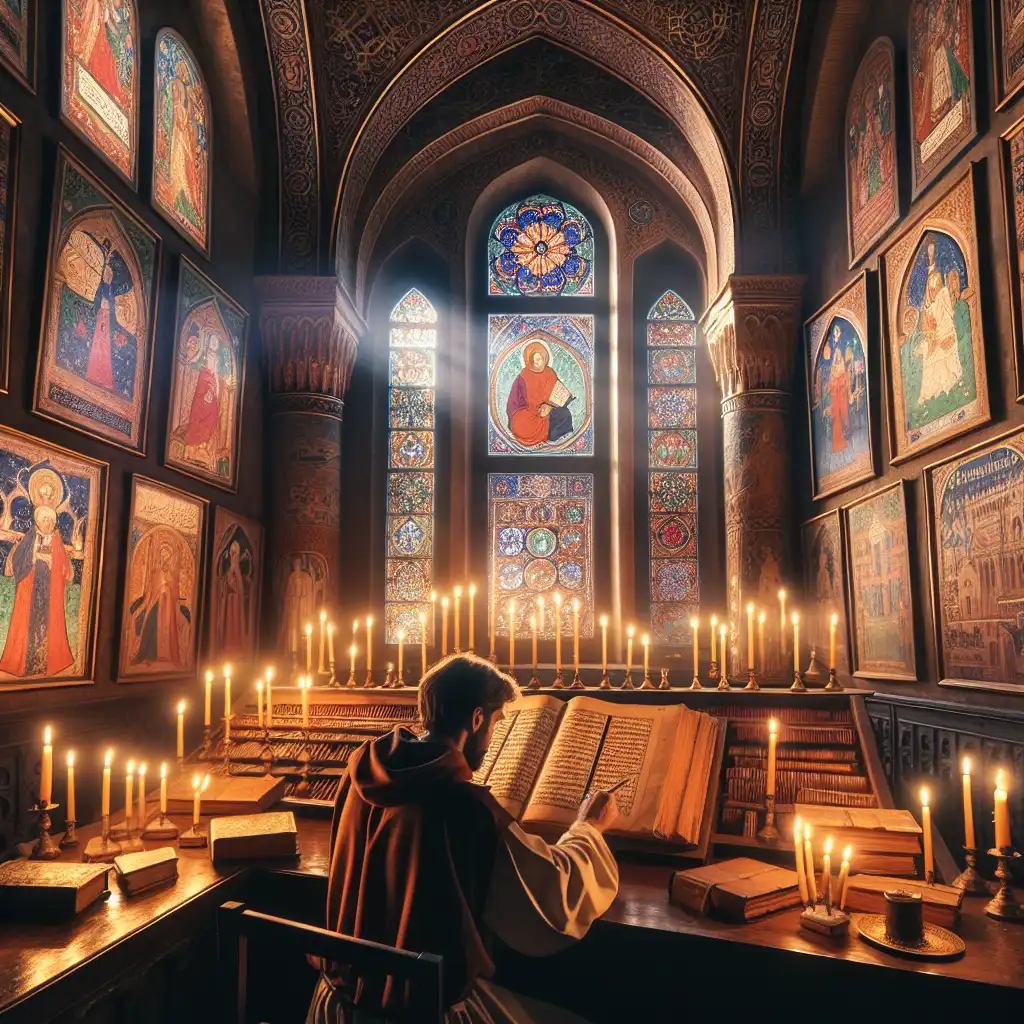
The study of images, symbols, and artworks
Her field of expertise is medieval iconography.
iconography
ˌaɪkəˈnɑːɡrəfi
불러오는 중…
ˌaɪkəˈnɑːɡrəfi
The study of images, symbols, and artworks
Her field of expertise is medieval iconography.

ˌaɪkəˈnɑːɡrəfi
The visual images or symbols used in a work of art or the study of these
The iconography of his paintings is steeped in allegorical reference.
ˌaɪkəˈnɑːɡrəfi
The use of images and symbols to represent things
The iconography of their work operates on several levels.
오디오를 불러오지 못했어요. 잠시 후 다시 시도해 주세요.
Iconography refers to the study or use of symbols, images, and objects that represent a specific idea, culture, or religion. It is commonly used in art and design, as well as in the study of history and culture. For example, the iconography of Christianity includes symbols like the cross, the Bible, and images of saints. In modern times, iconography can also refer to the use of emojis and other digital images as symbols to convey meaning and emotions in text communications.
Allegory and iconography are two different ways of representing ideas or stories visually.
Allegory is a story or image that has a hidden meaning or message.
Allegory is a story or image with a hidden meaning, while iconography uses symbols to represent ideas or concepts.
Allegory is used more in literature, while iconography is more common in art and religious texts.
단어 열기: Allegory →Iconology is the study of the historical and cultural context behind those images. It focuses on the cultural significance and meaning of the images and symbols and their relation to the broader context of historical and cultural trends.
To simplify it, iconography is about analyzing the images themselves while iconology is about understanding the cultural and historical context behind them.
단어 열기: Iconology →Imagery refers to any kind of visual representation or mental picture, such as photographs or paintings.
It can describe the way something appears or the way it is portrayed in the media, such as the imagery used in a movie or a book cover.
Iconography focuses on the meaning and symbolism behind specific images, while imagery refers to any kind of visual representation.
Iconography is more applicable in analyzing historical or religious art, while imagery is more commonly used in everyday language to describe visual representations in media and culture.
단어 열기: Imagery →Iconography refers to the symbols and images used in art and religion to convey certain meanings or ideas. For example, a painting of an angel in Christian art can be seen as a representation of purity or divinity.
Representation refers to the act of depicting or portraying something, often in a realistic or accurate manner. For example, a photograph of a person is a representation of their physical appearance.
Representation is applicable in various fields such as politics, media, and art.
Iconography deals with the symbolic meaning behind images while representation deals with the depiction or portrayal of something.
Iconography is used in art history and religious studies, while representation is used in various fields such as politics, media, and art.
단어 열기: Representation →Semiotics is defined as the study of signs and symbols and their interpretation. Semiotics is concerned with the meaning behind how things are represented, such as words or phrases, images, or music, and how they are understood by different cultures and individuals.
In simpler terms, iconography deals with the meanings of specific images and symbols, while semiotics looks at broader concepts of signs and their meaning in various contexts.
Iconography is mainly used in the field of art history, while semiotics is used in a wide range of fields, including communication, linguistics, and cultural studies.
단어 열기: Semiotics →Symbolism refers to the use of symbols to represent ideas or qualities beyond their literal meaning. Symbols can be words, images, objects, or gestures that have a deeper significance than their surface appearance.
Symbolism is often used in literature, poetry, and music to convey ideas or feelings in a more indirect way.
Iconography focuses on recognizable images or symbols, while symbolism is the use of symbols to convey deeper meaning. Iconography is applicable in art and cultural studies, while symbolism is more commonly used in literature, music, and poetry.
단어 열기: Symbolism →The history of tattoos -...
YouTube에서 보기 ↗Between the theme parks and the movies, the Disney iconography was probably the first set of archetypes that I was exposed to. Walt was able to expose me as a child to the full array of emotions, including fear and sorrow. Those movies and attractions haunted my dreams and made a deep impression on me as a child.
Scott McCloud:...
YouTube에서 보기 ↗People have a very proprietary relationship with Superman. It's important to respect the iconography and the canon, but at the same time, you have to tell a story. Once you land on who you think the character is and what his conflicts are, you have to let that lead you.
The urgent need for...
YouTube에서 보기 ↗If geography is prose, maps are iconography.
For the Love of Jaguars...
YouTube에서 보기 ↗The Grateful Dead always had their iconography down pat.
"Once There Was III" --...
YouTube에서 보기 ↗It's very hard to transgress; we have the furniture of transgression without the imagery and iconography to actually do it.
A brief history of...
YouTube에서 보기 ↗The dragon is a very consistent symbol of secret satellite iconography and signals intelligence satellites.
An underwater art...
YouTube에서 보기 ↗I'm a closet Catholic. I love the iconography of the saints. There was a point in my life when I was going to convert to Catholicism, but I didn't want my grandmother spinning around in her grave like a rotisserie chicken.
Sky Caves of Nepal Part...
YouTube에서 보기 ↗One cannot set out to make a work that's spiritual. What is a contemporary iconography for the spiritual? Is it some fuzzy space?
My journey mapping the...
YouTube에서 보기 ↗Book-jacket design may become a lost art, like album-cover design, without which late-20th-century iconography would have been pauperized.
Maurizio Seracini: The...
YouTube에서 보기 ↗My obsessions stay the same - historical memory and historical erasure. I am particularly interested in the Americas and how a history that is rooted in colonialism, the language and iconography of empire, disenfranchisement, the enslavement of peoples, and the way that people were sectioned off because of blood.