No se pudo cargar el audio. Inténtalo de nuevo más tarde.
Cómo se usa
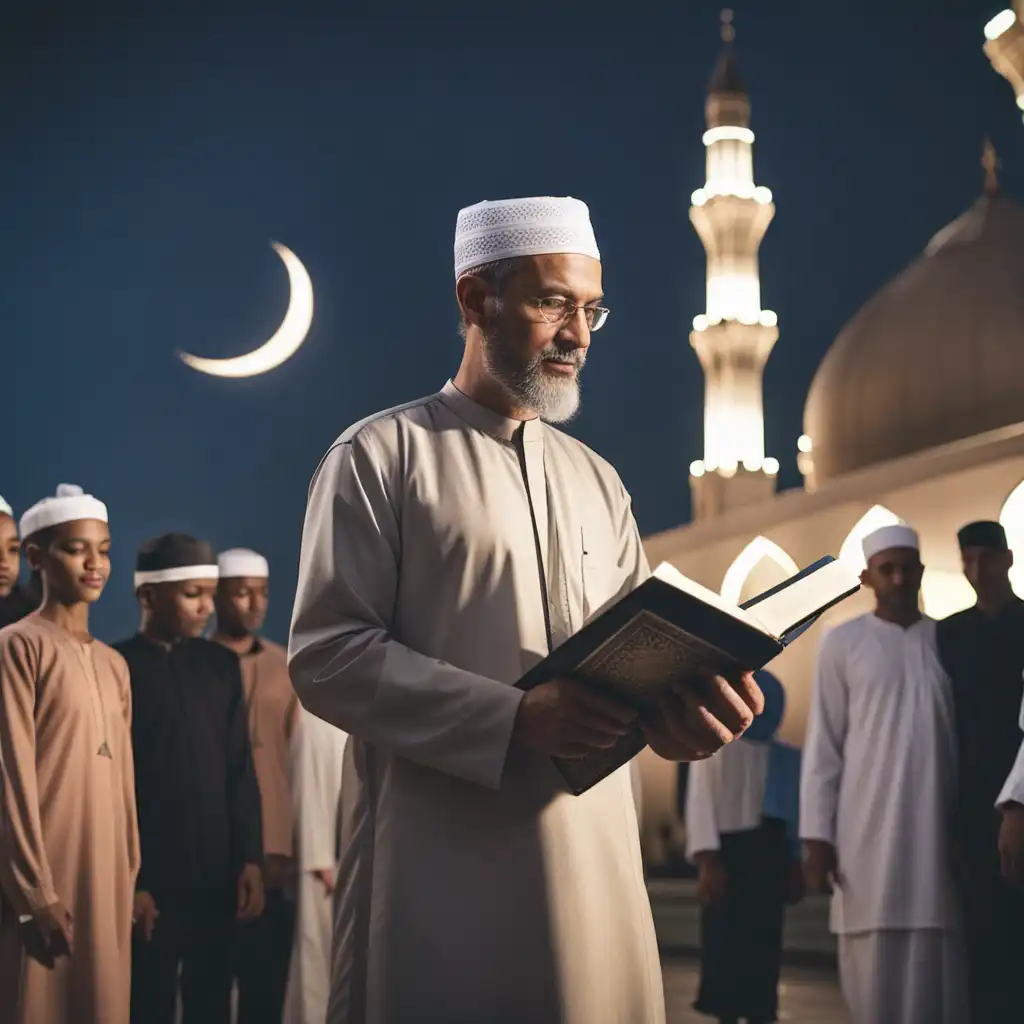
The word 'mullah' is often used to refer to a Muslim religious leader, particularly one who has been trained in Islamic theology or law. This term is most commonly used in the Middle East and South Asia, and is usually associated with Sunni Islam. In general, 'mullah' is a respectful term used to address or refer to a learned Islamic scholar or teacher. However, it can also carry some negative connotations in certain contexts, particularly when used to describe conservative or traditionalist religious leaders who may be seen as intolerant or oppressive. Overall, it is important to understand the cultural and religious context in which the term 'mullah' is used in order to use it appropriately and respectfully.
Ayatollah refers to a high-ranking Shia Muslim cleric who has achieved the status of ayatollah through his religious education and scholarly work.
Ayatollahs have the authority to issue religious rulings and interpretations of Islamic law, and are generally regarded as spiritual leaders within the Shia community.
In summary, Ayatollah is specific to Shia Islam and refers to a high-ranking scholar, while Mullah is a more general term that can refer to any Muslim cleric, but is often used to refer to Sunni Muslim clerics.
Both cleric and mullah are religious terms, but they come from different religious traditions.
A cleric is typically a Christian religious leader, such as a priest, minister, or bishop. These individuals are often trained in theology and lead religious services and ceremonies.
The difference between the words cleric and mullah is the religion they are associated with. Cleric is a term more commonly associated with Christianity, while mullah is more commonly associated with Islam.
Both imam and mullah are Islamic terms used to refer to leaders in the Islamic faith, but they have different specific meanings.
An imam is a religious leader who leads prayer services in a mosque and may also provide guidance in matters of faith and life.
Overall, while they share some similarities as leaders in the Islamic faith, imam refers more to a spiritual guide and prayer leader, while mullah is a scholar who provides religious counsel.
Mufti and Mullah are both Islamic terms, but they refer to different things.
A Mufti is someone who is considered an expert in Islamic law (also known as Shariah). They are qualified to issue religious rulings (or fatwas) on a wide range of topics, from marriage and family issues to financial and commercial matters.
Muftis are found in Sunni Muslim communities.
A mufti is focused on interpreting Islamic law, while a mullah is focused on teaching Islamic principles.
Both mullah and sheikh are titles used in various Islamic cultures to refer to religious leaders, but they have different origins and applications.
A sheikh is a more general term that can be used to refer to a leader or authority figure in various contexts, including religion, politics, and society.
In some Muslim cultures, a sheikh may also be a descendent of the Prophet Muhammad or the founder of a Sufi order.
Mullah is a specific title for a Muslim scholar, while sheikh is a more general term used for respected leaders and authorities in Muslim societies.
Stamps from Afghanistan are hilarious. You can tell when the revolutions are because suddenly they stop having pictures of the mullahs and the independence monument and they start having fish on them.
Lower oil prices won't, by themselves, topple the mullahs in Iran. But it's significant that, historically, when oil prices have been low, Iranian reformers have been ascendant and radicals relatively subdued, and vice versa when prices have been high.
It's no surprise that hackers working for North Korea, Iran's mullahs, Vladimir V. Putin in Russia, and the People's Liberation Army of China have all learned that the great advantage of cyberweapons is that they are the opposite of a nuke: hard to detect, easy to deny, and increasingly finely targeted.
The world has grown increasingly dangerous, with a nuclear madman in North Korea testing an ICBM a month, mullahs in Tehran plotting the takeover of the Middle East, Russia engaging in 'frozen conflicts' in Ukraine, Georgia, and Moldova, a very hot civil war in Syria, and China appropriating a vast swath of the Pacific to itself.
Middle-class Pakistani cultural life is what I've seen, what I know - they're not all screaming faceless mullahs. It's disturbing that in American films, the character on the other side is not even named.
The mullahs of the Islamic world and the mullahs of the Hindu world and the mullahs of the Christian world are all on the same side. And we are against them all.
Former Libyan dictator Moammar Gadhafi and the radical Islamist mullahs ruling Iran share many similarities, but honesty and negotiating in good faith are not among them.