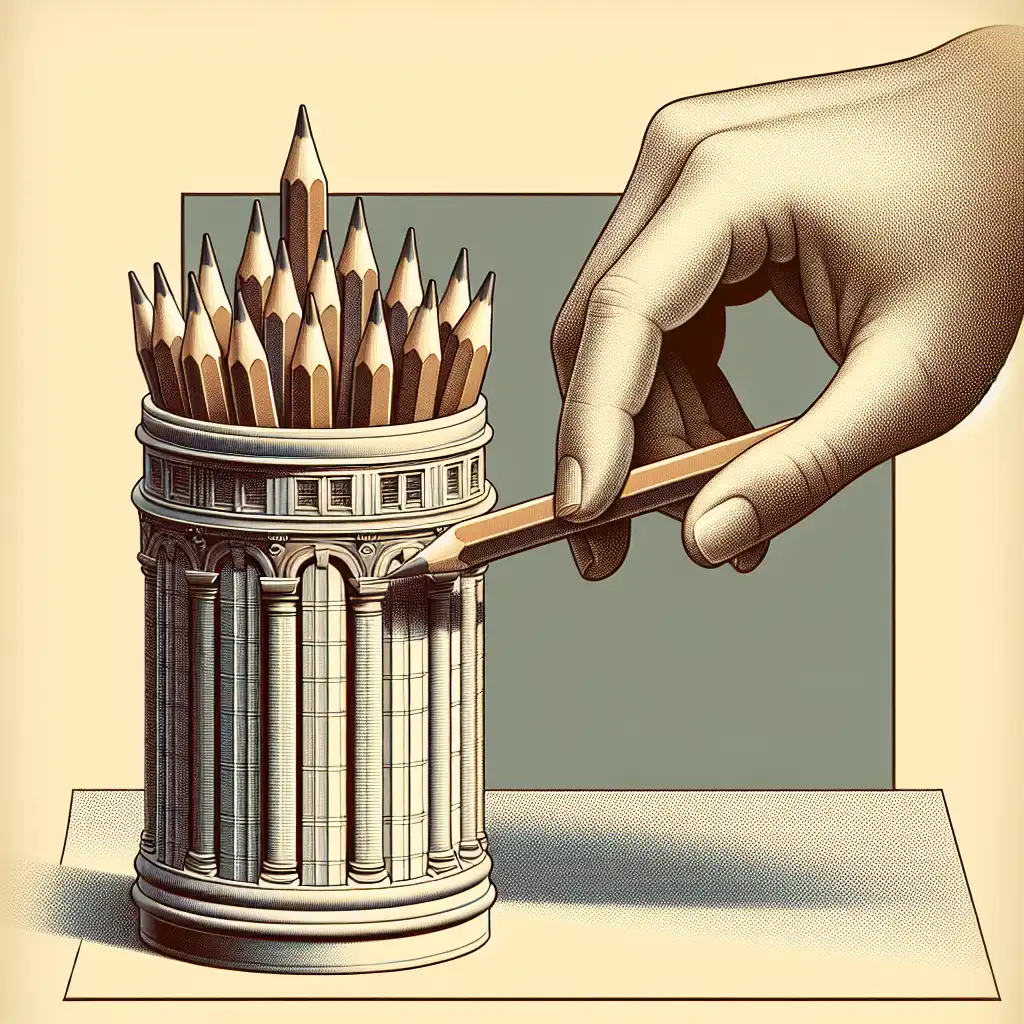
cylindrical
adjective cylindrical
səˈlɪndrɪkl
Having the shape of a cylinder; long and circular in cross-section
I put the pencils in the cylindrical container.
cylindrical
səˈlɪndrɪkl
Chargement…
səˈlɪndrɪkl
Having the shape of a cylinder; long and circular in cross-section
I put the pencils in the cylindrical container.

səˈlɪndrɪkl
Relating to or resembling a cylinder
The long, cylindrical neck of the giraffe enables it to reach leaves high in the trees.
Impossible de charger l’audio. Réessayez plus tard.
Cylindrical means having a shape that is round like a cylinder or a tube. For example, a pencil or a soda can are cylindrical objects because they have a long, narrow shape that is rounded. It is a useful word when describing things like pipes, columns, or containers.
A curve is a line that bends and changes direction.
It can be applied to any shape or object that has a curved edge, such as a circle or a crescent.
Cylindrical refers to a specific shape that is curved in the form of a cylinder, which is a long, straight object with circular ends.
Curve is a general term for any shape that bends or changes direction, while cylindrical specifically refers to a shape that is long and rounded, like a pipe or can.
Ouvrir le mot: Curve →Hollow refers to an object that has an empty space inside it.
Cylindrical can describe objects that have a round shape, like a can or a pencil, while hollow can describe anything that is empty inside, like a balloon or a bucket.
Cylindrical describes the shape of an object and hollow describes the space inside an object.
Ouvrir le mot: Hollow →Longitudinal refers to a direction or orientation that is along the length of something. It describes something that is elongated, stretched out, or stretched in the same direction.
Examples of things that can be described as longitudinal include a train track or a river.
Cylindrical describes a shape, while longitudinal describes a direction or orientation. Each word can be used in different contexts.
Cylindrical may be used in the context of describing objects such as tubes, rods or pipes while longitudinal may be used in the context of describing directions like the longitudinal axis of a body.
Ouvrir le mot: Longitudinal →Cylindrical and oblique are two different ways of describing the shapes of objects.
Oblique describes something that is slanted or tilted at an angle, rather than being straight up and down.
An example of an oblique object would be a leaning tower or a tilted picture frame.
Ouvrir le mot: Oblique →Round means having a circular shape or being curved in a circular manner.
Round is applicable when referring to objects that are circular or curved, such as a ball or a donut.
Cylindrical refers to the shape of an object that has straight sides and circular bases, while round refers to the shape of an object that is circular or curved.
Ouvrir le mot: Round →Straight means not curved or bent, having a linear direction.
Cylindrical is a shape while straight is a direction.
Ouvrir le mot: Straight →Cylindrical means having a constant diameter or width along its entire length, like a soda can or a pencil. Taper means gradually decreasing in width or thickness towards one end, like a cone or a sharpened pencil.
Cylindrical is applicable to objects that are uniform in shape, such as cylinders, pipes, or columns. Taper is applicable to objects that gradually change in shape or width, such as wedges, cones, or tapered candles.
Ouvrir le mot: Taper →Tubular is used more broadly and can describe something that has a tube-like shape but may not have a uniform circular shape (like a piece of plumbing or a rolled-up poster).
If you're describing something that has a perfectly circular shape, use cylindrical. If it's more irregular but still shaped like a tube, use tubular.
Ouvrir le mot: Tubular →How to unboil an egg -...
Voir sur YouTube ↗When I first came to New York City, what I was thrilled about was not the Empire State Building, or the Statue of Liberty; it was the fireplugs in the street. These things that Jack Kirby had drawn. Or these cylindrical water towers on top of buildings that Steve Ditko's 'Spider-Man' fights used to happen in and around.
TIL: How Cookiecutter...
Voir sur YouTube ↗How to rebuild the world...
Voir sur YouTube ↗Rajesh Rao: Computing a...
Voir sur YouTube ↗This sea creature...
Voir sur YouTube ↗Caring for Coral %\PIPE%...
Voir sur YouTube ↗Rockets 101 %\PIPE% National...
Voir sur YouTube ↗The story of 'Oumuamua,...
Voir sur YouTube ↗The artificial muscles...
Voir sur YouTube ↗The beautiful,...
Voir sur YouTube ↗