Audio could not be loaded. Please try again later.
How to use
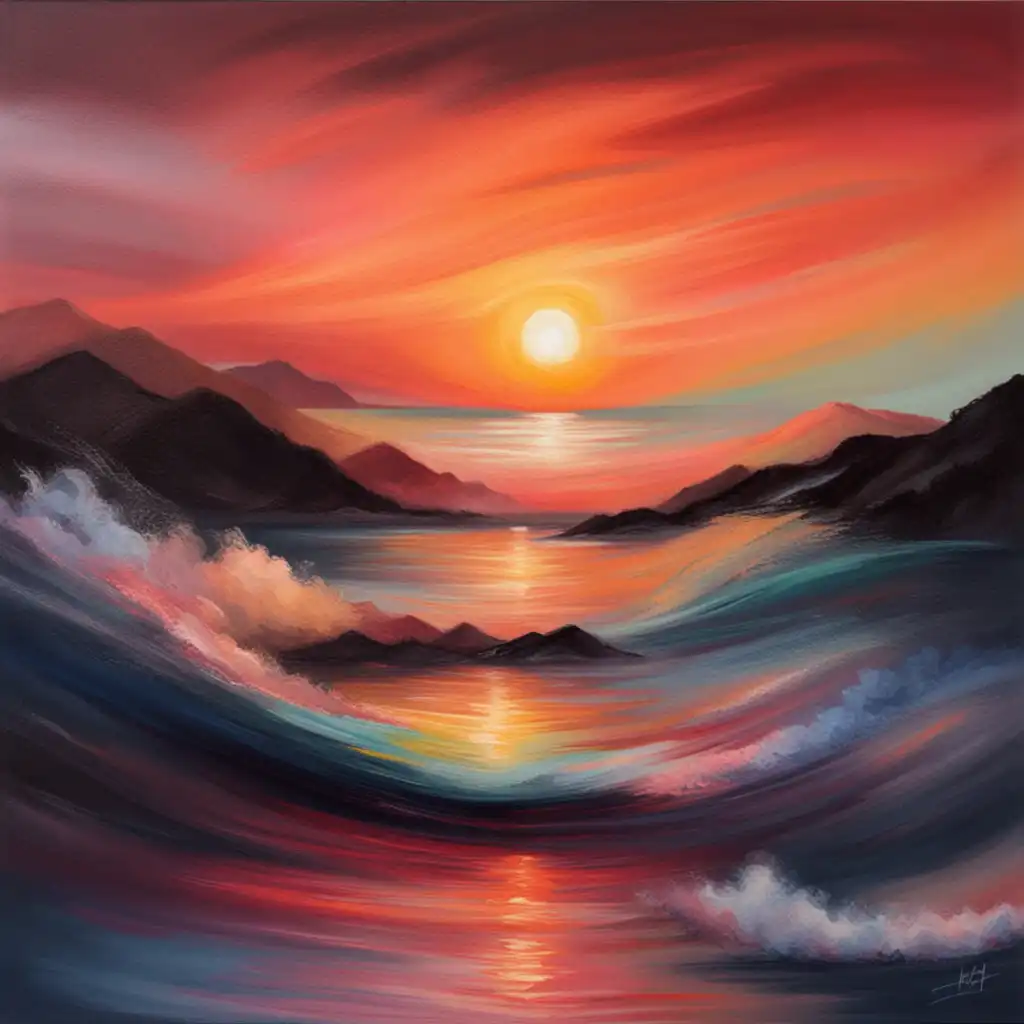
The word 'impressionistic' is often used to describe something that is not very detailed or precise, but instead gives an overall sense or feeling of something. It comes from the style of painting called impressionism, which uses broad brushstrokes and bright colors to create an overall impression of a scene, rather than a detailed, realistic portrayal. In everyday language, you might use the word 'impressionistic' to describe a vague or general description, a piece of music or art that is more about mood than detail, or even someone's memory of an event that may not be entirely accurate, but captures the essence of how they experienced it.
Abstract and impressionistic are both terms used to describe types of art.
Abstract art refers to artwork that does not represent anything from the visible world, but instead focuses on colors, shapes, lines, and textures.
Abstract art is often used to express emotions or ideas and can be found in various mediums like painting, sculpture, and even architecture.
Abstract art is focused on elements of design and does not aim to replicate anything specific from the visible world, while impressionistic art is more representational and captures the essence of a scene or moment.
Ambiguous means unclear or having more than one possible meaning.
Ambiguous means something is not clear or has more than one meaning, while impressionistic means something is conveyed in a way that focuses on feelings and emotions, rather than precise details.
Imprecise means not exact or accurate, while impressionistic means conveying an impression or feeling rather than a precise description.
Imprecise is applicable when referring to measurements or details that are not specific or exact. For example, if someone says that a distance is "about a mile," this is imprecise because it does not provide an exact measurement.
Similarly, if a person gives an imprecise description of an event, they are not providing all the specific details.
Indistinct refers to something that lacks clarity or definition.
Impressionistic describes a style of art or description that captures the essence of something, while indistinct describes something that lacks clarity or definition.
Inexact refers to something that is not precise or accurate, often due to limitations in knowledge or measurement. This term is applicable when discussing quantitative data or scientific calculations.
Impressionistic is subjective and related to art, while inexact is objective and related to science.
Obscure refers to something that is difficult to understand, interpret, or ascertain. It often relates to writing or language that is unclear or difficult to follow.
I hate flatscreens. I don't want to see anything in that much pixilation. I don't need to see the pimple on someone's face. I love the world through glass. The more old, dusty and tainted that glass is, the prettier and more impressionistic that is to me. I don't need to see everything perfectly. I don't like it.
If you're an impressionistic painter and you want to paint expressionism, you've got to change. You've got to figure out a way to do it and do it. If you've been playing jazz all your life and you want to start to play rock n' roll, blues, then do it.
When you're telling stories, you are actually trying to illuminate some portion of the truth in an artful way. The story may immediately seem to be a lie, but it's like an impressionistic painting - you see the light and the color better than you would with a photo-realistic piece.
It's interesting the kind of freedom the musical form gives you. The rules are out the window. You can get impressionistic without seeming pretentious. Because it's perceived as an inherently accessible form, it gives filmmakers some leeway.
I think the narratives on 'Trans,' 'Plans,' and 'Narrow Stairs' moved away from the way I wrote on the first couple of records, which was a lot more impressionistic. I was writing those songs in my early 20s, so I thought I was being more clear than I actually was.
I'm somebody who has to physically experience an environment in order to know it as well as I would like to know it. I recognize this is impressionistic, not scientific. People say, 'You sound like Walt Whitman.' Well, I'll take that comparison.
Before I was 5, I did have a lot of time on my hands. I had no job and really no career, and I spent an awful lot of time listening to records. It was more the classical ones, really - Prokofiev, and I think there was some Mozart in there, and more impressionistic composers like Delius.