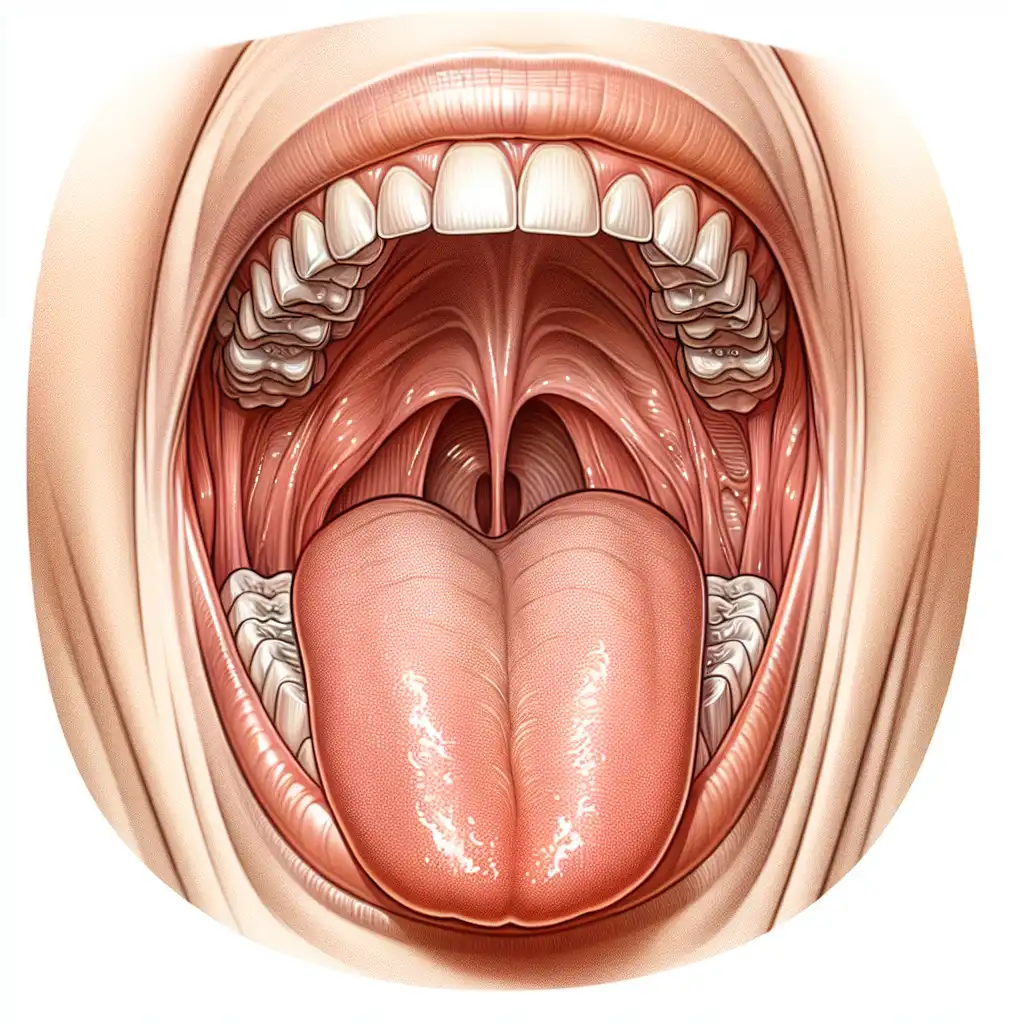
palatal
adjective palatal
ˈpælətl
Related to the roof of the mouth, also known as the palate.
The tongue helps produce palatal sounds when it touches the palate.
palatal
ˈpælətl
読み込み中…
ˈpælətl
Related to the roof of the mouth, also known as the palate.
The tongue helps produce palatal sounds when it touches the palate.
ˈpælətl
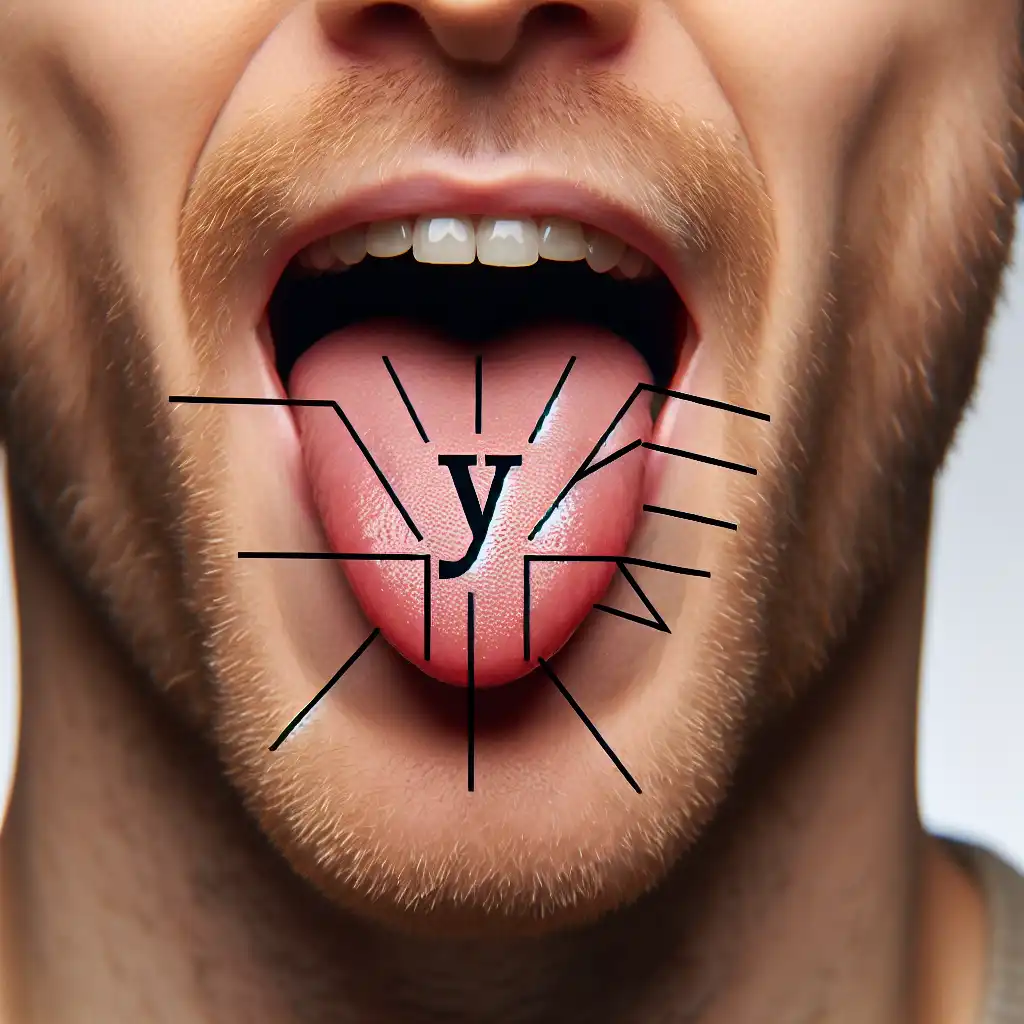
A sound (as in English) produced by bringing the blade of the tongue against or close to the palate.
The 'y' sound in English is an example of a palatal.

ˈpælətl
A dental appliance that fits against the palate and is used mainly in orthodontics.
The dentist recommended a palatal for my overbite.
音声を読み込めませんでした。しばらくしてからもう一度お試しください。
The word 'palatal' is used to describe things that involve the roof of your mouth called the palate. In English, we use 'palatal' to describe things like certain speech sounds or the location of some teeth in your mouth. For example, the 'y' sound in the word 'yes' is made by raising the middle of your tongue towards the top of your mouth, or your palate. Another example is when we talk about our upper molars, which are also called palatal teeth because they're located towards the back of the roof of our mouth.
Both “alveolar” and “palatal” are terms related to the mouth, specifically the tongue and the way it produces sounds.
“Alveolar” refers to sounds that are produced when the tongue touches the alveolar ridge, which is the bony ridge just behind the front teeth.
Examples of alveolar sounds include /t/, /d/, /s/, and /z/.
“Palatal” refers to sounds that are produced when the tongue touches the hard palate, which is the roof of the mouth behind the alveolar ridge.
The terms “alveolar” and “palatal” are used to describe specific sounds in different languages or dialects. For example, in English, the sound /t/ is alveolar, while in some other languages, it might be pronounced as a palatal sound.
単語を開く: Alveolar →Cephalic means related to the head, while palatal means related to the roof of the mouth.
Cephalic is applicable when talking about things related to the head, such as the cephalic index which is a measure of the size of the head compared to the rest of the body.
It can also be used in medical terminology to describe procedures or conditions related to the head, such as a cephalic presentation during childbirth.
単語を開く: Cephalic →Dental refers to teeth or related to teeth. It's applicable for things like dental check-ups, dental fillings, or dental braces.
Dental refers to things related to teeth, while palatal refers to things related to the roof of the mouth.
単語を開く: Dental →Lingual refers to things related to the tongue, while palatal refers to things related to the palate or roof of the mouth.
In dentistry, a lingual appliance is a type of orthodontic brace that is on the inner side of the teeth facing the tongue, while a palatal appliance would be on the inner side of the teeth facing the roof of the mouth.
Lingual and palatal are just words that describe different parts of the mouth or tongue, and are used in various fields such as linguistics, dentistry, and medical anatomy.
単語を開く: Lingual →Maxillary refers to the upper jaw bone, while palatal refers to the roof of the mouth. Maxillary is applicable when referring to the placement or location of teeth in the upper jaw, while palatal is applicable when referring to the position of the tongue or the surfaces of the upper teeth in contact with the roof of the mouth.
単語を開く: Maxillary →Oral refers to sounds that are produced by the mouth, including vowels and consonants that require movement in the oral cavity (such as "b" or "p").
Palatal refers to sounds that are made by the tongue touching the hard palate (the roof of the mouth). Palatal sounds include the "y" sound in "yes" and the "ch" sound in "cheese." In simpler terms, oral sounds are made with the mouth and palatal sounds involve touching the roof of the mouth with the tongue.
単語を開く: Oral →Palatine refers to something related to or located in the palate bone, which is a bone that forms the back part of the roof of the mouth and the floor of the nasal cavity.
For example, the palatine tonsils are masses of tissue located on either side of the throat. Palatine is applicable in anatomy, referring to the palate bone or tonsils.
単語を開く: Palatine →Pharyngeal refers to sounds that are articulated in the pharynx or throat. These sounds are produced by constricting the pharynx and raising the root of the tongue.
Examples of pharyngeal sounds include the "h" sound in "hat" or the Arabic letter "ʕain". Pharyngeal sounds are less common in many languages, but are found in languages like Arabic, Hebrew, and some Indigenous languages.
Palatal refers to tongue movements involving the top of the mouth, while pharyngeal refers to constriction in the throat.
単語を開く: Pharyngeal →