operatic
adjective operatic
ˌɑːpəˈrætɪk
Related to or characteristic of opera
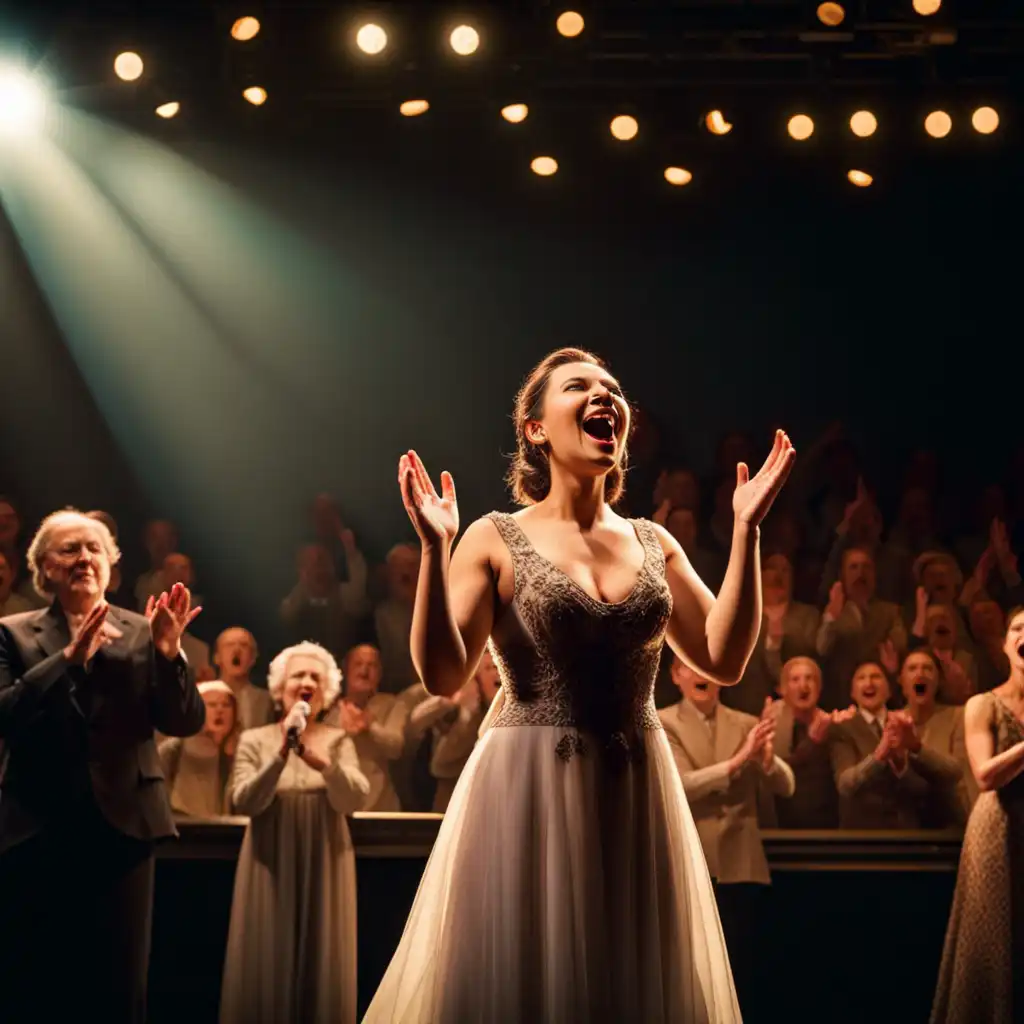
The female opera singer hit an exceptionally high note, impressing the audience with her operatic voice.
operatic
ˌɑːpəˈrætɪk
加载中…
ˌɑːpəˈrætɪk
Related to or characteristic of opera
The female opera singer hit an exceptionally high note, impressing the audience with her operatic voice.
ˌɑːpəˈrætɪk
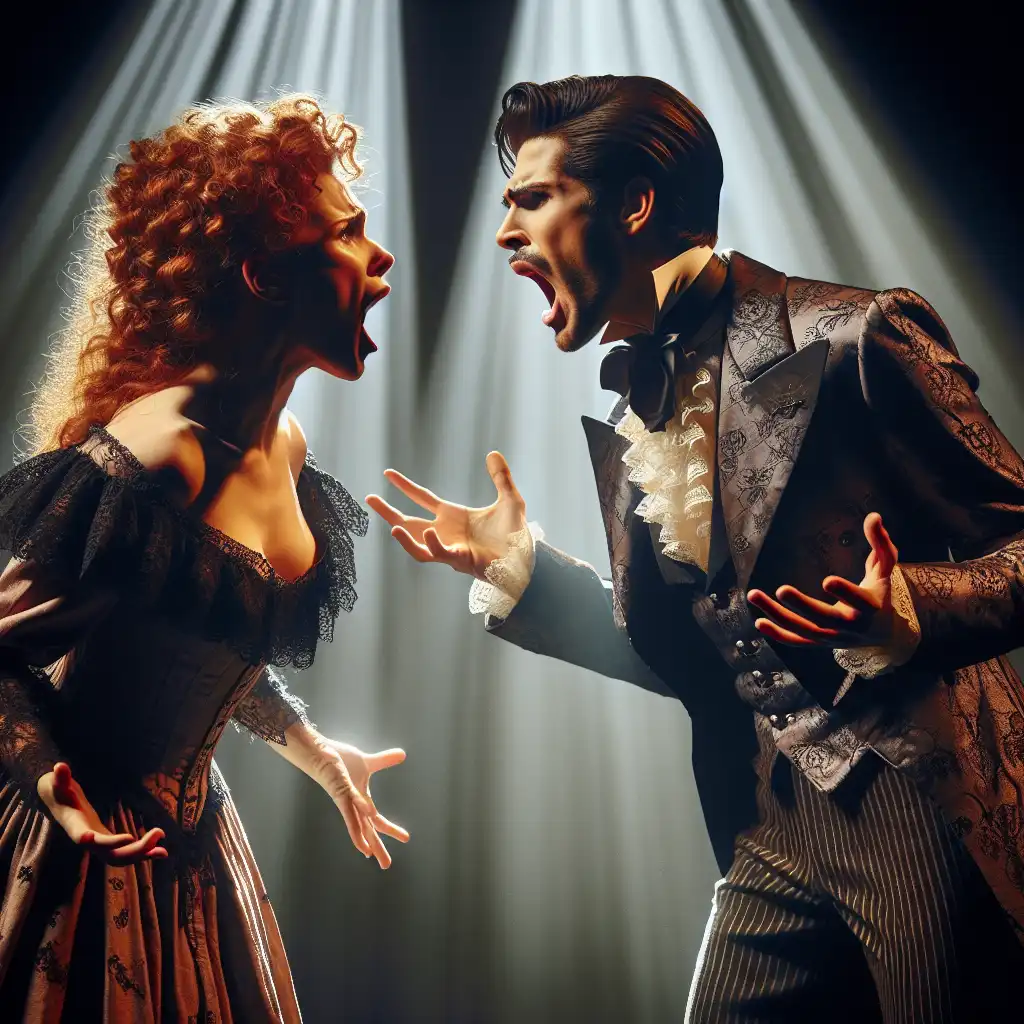
Exaggerated or overly dramatic
Their breakup was operatic, full of shouting and passionate declarations.
音频无法加载,请稍后再试。
The word 'operatic' usually relates to or is associated with operas, which are musical dramas performed on a stage involving singing, acting, and instrumental music. It can refer to anything that is grand, melodramatic, or exaggerated like an opera. People also use it to describe a situation or a person's behavior that is overly dramatic or emotional. For example, you could say, "He delivered an operatic speech" meaning that he gave a very passionate and theatrical speech.
Act refers to a unit of storytelling in a play or a musical performance. It has a beginning, middle and an end and often involves a change in the plot or characters.
Operatic pertains to music that is sung in an operatic style, which is characterized by a dramatic and emotional melody with powerful vocals that convey intense emotions.
In simpler terms, an act is a part of a play or musical, whereas operatic refers to a specific style of singing in musical performances.
For example, a play may be divided into multiple acts, but operatic singing may only be used in certain parts of a musical production.
打开单词: Act →Bombastic describes speech or writing that is overly grandiose, exaggerated or pretentious. It refers to language that is too showy or that tries too hard to impress.
Operatic describes something that is dramatic, extravagant, or melodramatic - just like an opera. Whereas bombastic usually refers to language or writing, operatic can describe any kind of performance, event, or experience.
To simplify, bombastic describes over-the-top language, while operatic describes something that is dramatic, elaborate, and sometimes exaggerated.
打开单词: Bombastic →Both dramatic and operatic are adjectives used to describe works of art, performance, or events.
Dramatic refers to something that is intense, emotional or exciting.
For example, a dramatic play might cause the audience to feel tension or suspense, or a dramatic event might be one that is unexpected and has a significant impact on people's lives.
An operatic work is characterized by arias, duets, and ensemble pieces, as well as dramatic storytelling, intricate sets, and costumes.
The term operatic can also be used more broadly to describe something that is excessive, over-the-top or melodramatic, as many operas are known for their emotive and grandiose style.
Dramatic can describe any work of art or performance that evokes intense emotions, whereas operatic is more specific to the art form of opera or something that is extravagantly theatrical.
打开单词: Dramatic →Extravagant refers to something that is excessive or unnecessarily lavish. It is applicable when describing things like spending, parties, or lifestyles.
Extravagant is about excess and operatic is about drama.
打开单词: Extravagant →Histrionic refers to exaggerated and theatrical behavior, often done for attention or dramatic effect. It is applicable when describing someone who is overly emotional, exaggerated or melodramatic.
Histrionic relates to behaviour while operatic relates to singing/music.
打开单词: Histrionic →Melodramatic refers to something that is overly emotional, exaggerated, and unrealistic.
Melodramatic is a general term describing exaggerated and unrealistic drama, while operatic specifically refers to the style of storytelling through singing and performance found in opera.
打开单词: Melodramatic →Stage refers more broadly to any type of theater production, including plays and musicals that may not involve classical music or singing.
Essentially, operatic is a more narrow term that only applies to opera, while stage is a broader term that can be applied to any live theatrical performance.
打开单词: Stage →Theatrical is a more general term that can refer to any type of performance art that takes place on stage, including plays, musicals, and operas.
The term theatrical describes the overall style of a production, such as the costumes, staging, lighting, and acting.
Operatic specifically refers to opera, while theatrical is a broader term that can apply to any type of live performance on stage.
打开单词: Theatrical →and told me I had to stop singing. She said "Those high notes are going to kill you." While she didn't have any medical evidence to back up her claim that there was a relationship between operatic arias and pulmonary hypertension,
在 YouTube 上观看 ↗You know when Hollywood does a great big blockbuster that really wraps you up in a world, and lets you believe in extraordinary things that move you in some way, in an almost operatic sensibility? That to me is the most fun I have at the movies.
The strength of various partials is part of what gives each instrument its unique sonic signature. It also affects an instrument’s ability to stand out in a crowd, because our ears are more strongly attuned to some frequencies than others. This is the key to an opera singer’s power of projection. An operatic soprano—
在 YouTube 上观看 ↗I think I just have a natural operatic aesthetic. I can't help it.
and it's not just music these are the late 1700s revolutionary times in both the old and new worlds and mozart isn't immune to the political energy around him he composes his first great operatic work the marriage of figaro
在 YouTube 上观看 ↗Although my family - parents and sister - all work in the personnel management business, their real passion is performing, amateur operatic societies and so on.
You have to have great passion, because to sing operatic music requires lots of work. I study for at least two hours every day. The voice is like an instrument and requires constant exercise.
I think that's what I really liked about Narc: My character has a real operatic range in a way that older movies used to have.
We of the soft-crooning radio type of singer are giving the people what they want. The American public as a whole does not care for full-throated operatic singing. And why should it? Down through the ages, it has been the simple song which has lived and continues to touch the heart of humanity. And so it is with singing.
It's logical for us to sing, but not necessarily operatic pieces.
An operatic voice is like no other.
No operatic star has yet died soon enough for me.
It started with the Godfather, this operatic violence. I don't know.