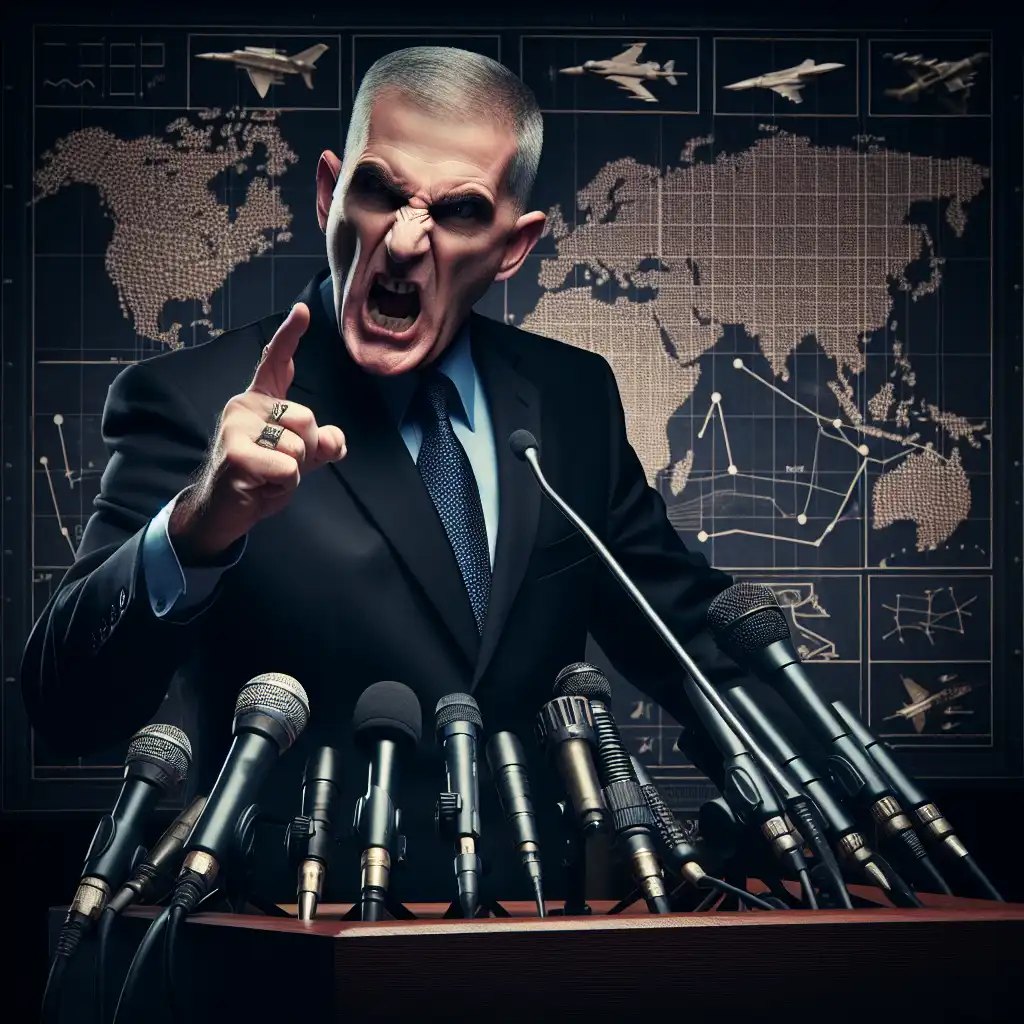
warmonger
noun warmonger
ˈwɔːrmɑːŋɡər
A person who encourages others to fight or go to war
Many people considered the dictator a warmonger due to his aggressive foreign policies.
warmonger
ˈwɔːrmɑːŋɡər
読み込み中…
ˈwɔːrmɑːŋɡər
A person who encourages others to fight or go to war
Many people considered the dictator a warmonger due to his aggressive foreign policies.
音声を読み込めませんでした。しばらくしてからもう一度お試しください。
The word "warmonger" is used to describe someone who wants or encourages war, often for personal or political gain. It is a negative term and often used to criticize those who are perceived as being too aggressive or eager for conflict. So, it is not a good thing to be called a "warmonger" and it's important to use this word carefully and in appropriate situations.
An aggressor is someone who starts a conflict or attack, while a warmonger is someone who encourages and promotes war or aggression.
For example, if one country invades another country, the invading country is the aggressor. A politician who constantly advocates for war, even when other options may exist, might be called a warmonger.
An aggressor is the one who takes direct action, while a warmonger may be more of a vocal or political force.
単語を開く: Aggressor →Belligerent refers to someone who is hostile or aggressive in their behavior or attitude towards others.
Warmonger refers specifically to someone who advocates for or encourages war, often for personal gain. It is a more extreme term than belligerent because it implies that the person actively wants to start or escalate conflicts.
Both words can describe people or countries involved in conflicts, but belligerent can also be used in a broader sense than warmonger, which is specifically about advocating for war.
単語を開く: Belligerent →A conquering is someone who defeats an enemy or takes over a place or territory. Conquerors usually have a specific mission and a plan to achieve it, and they aim for a peaceful resolution once they have obtained their goals.
In summary, conquerors are more focused on achieving a specific goal, often a positive one, while warmongers are more focused on violence and domination.
単語を開く: Conqueror →A crusader is a person who works passionately and tirelessly towards a noble cause, often with a moral or religious conviction.
Crusaders seek to bring positive change to the world, inspire others to action, and make a difference in society. They are often associated with fighting for justice or advocating for particular rights.
A crusader is a person who fights for what they believe in to create positive change, while a warmonger is a person who promotes violence and war for their own gain.
単語を開く: Crusader →Hawk refers to a person who supports using military force or being aggressive in foreign policy.
A hawk is someone who is generally more willing to use military force, but a warmonger is someone who actively tries to start wars.
単語を開く: Hawk →A militarist is a person who believes in and supports a strong military or the use of military force as a means to achieve goals.
Essentially, a militarist supports the use of military force as a tool in certain situations, while a warmonger actively seeks to create situations where military force is used.
単語を開く: Militarist →I was pretty much a warmonger and a pretty greedy guy. I always wanted to make as much money as I possibly could and felt the downtrodden didn't deserve a break.