
reverie
noun reverie
ˈrevəri
A state of being pleasantly lost in one's thoughts; a daydream.
He was snapped out of his reverie by the teacher's sharp voice.
reverie
ˈrevəri
불러오는 중…
ˈrevəri
A state of being pleasantly lost in one's thoughts; a daydream.
He was snapped out of his reverie by the teacher's sharp voice.
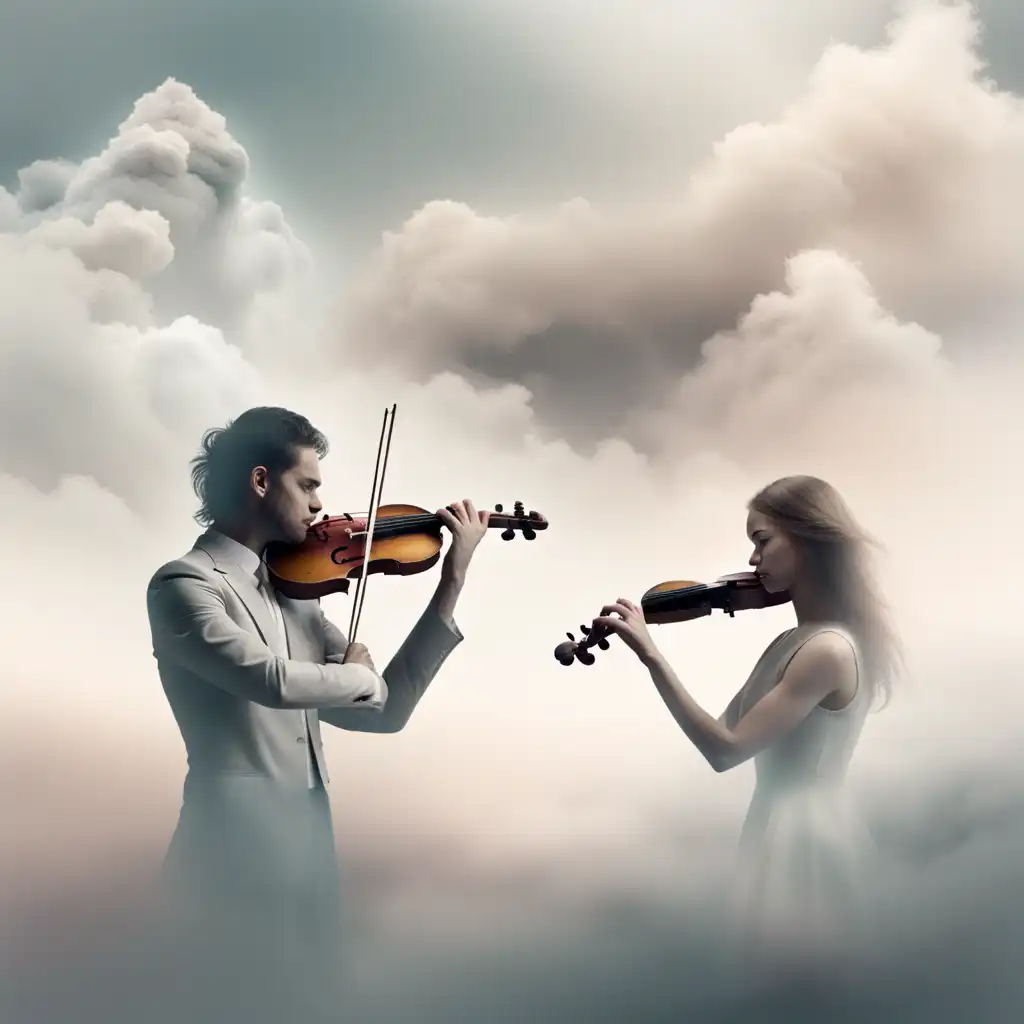
ˈrevəri
An instrumental piece suggesting a dreamy or musing state.
His latest composition is a beautiful reverie for violin and piano.
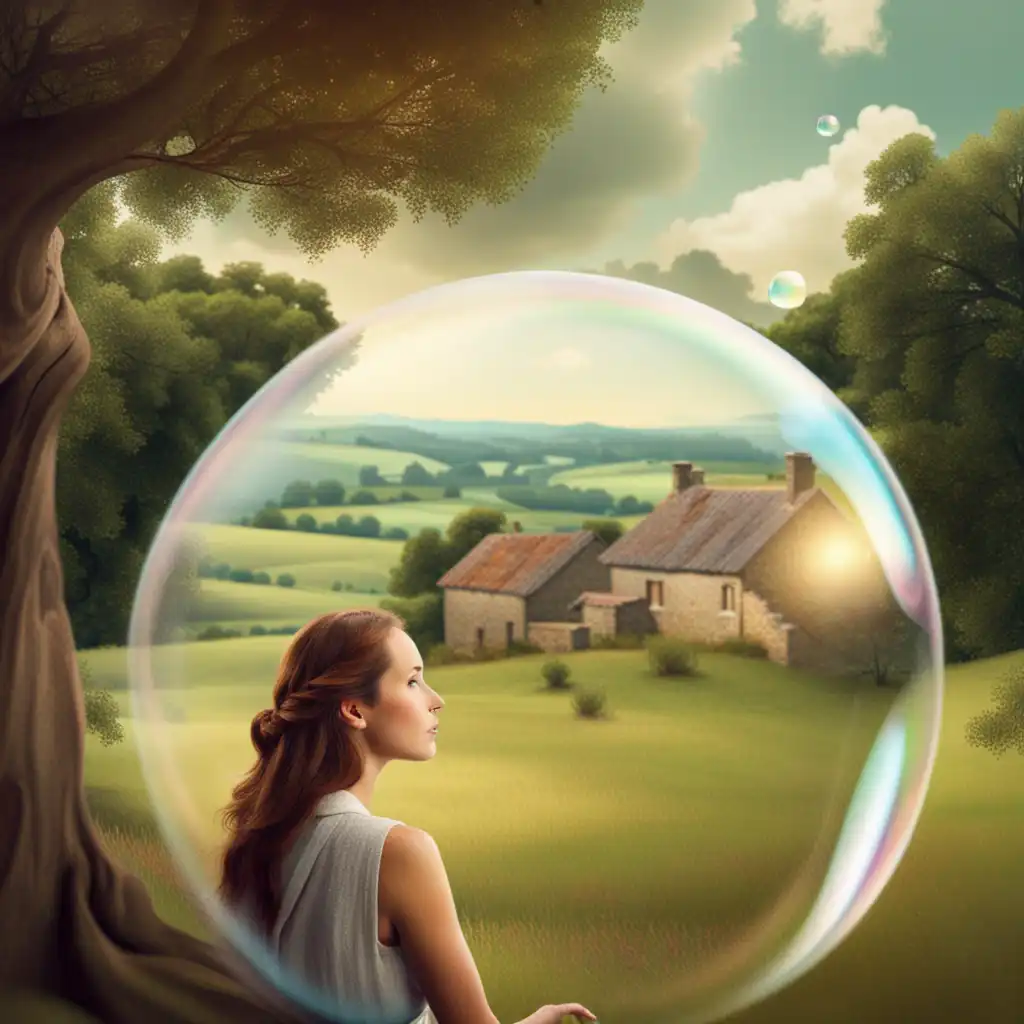
ˈrevəri
A fanciful or visionary notion; a daydream.
Her mind was filled with a reverie of what life might be like in such a place.
오디오를 불러오지 못했어요. 잠시 후 다시 시도해 주세요.
'Reverie' refers to a state of deep thought or imagination, where one is lost in a daydream or a pleasant memory. It is used to describe a moment when one is lost in their thoughts and not paying attention to their surroundings. You might use this word if you're drifting off into your own thoughts during a boring meeting or if you're walking alone in nature and reflecting on your life.
Both daydream and reverie refer to a state of mind where one is lost in thought or imagination.
Daydream is typically used to describe a fanciful, often unrealistic, thought or fantasy that occurs during the day while one is awake and alert.
Reverie, on the other hand, is a more contemplative and introspective form of daydreaming. It often involves thoughtful reflection or meditation on a specific idea or concept, and may lead to new insights or understandings.
Daydream describes a fleeting and often superficial form of imaginative thinking, while reverie describes a deeper and more meaningful type of contemplation.
단어 열기: Daydream →Both dream and reverie refer to a state of consciousness where someone is lost in thought or imagination.
However, dream usually implies a sleeping state where the mind is processing subconscious thoughts and experiences, while reverie usually refers to a waking state where someone is lost in pleasant daydreams or fantasies.
In other words, you might dream while sleeping, but you could be in a reverie while sitting in class, for example.
단어 열기: Dream →Fantasy is a genre of fiction that involves imaginary worlds, creatures, and events.
It is often used to reflect or envision a desirable outcome in reality. Fantasy is used to create imaginary scenarios, while reverie is used to daydream about desirable outcomes.
단어 열기: Fantasy →Both illusion and reverie refer to ideas or thoughts that are not necessarily based in reality.
An illusion is a false idea or belief that is often created by external factors, such as light, sound, or other sensory cues.
For example, a mirage in the desert is an illusion because it appears to be water, but it is actually a reflection of the heat of the sun on the sand.
So, while both illusions and reveries are related to thoughts or ideas that are not based in reality, illusions are typically created by external factors, while reveries are a product of the imagination.
단어 열기: Illusion →Imagine means to form a mental image or concept of something that is not present, real or tangible. It involves creating something in your mind that is not visible or tangible.
For example, you can imagine a unicorn.
Both words are applicable in different contexts. Imagine is used when you want to create a picture in your mind or think of something that isn't really there.
단어 열기: Imagine →Meditation is a focused practice where you train your mind to be calm and peaceful.
Reverie can be enjoyable and creative, but it is not a deliberate practice like meditation.
In summary, meditation is a focused practice that involves deliberate concentration and relaxation techniques, while reverie is a spontaneous mental activity that occurs when your mind is free to wander without any particular focus.
단어 열기: Meditate →Reflection refers to the act of thinking or considering deeply about something that has happened, in order to gain insight or learn something from it.
Both reflection and reverie involve thinking deeply but in different ways. Reflection is more analytical, whereas reverie is more free-flowing and imaginative.
One might use reflection to learn from past mistakes and improve oneself, while reverie can be a source of creative inspiration.
단어 열기: Reflection →Trance is a state of altered consciousness where you become less aware of your surroundings and may have difficulty distinguishing reality from fantasy.
It is a state induced by deep meditation or hypnosis, and in trance, people often remain motionless and seem to be in a sort of daze.
A trance is a state of a deeper subconscious level where the person is not fully conscious of realistic experiences.
Therefore, one should use reverie to describe a brief daydream-like state while trance should be used if referring to a long, deep state of altered consciousness.
단어 열기: Trance →The ballet that incited...
YouTube에서 보기 ↗Real shapes and real patterns are things you would observe in nature, like the marks on the back of a cobra's hood or the markings on a fish or a lizard. Imaginary shapes are just that, symbols that come to a person in dreams or reveries and are charged with meaning.
Daydreaming: The bridge...
YouTube에서 보기 ↗Thought is the labor of the intellect, reverie is its pleasure.
To lose one's self in reverie, one must be either very happy, or very unhappy. Reverie is the child of extremes.
I undertake the same project as Montaigne, but with an aim contrary to his own: for he wrote his Essays only for others, and I write my reveries only for myself.
Reverie is when ideas float in our mind without reflection or regard of the understanding.
Do anything rather than give yourself to reverie.
It was still quiet in the house, and not a sound was heard from outside, either. Were it not for this silence, my reverie would probably have been disrupted by reminders of daily duties, of getting up and going to school.
Immense power is acquired by assuring yourself in your secret reveries that you were born to control affairs.
It is a good idea to be alone in a garden at dawn or dark so that all its shy presences may haunt you and possess you in a reverie of suspended thought.
In contemplation and reverie, one thought introduces another perpetually; and it is by similarity, or the hooking of one upon the other, that the process of thinking is carried on.