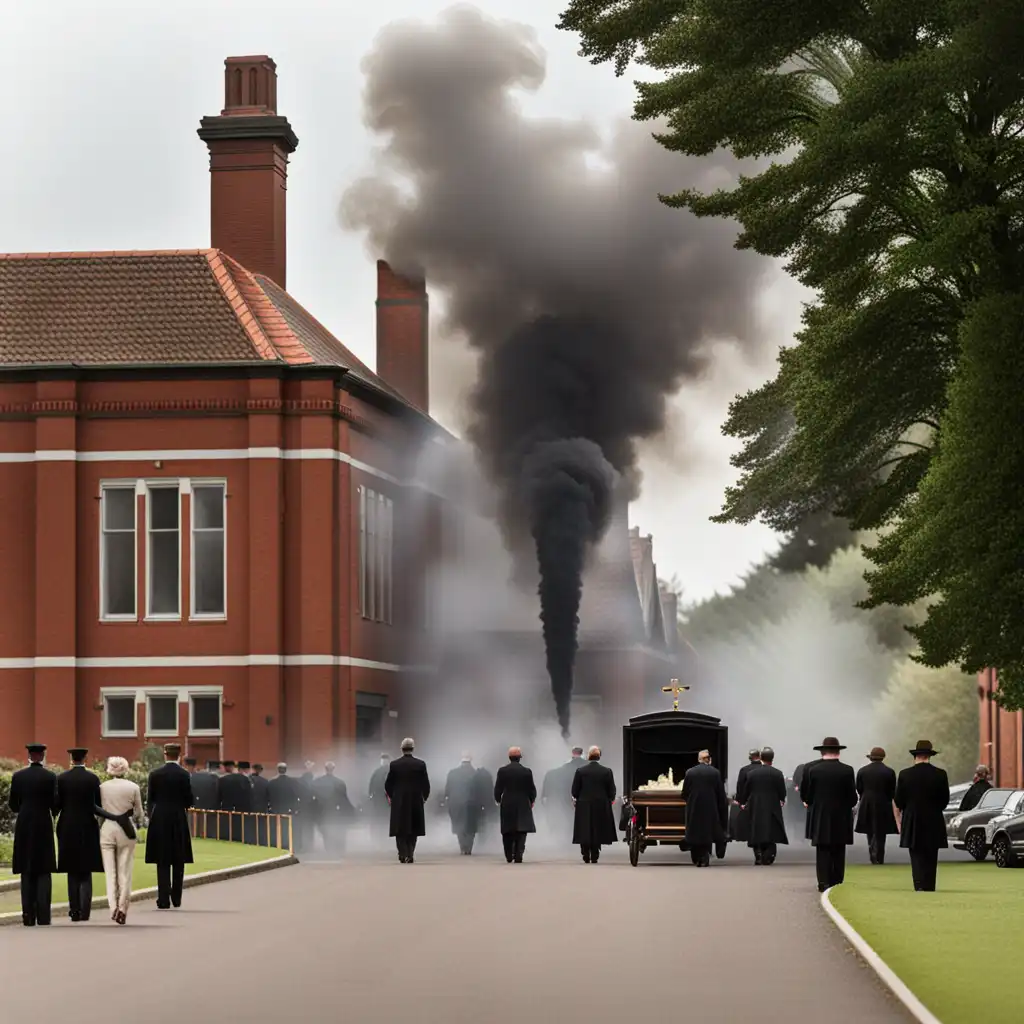
crematorium
noun crematorium
ˌkriːməˈtɔːriəm
A building where dead bodies are burned, usually as part of a funeral ceremony.
His body was taken to the local crematorium after the funeral service.
crematorium
ˌkriːməˈtɔːriəm
Chargement…
ˌkriːməˈtɔːriəm
A building where dead bodies are burned, usually as part of a funeral ceremony.
His body was taken to the local crematorium after the funeral service.
Impossible de charger l’audio. Réessayez plus tard.
A crematorium is a building where bodies are burned after someone dies instead of being buried in the ground. This is usually done when a person's family or loved ones choose to have them cremated instead of having a traditional burial. Cremation is a common alternative for those who do not have any religious, cultural or personal affiliations with burial practices. The ashes from the cremation are often kept in an urn or spread in a special location by the family. Crematoriums are found in many cities and towns and are used by funeral homes as a service to people who have lost someone close to them.
A mortuary is a place where dead bodies are stored temporarily before they are buried or cremated.
So, in simple terms, a mortuary is where the dead body is kept for a short time before burial or cremation, while a crematorium is where the body is burned and turned into ashes.
Ouvrir le mot: Mortuary →guide to death and the afterlife in Hinduism but the one place he can't take me is the cremation ground itself okay this is the holiest crematorium connect in the holiest city on the holiest River
Voir sur YouTube ↗It's not right to think about all of Jewish-German history as shrouded by the smoke of the crematorium.
but because we find the subject of death uncomfortable, we don't talk about it, and we don't question how we as a society approach death. One of the things that surprised me most in my research though, is how changeable attitudes actually are. This is the first crematorium in the U.K.,
Voir sur YouTube ↗I want to remind people that the Nazis weren't able to take the Jews to the crematoriums immediately. The German people wouldn't have allowed for it. Instead, the Nazis had to change public opinion. They marginalized the Jewish people, disparaged them, and made them objects of contempt.