bacteria
noun bacteria
bækˈtɪriə
Bacteria are very small living things that can cause illness or disease.
The food was contaminated with harmful bacteria.
bacteria
bækˈtɪriə
불러오는 중…
bækˈtɪriə
Bacteria are very small living things that can cause illness or disease.
The food was contaminated with harmful bacteria.
bækˈtɪriə
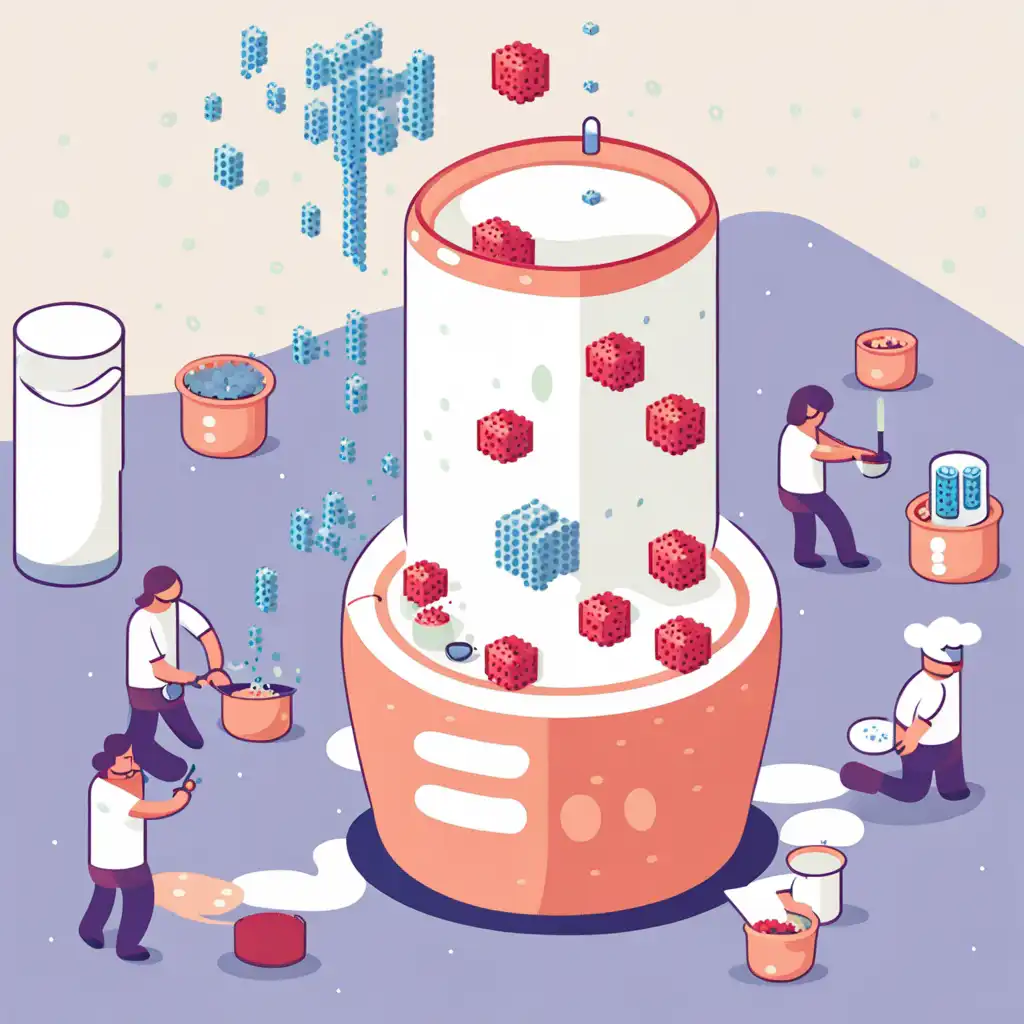
Bacteria are microorganisms that are used in making certain types of foods and medicines.
Bacteria in the yogurt helps with digestion.
bækˈtɪriə
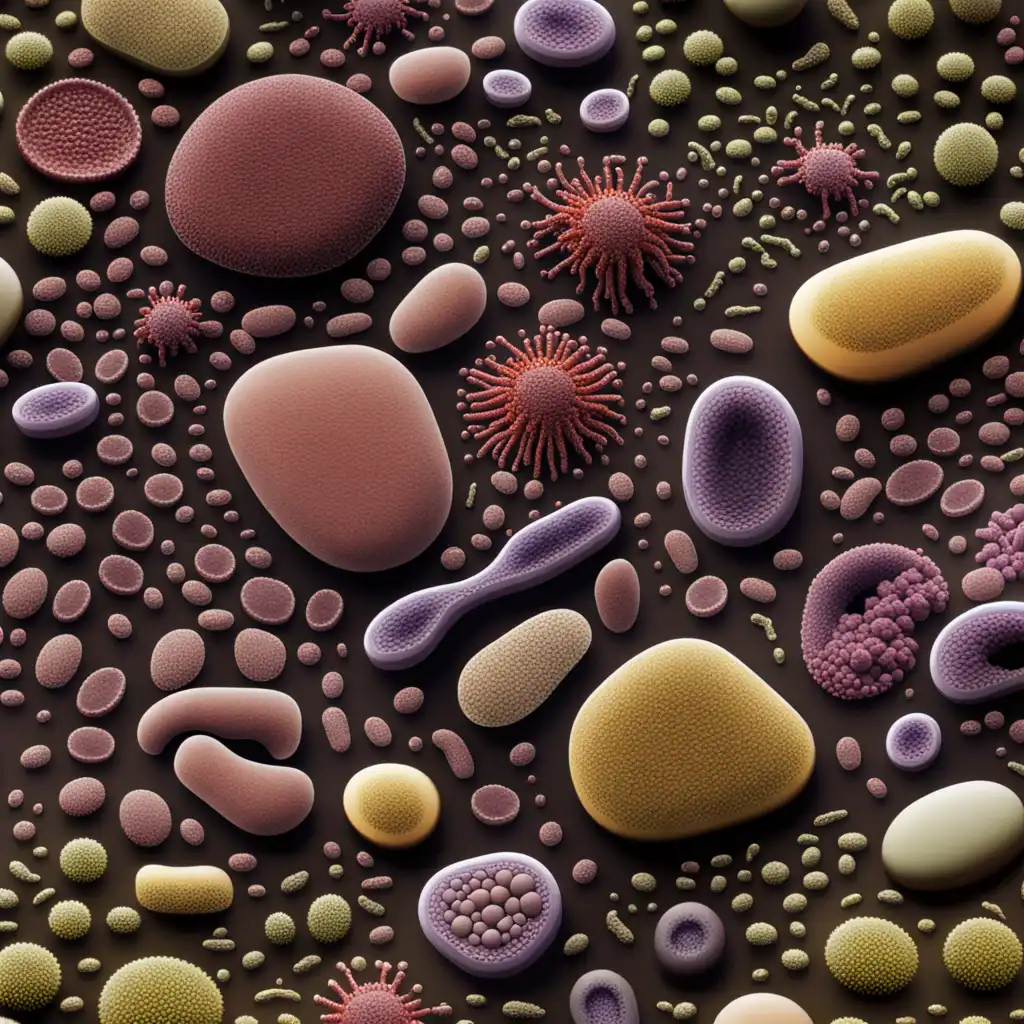
Bacteria are single-celled organisms that are neither plants nor animals.
Bacteria can be found in all kinds of environments, including soil, water, and human bodies.
오디오를 불러오지 못했어요. 잠시 후 다시 시도해 주세요.
Bacteria are tiny living things that are all around us. They can be found in the air, on surfaces, and even inside our bodies. Some bacteria are good for us, like the ones that live in our gut and help with digestion. But other bacteria can make us sick, like the ones that cause infections or food poisoning. It's important to wash your hands and keep things clean to prevent the spread of harmful bacteria.
Bacillus is a type of bacteria that has a rod-like shape, whereas bacteria is a broad term that refers to all types of tiny, single-celled organisms.
Bacillus is applicable when referring specifically to rod-shaped bacteria, while bacteria is applicable when discussing any of the millions of types of microorganisms that can fall under this category.
Essentially, it can be said that all bacillus types are bacteria, but not all bacteria are bacillus.
단어 열기: Bacillus →Bacteria are single-celled organisms that can be found in various environments, including soil, water, and inside living organisms.
A cell is the basic unit of life in all organisms, including animals, plants, and bacteria.
A cell contains various structures, such as a nucleus, mitochondria, and a cell membrane, that work together to keep the cell functioning properly.
While bacteria are a specific type of single-celled organism, cells can refer to any type of basic unit of life in any organism.
The term cell is more general and can be applied to various living things, while bacteria specifically refers to a type of single-celled organism.
단어 열기: Cell →Bacteria and germ are two words used to describe very small organisms that can cause disease or infection.
Germ is a more general term that can refer to any microscopic organism, including viruses, fungi, and bacteria. Unlike bacteria, viruses cannot live and reproduce outside of a host organism, making them more difficult to control and treat.
In conclusion, while bacteria specifically refers to a type of single-celled organism, germ is a more broad term that can describe any microorganism that can cause disease.
단어 열기: Germ →Bacteria and microbes are both tiny living organisms that cannot be seen with the naked eye, but there is a difference between the two.
Microbe is a broader term that includes not only bacteria but also other microscopic organisms such as viruses, fungi, and protists that are found in various environments such as soil, water, and air.
Some microbes can be harmful to animals and humans, while others can be beneficial, as they help in digestion, produce vitamins, or are used for making food and medicines.
Bacteria are a type of microbe, whereas microbe is an umbrella term that refers to various microscopic organisms, including bacteria.
단어 열기: Microbe →Bacteria are a type of microorganism, but not all microorganisms are bacteria. Microorganisms are tiny living organisms that are too small to see with the naked eye, such as bacteria, viruses, fungi, and protozoa.
Bacteria are one specific type of microorganism that are unicellular and have a simple cell structure without a nucleus.
Other microorganisms have different structures and can have different effects on the environment and living organisms. The term microorganism is a broader term that includes various types of living organisms that are too small to see, while bacteria specifically refer to a particular type of these living organisms.
단어 열기: Microorganism →Bacteria and organism are both living things, but they differ in their complexity and structure. Bacteria are simple, single-celled organisms that are found almost everywhere.
An organism refers to any living thing that can carry out basic functions like reproduction, growth, metabolism, and response to stimuli.
Organisms can be unicellular like bacteria or multi-cellular like plants and animals. An organism is a more general term used to describe any living thing, while bacteria is a specific type of organism that is distinguished by its single-cell structure.
Bacteria are a type of organism that is simple and single-celled, and can be beneficial or harmful to humans. Organisms are living things that can include bacteria as well as infinitely complex multi-cellular beings.
단어 열기: Organism →Pathogens are organisms that cause disease. They can be bacteria, viruses, fungi, or parasites. Pathogens are harmful and can cause illness, ranging from a mild cold to a life-threatening infection.
In short, all pathogens are bacteria, but not all bacteria are pathogens. Bacteria are applicable in many fields, including medicine, agriculture, and industry.
Pathogens are applicable in the field of medicine and public health, as they are a major cause of illness and death worldwide.
단어 열기: Pathogen →Bacteria and viruses are both types of microbes that can cause infections in humans, but they differ in several important ways.
Bacteria are single-celled organisms that can survive on their own outside of a host organism. They are larger and more complex than viruses, and they can reproduce on their own.
Viruses are tiny particles that require a host organism (like a human or animal cell) to survive and reproduce. They cannot replicate on their own or survive for very long outside of a host.
Viruses cause a wide range of infections, including the flu, cold, and HIV. Unlike bacterial infections, there are no antibiotics that can directly kill viruses.
Bacteria are independent single-celled organisms that can cause infections, while viruses are tiny particles that require a host organism to survive and reproduce.
단어 열기: Virus →How the food you eat...
YouTube에서 보기 ↗We can, for example, be fairly confident that either there will be a world without war or there won't be a world - at least, a world inhabited by creatures other than bacteria and beetles, with some scattering of others.
What's Hiding in the...
YouTube에서 보기 ↗What you see is that the most outstanding feature of life's history is a constant domination by bacteria.
Nathalie Cabrol: How...
YouTube에서 보기 ↗I love weird science. I learned in an article in 'National Geographic' that there are trillions of bacteria in our guts that help us digest food. These are non-human creatures.
Plague 101 %\PIPE% National...
YouTube에서 보기 ↗I think the biggest thing is clean as you go. Wash all your knives, cutting boards, dishes, when you are done cooking, not look at a sink full of dishes after you are done. Cleaning as you go helps keep away cross contamination and you avoid having food borne bacteria.
Quorum sensing: Bacteria...
YouTube에서 보기 ↗If an alien visited Earth, they would take some note of humans, but probably spend most of their time trying to understand the dominant form of life on our planet - microorganisms like bacteria and viruses.
Why do we harvest...
YouTube에서 보기 ↗Think of the earth as a living organism that is being attacked by billions of bacteria whose numbers double every forty years. Either the host dies, or the virus dies, or both die.
What causes antibiotic...
YouTube에서 보기 ↗Accidents at power plants are bad enough. But a leak from a bioreactor could be worse, since bacteria can learn new tricks when you're not looking.
What causes bad breath?...
YouTube에서 보기 ↗From dead plant matter to nematodes to bacteria, never underestimate the cleverness of mushrooms to find new food!
How mucus keeps us...
YouTube에서 보기 ↗Removing the bad bacteria from your skin is the key to clear skin.
Are spotty fruits and...
YouTube에서 보기 ↗Am I simply a vehicle for numerous bacteria that inhabit my microbiome? Or are they hosting me?