heathen
noun heathen
ˈhiːðn
A person who does not belong to any of the widely held religions
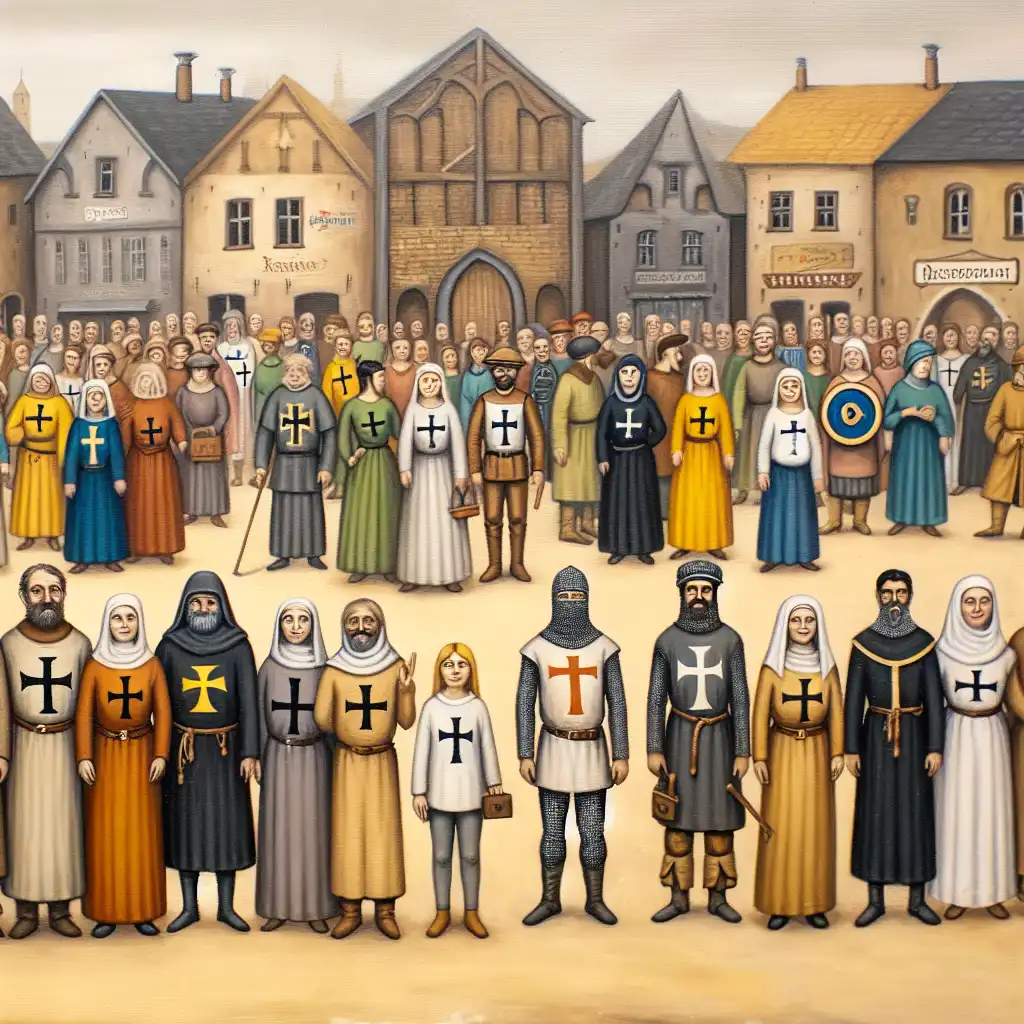
In the medieval times, people who were not Christians were often regarded as heathens.
heathen
ˈhiːðn
Đang tải…
ˈhiːðn
A person who does not belong to any of the widely held religions
In the medieval times, people who were not Christians were often regarded as heathens.
ˈhiːðn
Not associated with any religion
Heathen practices were frowned upon in the Christian community.

ˈhiːðn
A person who does not follow societal norms or rules
You're a heathen if you eat without washing your hands first.
Không tải được âm thanh. Vui lòng thử lại sau.
The word 'heathen' is used to describe someone who does not believe in the same religion or god as you. It is a term that may be used in a religious context to describe someone who is not part of a particular religion. However, in modern times it is considered offensive to use this term to describe people who do not follow your religious beliefs. So, it is better to use other terms like 'non-believer', 'non-secular', 'non-religious' instead of 'heathen' when talking about people of different religions.
Barbarian refers to someone who is considered uncivilized, lacking refinement, and seen as a threat to civilization.
Barbarian describes a person's level of civilization or refinement, while heathen describes their religious beliefs (or lack thereof).
Mở từ: Barbarian →Civilize means to improve or refine someone or something's manners, culture, and way of living. It is commonly used to refer to bringing people or societies up to a standard of civilization that is considered more advanced or sophisticated.
The word heathen refers to someone who is seen as uncivilized, barbaric, or pagan, especially in a religious context.
Civilize is a positive term that implies progress and improvement, while heathen is a negative term that implies backwardness or ignorance.
Mở từ: Civilize →Enlighten means to give someone knowledge or understanding, usually related to spiritual or philosophical ideas. It is applicable when someone needs to be educated or informed about a particular topic or concept.
Heathen refers to someone who does not belong to a widely practiced religion, or someone who is considered to be uncivilized or unenlightened.
Mở từ: Enlighten →Infidel is used specifically to describe someone who does not believe in the dominant religion of a particular society.
For example, in a predominantly Christian society, an infidel might be someone who practices Islam or Judaism.
Heathen is a broader term that can refer to anyone who doesn't adhere to a specific religion or faith, while infidel is a more specific term used to describe someone who opposes the dominant religion.
Mở từ: Infidel →Both heathen and pagan are terms that have been historically used to describe people who aren't part of a particular religious tradition, normally Christianity.
Pagan, on the other hand, is often used to describe people who practice a different religion other than Judaism or Christianity.
The difference is that heathen is a more negative term that describes people who aren't religious, while pagan is a term used to describe people who follow a different religious tradition than Christianity or Judaism.
Mở từ: Pagan →Savage is typically used to describe someone who is uncivilized or barbaric, often violent and aggressive. This term is most applicable when describing someone's behavior or actions.
The difference between the two terms is that heathen refers to a person's beliefs, while savage refers to their behavior.
Mở từ: Savage →Wild refers to something that is untamed or uncivilized.
Heathen is only applicable when talking about religion or faith, while wild can be used in many different situations.
Mở từ: Wild →they occurred at the same location as her proposed ballet and as he expanded to other areas they found something interesting where there were mid-ocean ridges there were also earthquakes so it seemed as though these two were related at this point even the skeptical heathen
Xem trên YouTube ↗I'm trying to champion the naturalist's worldview and show it's not as heathen as most religious people would make it out to be.
Heathens are unredeemed outcasts from heaven who roam the planet without hope of surviving the deaths of their bodies. They may have values, but they are not secured by any divine source. Yet we embrace this because we think it represents the truth.
I don't think the job of the antiracist is to convert the far-out heathen racist, or give them their 'come to Jesus' moment, as it's called. They'll either have those or they won't, and usually, when they have them, it's not because of something someone said per se; it's because of some life crisis that makes them rethink.
The quarrels and divisions about religion were evils unknown to the heathen. The reason was because the religion of the heathen consisted rather in rites and ceremonies than in any constant belief.
I would not attack the faith of a heathen without being sure I had a better one to put in its place.
I'm a heathen when it comes to marriage.
I didn't mind being unpopular at school, because everyone else was a heathen.
I, myself, identify myself as a heathen.
I have vowed to my God to teach the heathen, though I be despised by some.
On thee, Jesus, all our hopes depend. In thee all power is vested, even power to make sinful creatures instrumental in enlightening the heathen.