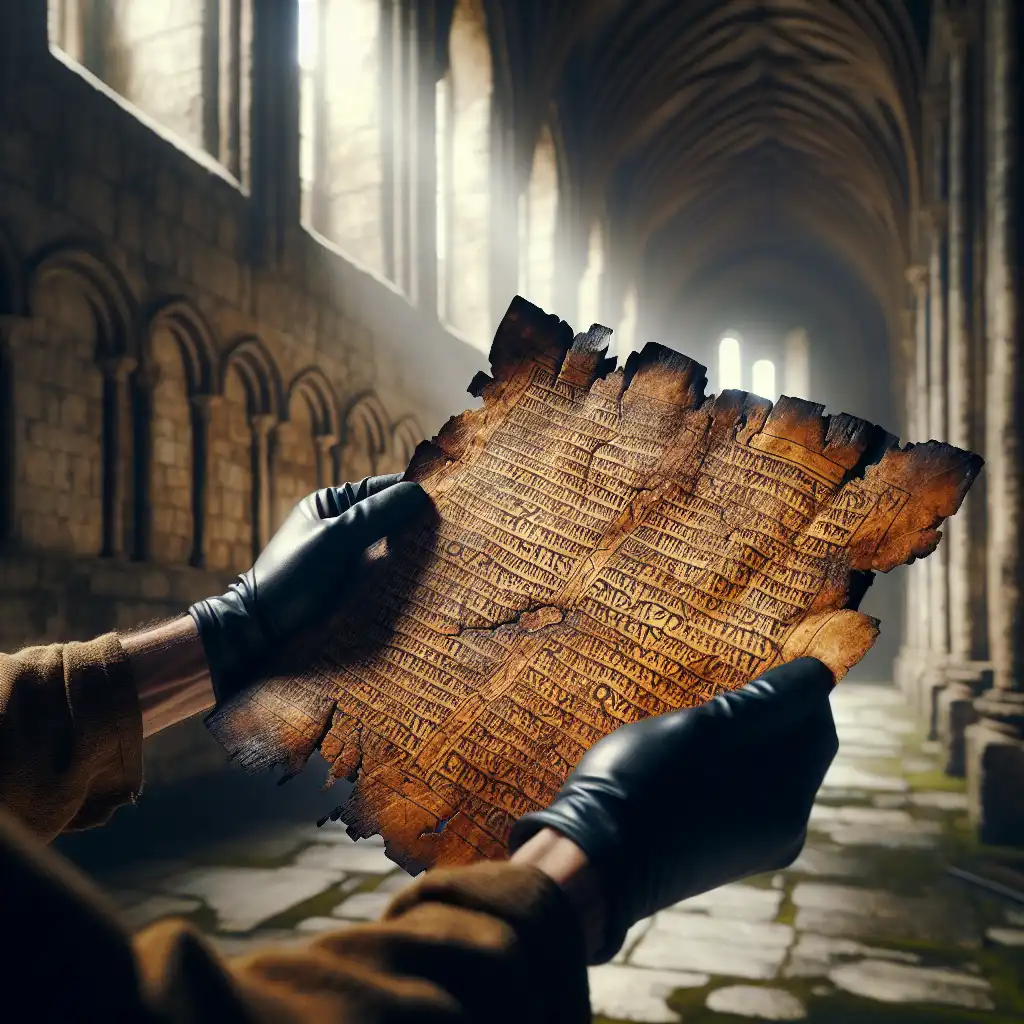
A palimpsest is something that has been written on and then erased so that something else can be written on top of it. It can refer to an actual manuscript that has been reused, or it can be used more broadly to describe anything that has layers of history or meaning. For example, a city might be described as a palimpsest because it has been built and rebuilt over time, revealing the different eras and cultures that have influenced it.
Document refers to any written or printed material that provides information, evidence or proof of something.
A palimpsest is a document that has been reused or overwritten, usually on parchment or vellum, where the original writing has been erased or obscured to make way for new writing.
A document is a record of information that has not been altered, while a palimpsest is a document that has been reused or overwritten with new content on top of the original.
A manuscript is a handwritten or typewritten document that is usually the original copy of a text.
Manuscripts can be works of literature, historical records, religious texts, or any other type of written work.
A palimpsest is a manuscript that has been written on top of an existing text that has been erased or scraped off. The original text can still be visible under the new writing, and it can provide valuable insights into the history and evolution of a particular work or language.
A manuscript is a document that was intentionally written from scratch, while a palimpsest is a document where an earlier text has been erased so that new text can be written on top of it.
Manuscripts are applicable in a wide range of fields, while palimpsests are usually of interest to historians and linguists.
A scroll is a long piece of paper, parchment, or other material that is rolled up for storage or transport.
It is often used for writing important documents like religious texts, historical records, or literature. Scrolls were used extensively in ancient times before the invention of books.
The main difference between the two words is that a scroll refers to a specific type of document, while a palimpsest is a type of parchment or writing material that has been reused.
A text refers to any piece of written or printed material, such as a book, article, or document.
Palimpsests are applicable in the context of historical or archaeological research, as they provide insight into the evolution of language, literature, and culture over time.
Texts are a more general term that can be used in any context where written or printed material is being discussed, such as in academia or journalism.
In simpler terms, a palimpsest is a special type of text that has been overwritten or reused, while a text refers to any written or printed material.
Palimpsest refers to a piece of writing material, such as a parchment or a tablet, which has been used before and has had its previous content partially erased or obscured to make way for new writing.
This term is commonly used in the context of ancient manuscripts or historical records where new information was written over old content.
Write refers to the process of producing written or printed material using pen, pencil, or a digital device such as a computer or phone.
Writing can be done on various surfaces, such as paper, whiteboards, or screens, and can be used for a wide range of purposes, such as communication, storytelling, or academic work.
Palimpsest is a specific term that refers to a particular type of writing material that has been reused, while write is a more general term referring to the act of producing written or printed material.
We quickly erase hoaxes once exposed, excising the monstrous palimpsest, because as with any witch hunt or obvious fake, afterward we can't quite explain why we ever believed the outrageous thing in the first place.
Paris has long been a palimpsest of different cities, each new iteration grafted on top of the still visible last, spanning the extremes of human excellence and beauty and, just as crucially, filth and squalor.
Jews have a special relationship to books, and the Haggadah has been translated more widely, and reprinted more often, than any other Jewish book. It is not a work of history or philosophy, not a prayer book, user's manual, timeline, poem or palimpsest - and yet it is all these things.