
dualism
noun dualism
ˈduːəlɪzəm
The concept that the world is ruled by two opposite forces or principles.
Dualism highlights the conflict between good and evil.
dualism
ˈduːəlɪzəm
Chargement…
ˈduːəlɪzəm
The concept that the world is ruled by two opposite forces or principles.
Dualism highlights the conflict between good and evil.

ˈduːəlɪzəm
State of having two elements or parts.
His photographs explore the dualism of light and dark.
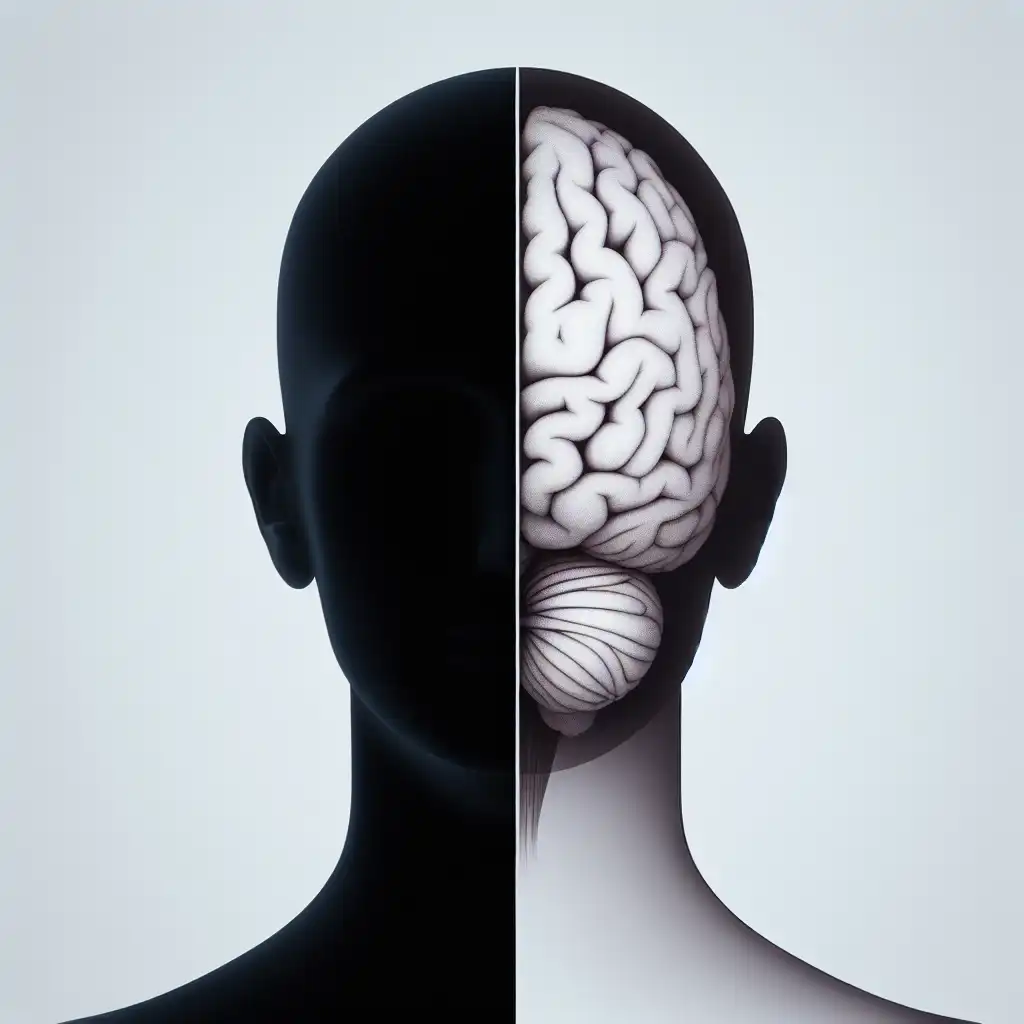
ˈduːəlɪzəm
The theory that humans have both physical and mental aspects.
Dualism considers the body and mind as separate entities.
Impossible de charger l’audio. Réessayez plus tard.
Dualism is a philosophy that says the world is made up of two opposing forces. For example, some people believe that the mind and body are separate things that work together (dualism), while others believe the mind and body are the same thing (monism). Dualism can be used in different fields, such as philosophy, religion, and science. In everyday language, you might also use the word 'dualism' to describe something that has two opposing aspects, like the dualism of good and evil in a story.
Antithesis refers to the direct opposite or contrast of two things. For example, good and evil, light and darkness, or love and hate are antitheses.
Antithesis is often used in literature to create emphasis or highlight opposing ideas.
Antithesis is the contrast between two things, while dualism is the belief in two separate and equal forces or principles.
Antithesis is applicable in literature or rhetoric, while dualism is more commonly used in philosophy.
Ouvrir le mot: Antithesis →Binary refers to a system of two parts or choices, while dualism refers to a philosophical belief that there are two opposing forces or concepts in the world.
Binary can be used when there are only two options to choose from, like a binary code in computing where there are only 1s and 0s.
Binary refers to a system with two choices, while dualism is a belief in two opposing forces or concepts.
Ouvrir le mot: Binary →Dichotomy refers to a division of things into two distinct parts, often opposing each other, like good and evil. We use it when we are talking about polar opposites.
In simpler terms, dichotomy is like dividing things into two sides of a coin, while dualism is the belief that there are two separate coins.
We use dichotomy to classify things into two simple categories, while dualism describes more complex relationships between two opposing forces.
Ouvrir le mot: Dichotomy →Double typically refers to something that has two identical parts, like a double cheeseburger or a double bed.
It can also describe something that is done twice, like a double check or a double take.
So, while double refers to a physical or numerical doubling, dualism refers to a philosophical or spiritual concept of two separate and distinct entities.
Ouvrir le mot: Double →Dualistic describes something that is characterized by the existence of two contrasting or opposing elements.
For example, someone might have a dualistic view of good and evil, believing that they are two opposing forces in the world.
Dualism refers to a belief or concept, whereas dualistic describes something that has two contrasting elements.
Ouvrir le mot: Dualistic →Duality refers to the concept of two complementary, interconnected aspects of a phenomenon, for example, light and darkness, yin and yang, or order and chaos.
Duality is often used in the context of physics, psychology, and spirituality.
Dualism emphasizes the existence of two opposing forces or principles, while duality emphasizes the complementary and interdependent nature of two aspects of a phenomenon.
Ouvrir le mot: Duality →Paradox refers to a situation where two things seem contradictory but may actually be true. For example, the statement "Less is more" is a paradox because it seems to contradict itself, but in some contexts, it can make sense.
To summarize, dualism refers to the idea of two opposing forces or concepts, while a paradox refers to a statement or situation that seems contradictory but may actually be true.
Dualism is applicable in philosophy, religion, and other areas where opposing forces are discussed, while a paradox can arise in any context where there is a seeming contradiction.
Ouvrir le mot: Paradox →Twin refers to two individuals who are born at the same time and are, in most cases, identical or fraternal siblings. The term describes the relationship between these two people and is often associated with a strong connection or bond.
So, while dualism is a broader concept that refers to the duality or separation of two opposing things, twin specifically refers to two individuals who share a unique and close relationship by being born together.
Ouvrir le mot: Twin →Why Gender Equality Is...
Voir sur YouTube ↗Modern secular thought has its own dualism: It treats only the physical world as knowable and testable, while locking everything else - mind, spirit, morality, meaning - into the realm of private, subjective feelings. The so-called fact/value split.
My friend Richard...
Voir sur YouTube ↗I believe in general in a dualism between facts and the ideas of those facts in human heads.
What would it be like if...
Voir sur YouTube ↗Male and female represent the two sides of the great radical dualism. But in fact they are perpetually passing into one another. Fluid hardens to solid, solid rushes to fluid. There is no wholly masculine man, no purely feminine woman.
In the first place, Descartes stands for the most explicit and uncompromising dualism between mind and matter.
Vinyl is democratic, as surely as the iPod is fascist. Vinyl is representational: It has a face. Two faces, in fact, to represent the dualism of human nature. Vinyl occupies physical space honestly, proud as a fat woman dancing.
The dualism itself becomes a sort of presupposition or datum; its terms condition the further problem.