
creed
noun creed
kriːd
A set of beliefs that guide someone's actions
People of all races, religions, and creeds were present at the assembly.
creed
kriːd
Loading…
kriːd
A set of beliefs that guide someone's actions
People of all races, religions, and creeds were present at the assembly.
kriːd
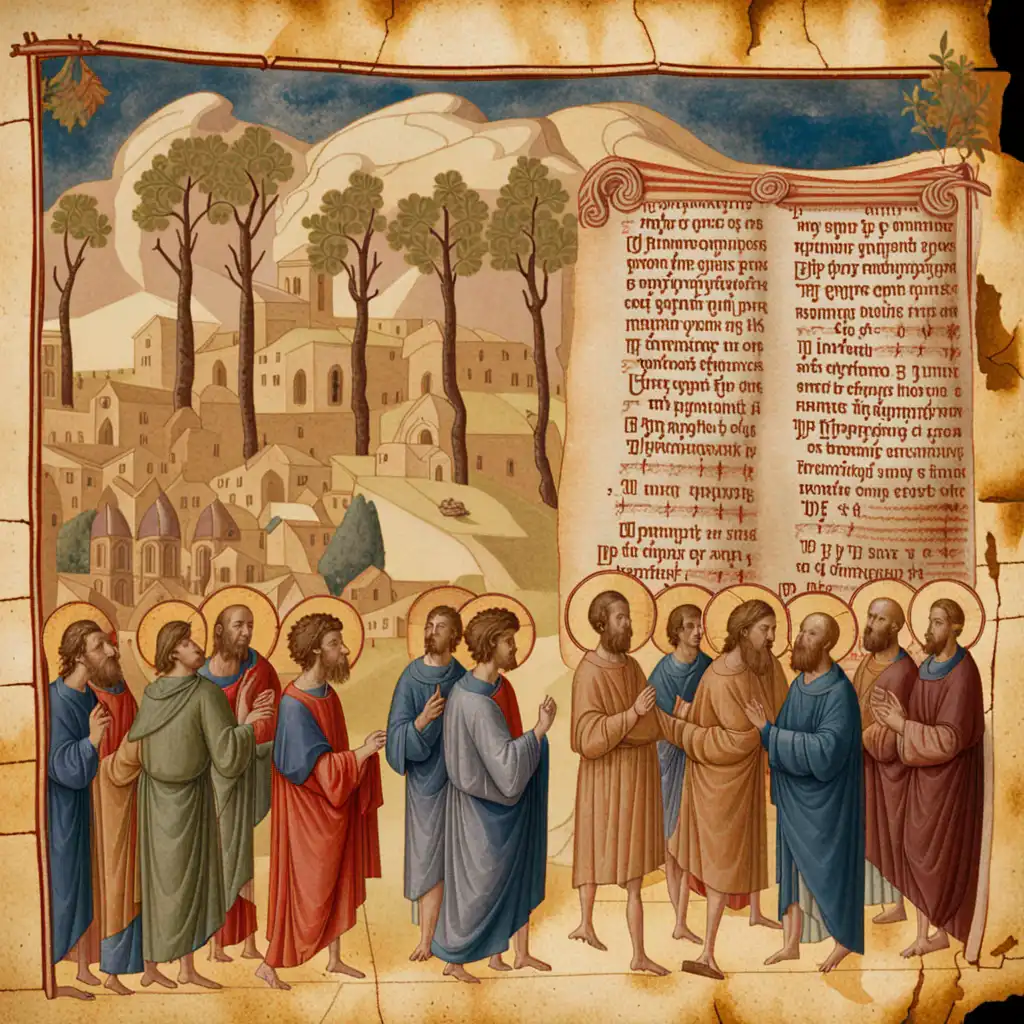
A formal statement of religious belief
The Apostles' Creed is an early statement of Christian belief.
Audio could not be loaded. Please try again later.
The word 'creed' refers to a set of beliefs or principles that a person or group of people follow. It is often used in a religious context, such as the Christian Creed, which outlines the fundamental beliefs of Christianity. However, the word can also be used in a broader sense to refer to any set of guiding principles or beliefs. For example, someone might say that their personal creed includes honesty, integrity, and compassion. The word 'creed' can be used in both formal and informal settings and is often used to express a person's values or beliefs.
Belief refers to a personal understanding or acceptance of something to be true, whereas the word creed refers to a set of beliefs or principles that are commonly held by a group of people who share a specific religious or political ideology.
For example, an individual may have a belief in aliens, but they may not adhere to any particular creed. Conversely, a religious organization may have a creed that outlines their core beliefs, but individuals within the organization may have differing personal beliefs.
Belief is something that an individual has, while creed is shared by a group.
Open word: Belief →Conviction refers to a strong belief or opinion that someone holds based on their personal experiences or knowledge. It is more personal and individualistic.
An example of conviction would be a person believing that eating a healthy diet and exercising regularly is important for their own well-being.
Open word: Conviction →Both credo and creed refer to a set of beliefs or principles. The main difference is that credo is a Latin word that typically refers to personal beliefs or individual statements of faith, while creed is an English word that usually refers to a formal statement of beliefs shared by a religious, political, or social group.
For example, someone might say "my credo is to always be honest" or "my credo is to treat others with kindness." In these cases, credo is being used to describe an individual's personal beliefs or guiding principles.
Credo usually describes personal beliefs, while creed refers to a formal statement of beliefs shared by a group.
Open word: Credo →Doctrine refers to a set of beliefs or principles that are established and taught by a particular group or organization.
It is broader than a creed and can cover various topics such as ethics, morality, and social justice. For example, the Doctrine of Karma is a fundamental principle in many eastern religions.
If you want to express your beliefs in a short and clear manner, use a creed. If you want to explain and teach a set of principles or beliefs that are more detailed and broad, use a doctrine.
Open word: Doctrine →Creed and dogma are both words used to describe a set of religious beliefs or principles.
Dogma refers to a specific set of beliefs or principles that are considered to be unquestionably true by a religious organization or community.
Unlike a creed, which is more of a summary or a statement of belief, dogma is more specific and prescriptive.
In general, creeds are applicable in more general religious or philosophical discussions as they summarize collective beliefs, while dogmas are more specific and applicable in religious teachings and practices, where strict adherence to certain principles is required.
Open word: Dogma →Faith refers to a belief or trust in something without proof or evidence.
It can be applied to many different areas of life, such as faith in a higher power, faith in a friend or family member, or faith in oneself.
Faith can be a personal belief or experience and is often associated with emotions of hope, trust, and confidence.
A creed is a specific set of beliefs or principles, while faith refers to a more general belief or trust without evidence.
Creed is often used in a formal or structured context, while faith can be a personal belief or experience in many different areas of life.
Open word: Faith →Ideology, on the other hand, refers to a broader framework of beliefs or principles that govern how society should be structured, governed, and developed.
Creed focuses on personal beliefs, while ideology encompasses broader societal beliefs. For example, a person's creed may be their religious beliefs, while their ideology may be their political beliefs about the role of government in society.
Open word: Ideology →Creed refers to a system of religious or political beliefs, while philosophy refers to a set of ideas about the nature of reality and knowledge.
A creed is applicable to a specific religion or political group, while philosophy is applicable to any field of study or discipline that involves thinking critically about the world.
Essentially, a creed answers the question, "What do we believe?" while philosophy answers the question, "How do we know what we know?"
Open word: Philosophy →A creed is a set of beliefs or values that a group of people follow, typically related to religion or ideology, while a principle is a fundamental truth or rule about how to behave or make decisions.
Principles are applicable in any situation where there are rules or guidelines to follow, such as in personal ethics or business practices.
In simpler terms, a creed is what you believe in, while a principle is how you behave based on those beliefs.
Open word: Principle →A tenet is a belief or principle that is fundamental to a particular philosophy, religion or belief system. It is an essential aspect of that faith or belief and is often considered a core value.
In simpler terms, a creed is a statement of beliefs that a group follows, while a tenet is a fundamental belief that is essential to a particular belief system.
For example, the Nicene Creed is a statement of faith used by Christians, while the Five Pillars of Islam are fundamental tenets of the Islamic faith.
Open word: Tenet →You have a responsibility to the world, to the state to them to take care of them right. You may teach them whatever creed you think is most important, but I say you have a responsibility to let them be informed
Watch on YouTube ↗Art raises its head where creeds relax.
universal. - So in psychology today, there is widespread agreement that seven facial expressions of emotion are universally recognized all around the world, regardless of race color creed nationality gender,
Watch on YouTube ↗That is America. That is America. Those bonds of affection; that common creed. We don't fear the future; we shape it. We embrace it, as one people, stronger together than we are on our own.
And if I have lived my life by any kind of creed it's probably that. I have always believed that the things we know -- that knowledge is an absolute good, that the things we have learned and carry with us in our heads are what make us who we are,
Watch on YouTube ↗Beauty is the only thing that time cannot harm. Philosophies fall away like sand, creeds follow one another, but what is beautiful is a joy for all seasons, a possession for all eternity.
And actually every time we hold out the hand of friendship to somebody not like us, whose class or creed or color are different from ours, we heal one of the fractures of our wounded world.
Watch on YouTube ↗Myths and creeds are heroic struggles to comprehend the truth in the world.
neglect aesthetic devastation, divisive urbanism that zoned communities by class creed or affluence. And the same was happening to the community. As the shape of the built environment changed, so the lifestyles and sense of belonging of the communities
Watch on YouTube ↗We have so much discrimination in this world - colour, race, creed, all of these things - and there is an issue here that the right of marriage in the civil law is not extended to same-sex couples.
all colors creeds genders. We could build such spectacular cities that we could disincentivize sprawl and actually protect nature. We can grow cities that are high-tech,
Watch on YouTube ↗We have come a long way in terms of equality for every race, sex and creed in this nation. We still have a ways to go to before we are there for everyone, but we must find peaceful and meaningful solutions that offer positive outcomes for all.
are uniting as never before, and that creed of inwards and backwards, that fear that anxiety, playing on the simplest instincts, is sweeping across the world. Those of us who believe,
Watch on YouTube ↗From the death of the old the new proceeds, and the life of truth from the death of creeds.
"We made you into nations and tribes so that you could learn from one another." And to my mind those are pretty wise words, no matter what your creed. Thank you.
Watch on YouTube ↗Opinions alter, manners change, creeds rise and fall, but the moral laws are written on the table of eternity.
but without any of the soft bits in Margaret's character. I wrote this poem for her. These are not my beliefs. But my mother has lived by this creed all her life.
Watch on YouTube ↗We believe in the dignity of man as an individual, whatever his race, colour or creed, and his right to better, fuller, and richer life.
And it's the nationalism of an idea that essentially says you can endure differences of caste creed, color culture cuisine custom and costume consonant for that matter, and still rally around a consensus. And the consensus is of a very simple principle,
Watch on YouTube ↗I think that everybody in the world, whatever colour or creed, has a jerk like JR in his or her family somewhere. Whether it is a father, uncle, cousin or brother, everybody can identify with JR and that certainly had something to do with the success of 'Dallas.