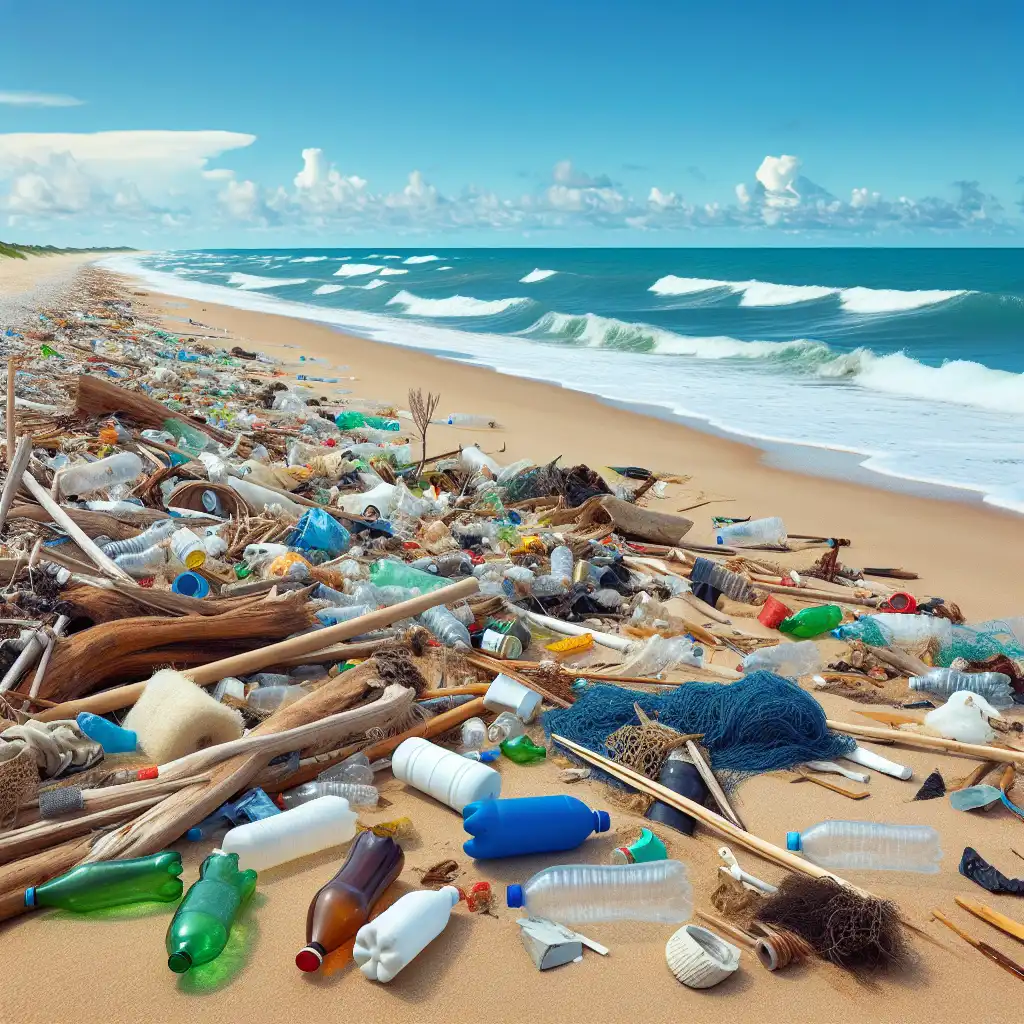
flotsam
noun flotsam
ˈflɑːtsəm
Waste material or things that have been thrown away, found floating in the sea or washed ashore
The beach was full of flotsam and jetsam washed up by the sea.
flotsam
ˈflɑːtsəm
Cargando…
ˈflɑːtsəm
Waste material or things that have been thrown away, found floating in the sea or washed ashore
The beach was full of flotsam and jetsam washed up by the sea.

ˈflɑːtsəm
People or things considered to be unimportant, unwanted or worthless
The room was filled with the flotsam of her life - unwanted gifts, unread books.
No se pudo cargar el audio. Inténtalo de nuevo más tarde.
The word 'flotsam' means floating debris or wreckage from a ship or boat that has sunk, washed up on shore, or been thrown overboard. It can also refer to random items or people who are seen as useless, unwanted, or unimportant. Flotsam is often found on beaches or in bodies of water, and it may include items such as driftwood, plastic bottles, and other litter. In everyday language, the term may also be used metaphorically to describe people or things that are considered to be unwanted or discarded, such as old furniture or outdated technology.
Debris is any scattered pieces of waste, discarded matter, or objects left over after an event. This term is typically used to describe the aftermath of a disaster, such as a hurricane or an earthquake.
Debris is often associated with destruction and is usually the result of a large-scale event.
Flotsam is specifically used to describe debris that is floating in water. This term is often used in reference to shipwrecks or other maritime disasters.
Debris refers to any scattered pieces of waste or objects left over after an event, while flotsam specifically refers to debris that is floating in water.
Abrir palabra: Debris →Detritus refers to the debris left over from something that has broken down or decayed, such as dead leaves or decaying fruit.
Detritus is debris left over from decay on land, while flotsam is debris floating on water.
Abrir palabra: Detritus →The words flotsam and jetsam both refer to objects that have been thrown into the water, but they have slightly different meanings.
Jetsam, on the other hand, refers to objects that have been intentionally thrown overboard by the crew of a ship in order to lighten the load.
So to summarize, flotsam is things that float in the water from an accident, while jetsam is things thrown overboard intentionally.
Abrir palabra: Jetsam →Litter refers to any kind of waste or garbage that has been discarded in public places, such as on the street or in a park.
Flotsam is more commonly used to describe marine debris, while litter describes land-based trash.
Abrir palabra: Litter →Flotsam refers to floating debris or wreckage from a ship, while refuse refers to any form of waste or garbage. Flotsam usually describes items that have been lost or discarded in the ocean, while refuse describes any garbage that needs to be disposed of properly.
Essentially, flotsam is a type of refuse, but refuse encompasses a wider range of waste materials.
Abrir palabra: Refuse →Rubbish refers to any kind of waste material or things that are thrown away.
Flotsam is applicable when referring to objects that have washed up onto the shore or beach, while rubbish is applicable when referring to any kind of discarded or unwanted materials, which could be anything from food to plastic.
Abrir palabra: Rubbish →Scrap refers to discarded or unwanted materials, usually made up of metal or other durable materials.
Flotsam is generally used in the context of floating debris in water, while scrap is used more broadly to describe discarded materials that are no longer needed or desired.
Abrir palabra: Scrap →Flotsam refers to debris or wreckage that is floating on water after a shipwreck, a storm or any other aquatic event. Waste refers to anything that is thrown away because it is no longer useful, healthy or desirable.
Flotsam is more specific and refers to items that are found in or on water, whereas waste is more general and refers to any materials that are no longer needed or wanted.
Flotsam is usually applicable in situations involving water, such as maritime accidents, while waste is applicable in many contexts of everyday life, such as household garbage or industrial waste.
Abrir palabra: Waste →The Survival of the Sea...
Ver en YouTube ↗We're into this barrage of pop culture - you know, TV, movies, the Internet. We become creatures that we've made up, made of certain different flotsam from pop culture and certain different personas that are in style.
The price of shame %\PIPE%...
Ver en YouTube ↗Air is traditionally 'thin,' but the more we learn about our atmosphere, the more substantial it becomes. In some places it is so filled with inorganic flotsam that it is almost thick enough to plough; in others, it has become so primed with the by-products of life that it comes close to being a living tissue in its own right.
Dead Whale Carcass Feast...
Ver en YouTube ↗Bill de Blasio, for his part, became the mayor of New York, surely the most powerful local political position in the nation, and arguably - after Giuliani and Bloomberg - one with a national base, one with, practically speaking, no job at all. He went from marginal political flotsam and jetsam to extraordinary centrality within a few months time.
National Geographic...
Ver en YouTube ↗Where does creativity...
Ver en YouTube ↗Bear Eats Dead Whale %\PIPE%...
Ver en YouTube ↗Best Of Oceans %\PIPE% BBC...
Ver en YouTube ↗Octopus Mating %\PIPE%...
Ver en YouTube ↗The Weird World of...
Ver en YouTube ↗The Ocean Food Chain %\PIPE%...
Ver en YouTube ↗