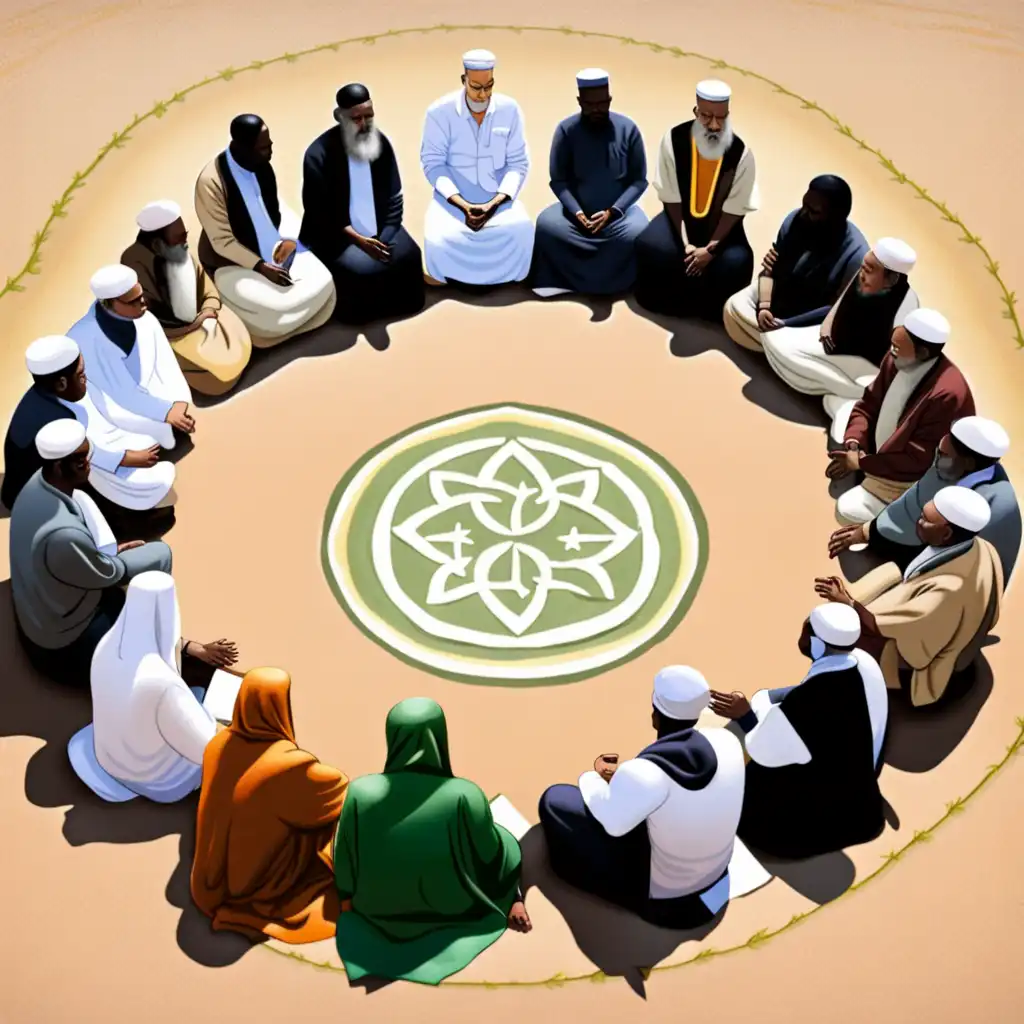
Dialogue is a conversation between two or more people. It's a way of exchanging ideas and thoughts. It can be formal or informal and can happen in many different places, such as at school, work, or with friends and family. When you're learning English, practicing dialogue is a great way to improve your speaking and listening skills. You can practice by finding a language partner, joining a language exchange program, or even watching movies or TV shows in English. By engaging in dialogue, you can learn new vocabulary and practice using grammar and pronunciation correctly.
Chat refers to a casual conversation, often between friends or acquaintances.
It is usually done with the intention of exchanging information or ideas. In simpler terms, chat is used when two people are talking casually to each other, while dialogue is used when people are talking in a more serious or formal way, like in a meeting or classroom discussion.
Colloquy and dialogue are both words that refer to a conversation between two or more people.
However, colloquy typically refers to a more formal discussion, such as a debate or a political discussion, whereas dialogue can refer to any type of conversation, whether it's formal or informal.
For example, a group of politicians might have a colloquy about a new law, while two friends might have a casual dialogue about their weekend plans.
Communicate means to convey or share information, thoughts or feelings with someone else.
Both communicate and dialogue are important in different situations. We use communicate when we want to express something to someone, whether it's through writing, speaking, or other means.
The words conversation and dialogue are often used interchangeably, but there is a subtle difference.
A conversation is a general term that refers to any type of talk between two or more people.
It can be casual or formal, light-hearted or serious. A dialogue is a more structured conversation that involves two or more people exchanging ideas or opinions on a particular topic.
Both conversation and dialogue are important forms of communication, but they are applicable in different scenarios.
A conversation may occur in any setting, like a party, office, or family gathering when people are catching up or passing time.
Conversation is more informal while dialogues are more structured and goal-oriented.
Discourse refers to a larger discussion or narrative that involves multiple perspectives or voices.
In other words, dialogue is a smaller-scale conversation while discourse is a broader discussion that may involve multiple conversations and viewpoints.
Dialogue can be useful for resolving conflicts or sharing information while discourse can help us understand complex issues from different perspectives.
Dialogue and discussion both involve conversation or communication between two or more people.
Discussion refers to a conversation where the participants are more interested in expressing their own opinions or ideas than in listening to others.
Both dialogue and discussion have their place. Dialogue is most useful when trying to build relationships, resolve conflicts, or promote understanding between different groups or individuals.
Discussion can be useful when brainstorming ideas, debating issues, or making decisions.
Exchange refers to the act of giving and receiving something between two or more parties.
Dialogue focuses on the exchange of thoughts and ideas between people, while exchange involves the transfer of tangible or intangible things between two or more parties.
Exchange is applicable in situations where there is an exchange of goods, services, or ideas between individuals or organizations.
Dialogue and interchange both refer to a conversation or communication between two or more people.
However, dialogue typically implies a more formal, structured conversation, while interchange has a more informal and spontaneous connotation.
Dialogue can be used in professional or academic settings, such as a business meeting or a literary work, while interchange is often used in everyday conversations or discussions.
Talk refers to any form of communication that involves the exchange of information.
Talk can be used in any situation where people need to communicate, such as in everyday conversation, public speaking, or instructional settings.
Dialogue is a specific type of talk that involves respectful and open communication aimed at finding common ground, while talk refers to any form of communication.
because it can be read in far more ways. Importantly the allegory is connected to the theory of forms, developed in Plato's other dialogues, which holds that like the shadows on the wall, things in the physical world are flawed reflections of ideal forms,
And there's nothing we do that is more crucial to our survival. Here's the dilemma As the world grows by several billion more people, We'll need to double maybe even triple global food production. So where do we go from here? We need a bigger conversation an international dialogue. We need to invest in real
What does "genius" mean to me? I think there are many brilliant people in the world many people who are very very intelligent. So I think it has to do with a line of dialogue
narcissist for wanting to be a performer and find true inner peace and that's it thank you there's one more verse but it's short I swear now a question to further our dialogue
And the different stages of sleep have been shown to help consolidate different types of memories. During the non-REM slow-wave sleep, declarative memory is encoded into a temporary store in the anterior part of the hippocampus. Through a continuing dialogue between the cortex and hippocampus,
but its own distinct epigenome. The epigenome also mediates a lifelong dialogue between genes and the environment. The chemical tags that turn genes on and off can be influenced by factors including diet, chemical exposure, and medication.
including your culture community and family, influence how you see the world. Say "This is how I see the problem but how do you see it?" Don't assume that your perception is the objective truth. That'll help you work toward sharing a dialogue with others to reach a common understanding together.
In music, what is very important is temporality of space and length, based on the breathing space the director gives the music within the film, by separating the music from various elements of reality, like noises, dialogues... That's how you treat music properly, but it doesn't always happen this way. Music is often blamed, but it's not its fault.
and lets common phrases squash into a single word. In rare cases you can have a double contraction, though those generally aren't accepted in writing, with the exception of dialogue. So it's possessive it's often followed by s's,
Now that you have an idea, or something you think could be good for a cartoon, it's time to shape it. A cartoon is like a staged play. A cartoonist is playwright, director, stage designer, choreographer, and costume designer. A cartoon has characters, a set, dialogue,
For me dialogue is as essential in football as in life. I like to talk to my players and I never impose anything, I always give them the chance to make their own choices.
Outside of writing dialogue they serve no purpose in most formal writing. And in some contexts the stigma these social cues carry can work against the speaker. But in most conversations these seemingly senseless sounds can convey a world of meaning.
I would say I have sort of a natural gift for character, and following one person's point of view at a time, and dialogue, but I'm not naturally good at strong plot.