
outcrop
noun outcrop
ˈaʊtkrɑːp
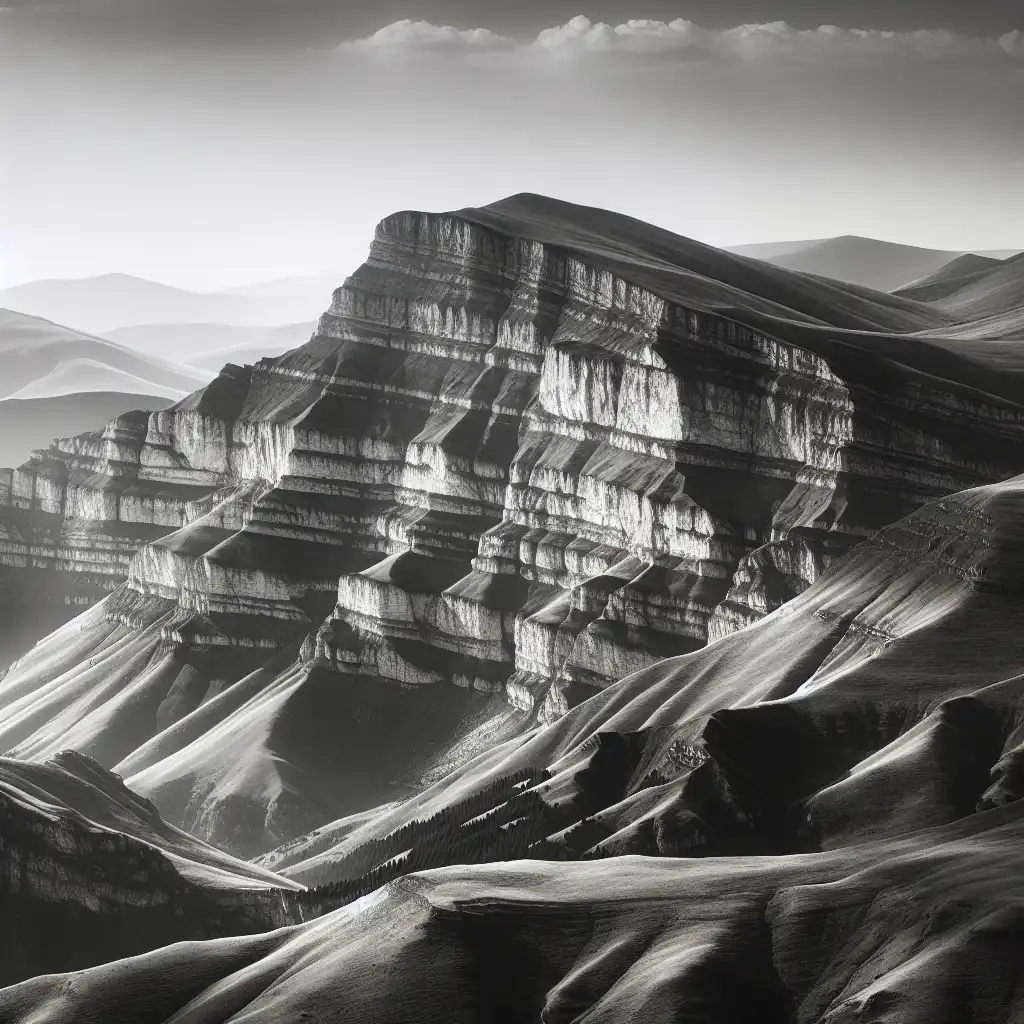
A part of the earth's surface where the rocks or minerals come out from underneath the soil or water.
There is an outcrop of rock in the middle of the field.
outcrop
ˈaʊtkrɑːp
読み込み中…
ˈaʊtkrɑːp
A part of the earth's surface where the rocks or minerals come out from underneath the soil or water.
There is an outcrop of rock in the middle of the field.
ˈaʊtkrɑːp
When rock or mineral forms, or becomes visible on the earth's surface.
The rock outcrops on the eastern side of the mountain.
音声を読み込めませんでした。しばらくしてからもう一度お試しください。
An outcrop is a part of a rock or a cliff that sticks out from the ground. It is usually exposed because of erosion or weathering. It can be found in mountains, hills, or even in flat ground. People use the word 'outcrop' to describe the exposed part of a rock or cliff that they can see above the ground level.
Appearance refers to the way something or someone looks.
It can describe physical characteristics, such as hair color or facial features, as well as the overall impression of something, such as the appearance of a building or an event.
Appearance is applicable to describing how something looks in general, while outcrop describes a specific geological feature.
単語を開く: Appearance →Emergence refers to something appearing or becoming visible, often gradually, whereas outcrop refers to a portion of rock that is visible above the surface of the ground.
For example, the emergence of a new species refers to the gradual appearance of that species over time, while an outcrop of rocks may be visible along the side of a mountain or in a quarry.
Emergence can be applied to many different things, such as new ideas, technologies, or trends, while outcrop is generally used in the context of geology and the study of rocks and minerals.
単語を開く: Emergence →An eruption refers to a sudden and violent release of material, such as lava, gas, and ash, from a volcano, while an outcrop refers to a visible exposed portion of rock or geological formation on the surface of the earth.
Eruption describes a volcanic event, where molten rock or magma is released from the earth's surface, while outcrop describes a geological feature visible on the surface of the earth, such as a cliff or mountain.
In simpler terms, eruption is related to volcanoes while outcrop refers to visible rocks on the surface.
単語を開く: Eruption →Exposure refers to the amount or degree to which something is presented or exposed to view, while outcrop refers to the appearance of a rock or geological formation at the surface of the earth.
Exposure means how much something can be seen, while outcrop refers to when something is visible on the surface, especially with regard to rocks or geological formations.
Exposure is used more generally, while outcrop has a more specific geological connotation. For example, a photographer might talk about the exposure of a photograph, while a geologist might talk about the outcrop of a rock formation.
単語を開く: Exposure →Jut and outcrop both refer to geological features, but there are slight differences between the two.
A jut refers to a point or edge that sticks out from a larger form, like a rock jutting out from the side of a cliff. This term is often used to describe smaller protrusions.
Thus, jut describes smaller protrusions while outcrop is used for larger, more expansive rock formations.
単語を開く: Jut →Manifestation refers to the visible or obvious appearance of something, usually related to abstract concepts or ideas like emotions, thoughts, or beliefs.
Manifestation describes the appearance of abstract concepts, while outcrop describes the appearance of natural or physical features.
単語を開く: Manifestation →A protrusion is any kind of object that sticks out from its surroundings.
The main difference between these two terms is that outcrop specifically refers to a section of rock that is exposed on the surface, while protrusion is a more general term that can apply to any kind of object that sticks out.
In terms of when each term would be used, outcrop would be used when talking about geological features, such as a rock formation or a cliff face, while protrusion can be used in a wider range of contexts.
単語を開く: Protrusion →Rise refers to an upward slope or incline.
It can be natural or man-made and can occur gradually over an extended distance. Rise is applicable when there is a gradual increase in elevation, such as in a hill or mountain.
Outcrop refers to a sudden exposure of rock or soil, while rise refers to a gradual increase in elevation.
単語を開く: Rise →Mars Rover: Opportunity...
YouTube で見る ↗Wombats Poo Cubes! %\PIPE%...
YouTube で見る ↗The secret messages of...
YouTube で見る ↗Dive into an ocean...
YouTube で見る ↗Frans Lanting &...
YouTube で見る ↗The Ancient Orchestra %\PIPE%...
YouTube で見る ↗Dino Hunter Digs for...
YouTube で見る ↗Mars Up Close Part 3:...
YouTube で見る ↗Water on Mars? %\PIPE%...
YouTube で見る ↗Fossil Found in Kitchen...
YouTube で見る ↗