
whelp
noun whelp
welp
A young dog, wolf, lion, or other carnivorous mammal.
The wolf whelp was separated from its mother.
whelp
welp
読み込み中…
welp
A young dog, wolf, lion, or other carnivorous mammal.
The wolf whelp was separated from its mother.

welp
An inexperienced, young or new person.
The young whelp was new to the world of business.
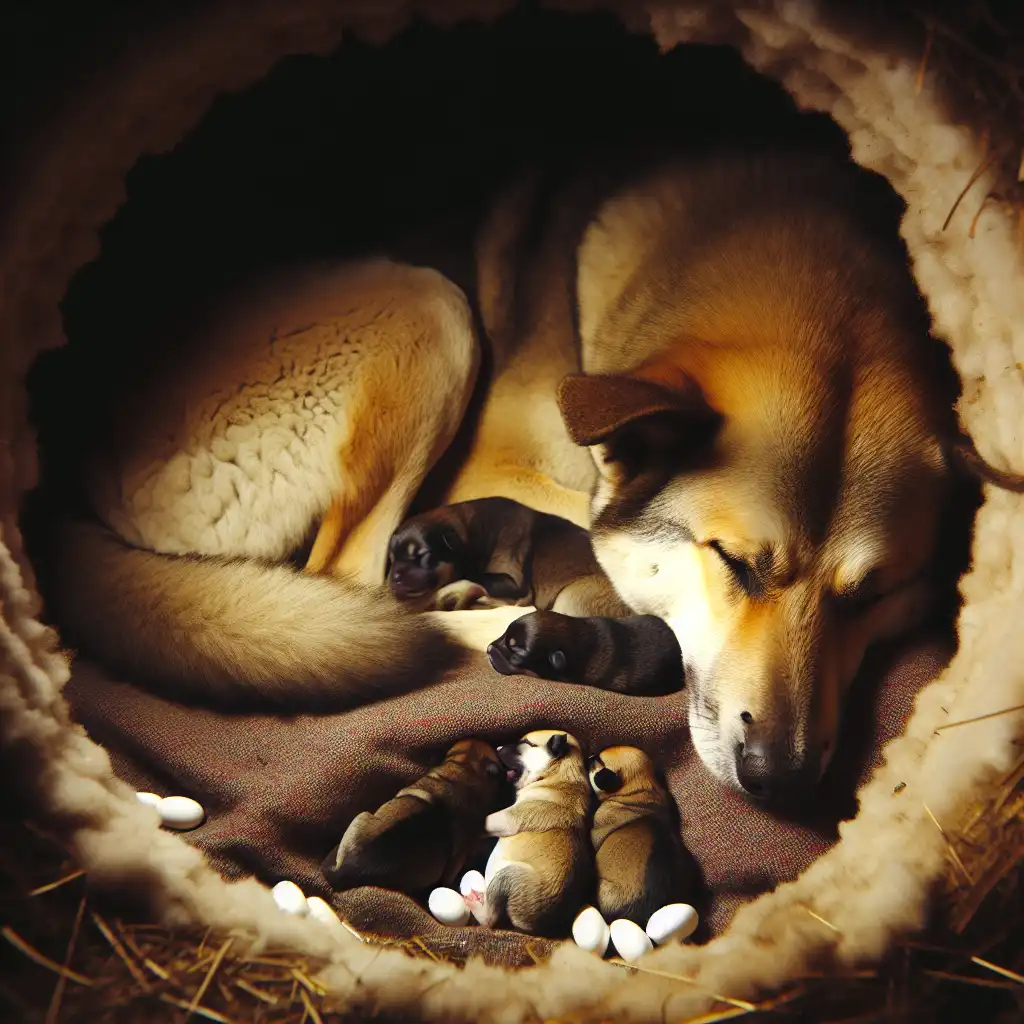
welp
To give birth to (said of dogs, wolves, and other carnivorous mammals).
The dog whelped three puppies.
音声を読み込めませんでした。しばらくしてからもう一度お試しください。
The word 'whelp' refers to a young animal, particularly a dog or a wolf. It can also be used as a verb to describe the act of giving birth to puppies. The word is generally not used in everyday conversation and is more commonly found in literature or when discussing animals.
Calf refers to a young cow or bull, while the word whelp refers to a young dog or wolf. Calf is used specifically in reference to bovine animals, while whelp is used specifically in reference to canines.
So, for example, if you saw a baby cow, you would say it is a calf, but if you saw a baby dog, you would say it is a whelp.
単語を開く: Calf →The words cub and whelp both refer to young animals, but they are typically used for different species.
Cub is usually used to refer to young bears, lions, tigers, and other large predatory mammals. For example, a baby bear would be called a "bear cub.".
To summarize, cub is used for young large predatory mammals like bears, while whelp is used for the young of certain domestic animals.
単語を開く: Cub →Fawn refers specifically to a young deer, whereas whelp is a term used for a young animal such as a dog, wolf, or bear.
If you see a young deer, you would call it a fawn, and if you see a young dog or wolf, for example, you would call it a whelp.
Fawn and whelp are both used to describe young animals, but they are specific to different types of animals.
単語を開く: Fawn →Foal is primarily used to refer to a baby horse, from birth until it is weaned from its mother. Whelp is used to refer to a baby animal of various species, but is most commonly used to refer to a young dog or wolf.
If someone is talking about a baby horse, they would use the word foal, but if they are referring to a baby dog or wolf, they would use the word "whelp."
単語を開く: Foal →Kitten refers specifically to a baby cat, while whelp can refer to a baby of any type of carnivorous animal, such as a dog or a wolf.
However, whelp is not commonly used in everyday speech and is often reserved for more formal or technical contexts. If you want to talk about a baby cat, use kitten, but if you want to refer to a baby of a larger carnivorous species, whelp could be used.
単語を開く: Kitten →Offspring refers to the children or descendants of a particular person, animal, or plant.
It can be used in a less formal or more familiar context, but it is not a general term for all kinds of offspring.
Offspring is a broader term that can be used for any kind of children or descendants, whereas whelp is a specific term that refers only to the young of certain carnivorous animals.
単語を開く: Offspring →Both pup and whelp refer to young animals, especially to young dogs.
However, pup is a more common term used for a puppy, which is a young dog, usually under one year old. Whelp refers to a young dog as well but is more specific and usually used to describe a newborn or a very young puppy, around 2-3 weeks old.
Pup is a more commonly used and general term, while whelp is a more specific term for a newborn or very young puppy.
単語を開く: Pup →Both words spawn and whelp refer to the birth of animals, but they are used differently depending on the type of animal.
Spawn is used for the birth of fish, amphibians, and invertebrates like jellyfish. For example, we can say "The salmon will spawn in the river" or "The jellyfish are spawning in the ocean.".
単語を開く: Spawn →Shall we, who have laid the proud British lion at our feet, now be afraid of his whelps?