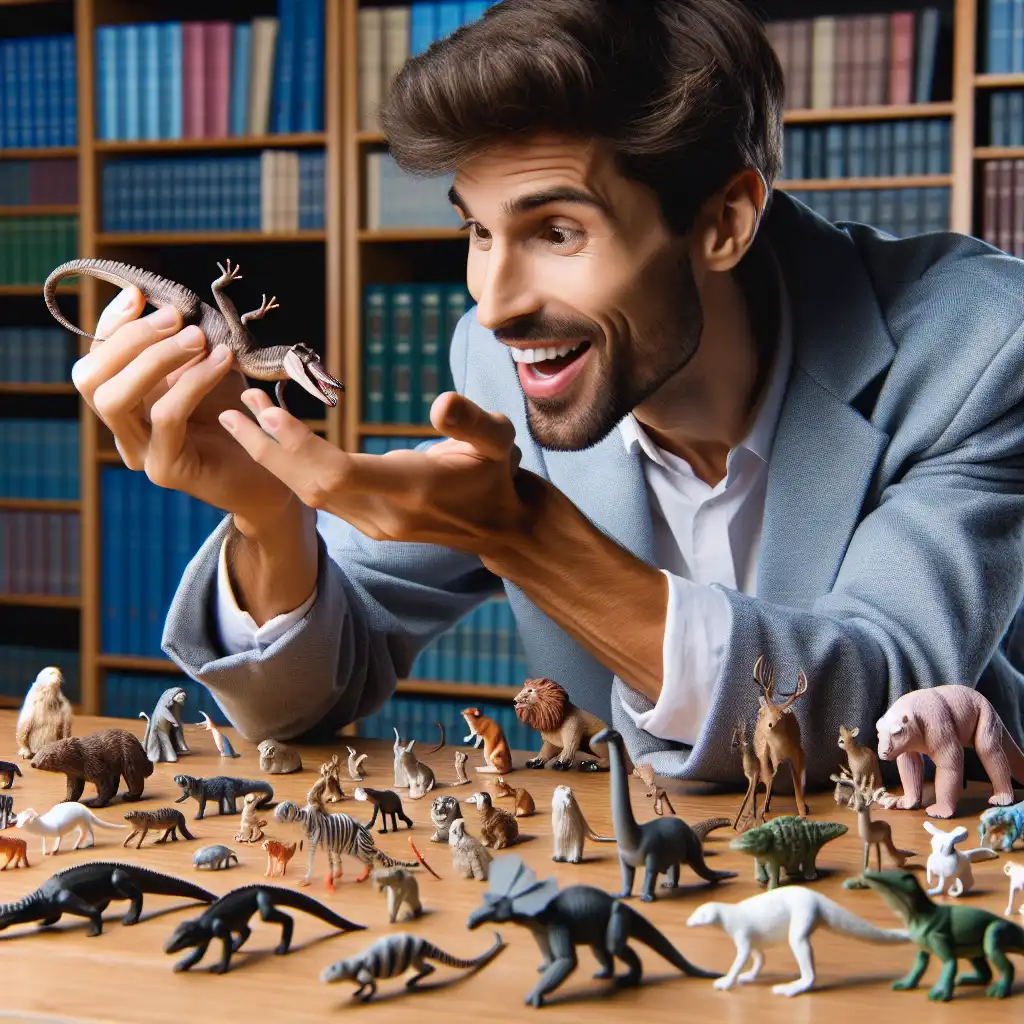
Classification means sorting things or putting them into groups based on their similarities and differences. It's like putting all the red toys together and all the blue toys together. You can use classification in many areas, such as organizing books in a library, grouping animals by species, or organizing clothes by type. It helps make things easier to find, understand, and learn about.
Arrangement refers to the organization of various items or things in a certain order or pattern, usually based on a specific purpose or criteria.
Both arrangement and classification are applicable in various contexts.
Arrangement is often used to organize physical objects or items, whereas classification is used to categorize them based on their attributes or characteristics.
Categorization and classification both involve sorting things into groups, but there is a subtle difference between them.
Categorization involves grouping similar things together based on their common characteristics or properties. For example, a grocery store might categorize its products into sections such as dairy, meat, and produce.
While both terms can be used in a variety of contexts, categorization is more flexible and open-ended, while classification typically involves a more structured and predefined system.
Categorization is used when grouping things together based on similarities, and classification is used when sorting things into specific predefined categories.
Classify refers to the act of assigning or placing something into a particular category or group.
For example, to classify a new species of fish based on its physical characteristics and behavior.
Classification is a process or system used to group things together, while classify is the action of placing something into a specific group or category.
Codification is the process of encoding information into a structured format or system, such as assigning codes or symbols to represent different elements.
Classification means grouping things or objects based on their similarities or characteristics. Division is a way of separating things into different categories or groups based on their differences or distinct features.
Division is applicable when separating or breaking things down into parts or categories. For example, dividing countries into continents, dividing a company into departments or dividing a library into sections.
Group refers to a collection of things or people that share a common characteristic or purpose. For example, a group of friends, a musical group, or a group of employees.
Classification is the process of categorizing things based on their similarities or differences, while a group is a collection of things or people that share a common characteristic or purpose.
Organization refers to arranging or structuring information or objects in a particular order or system to make it easier to access or use.
Classification is more focused on grouping things based on their similarities or differences, while organization is more about arranging things in a logical manner that makes sense for their intended use or purpose.
Sorting is the process of arranging items into a specific order, based on a particular criterion. Sorting often refers to arranging items based on a common trait, such as color or size.
Sorting can be used in any situation where objects or data need to be organized into an order or sequence, such as organizing a bookshelf or sorting inventory.
The main difference between classification and sorting is that classification focuses on identifying and grouping items based on specific attributes, while sorting is more focused on arranging items in a particular order.
Classification is the process of organizing things into groups based on their similar characteristics. Taxonomy is a specific type of classification that is used in biology to group and name organisms based on their evolutionary relationships.
In contrast, taxonomy involves not only grouping organisms, but also giving them specific names based on their evolutionary history.
So, while both classification and taxonomy involve organizing things into groups, taxonomy is more specific and is primarily used in the field of biology to classify and name different types of organisms.
Howard identified seven cloud types, but these have since been expanded to ten, cloud nine being the towering cumulonimbus thunder cloud, which is probably why being on cloud nine means to be on top of the world. Howard's classification had an immediate international impact.
Take any old classification problem where you have a lot of data, and it's going to be solved by deep learning. There's going to be thousands of applications of deep learning.
And often they'll come back with the classification that things that move tend to have brains. And that's absolutely correct. Our nervous system evolved because it is electrical. It's fast so we can quickly respond to stimuli in the world and move if we need to.
My life experience confirms that the U.S. government frequently overclassifies data. But that's a stronger argument for not dumping large volumes of government traffic on an unclassified personal server than it is a justification for retroactively challenging classification decisions.
They're usually characterized as large depressions in the ground called calderas, located above multiple openings in the Earth's crust. In terms of eruptions, supervolcanoes explode at a magnitude of eight, the highest and most violent classification
Where protection of certain sensitive information is well-founded, I remain committed to upholding the laws and longstanding policies governing classification and public release.
sort of perform for me so we can expose the clicks and swipes of users all over the world so what I do is I take the metadata from the Zooniverse and I count all of the users and I count all over the classifications and I for every
Unless one is a religious fundamentalist and believes that man was created in the image and likeness of God, it is foolish to believe that human beings are exempt from biological classification and the laws of evolution that apply to all other life forms.
of how much it would benefit them to people who confront a very complex world, and it's a world where we've had to develop new mental habits new habits of mind. And these include things like clothing that concrete world with classification,
I was part of the draft resistance movement in L.A. where we did demonstrations at the draft centre and burned our cards and made a lot of trouble on campus. I had a student classification and they said that anybody who'd taken part in these demonstrations would be reclassified and drafted. And that's when I went to Canada.
It is this chemical reaction thermonuclear fusion that generates a star's heat and energy and causes it to shine. Stars are categorized by a number of characteristics. One of these classifications is by surface temperature
to tell the difference between a cat and a dog would be almost impossible, even with the significant advance in the state of artificial intelligence. Now we can do it at a level greater than 99 percent accuracy. This is called image classification -- give it an image put a label to that image --
In my country of South Africa, we struggled for years against the evil system of apartheid that divided human beings, children of the same God, by racial classification and then denied many of them fundamental human rights.
perhaps because he has lost all of his peers or maybe because he is in that special classification of young males digit has been remarkably of tolerant toward observers and even appears to
and our computer program images, and count how often they're right. But all these images are past images. They've all been biopsied to make sure we had the correct classification. This one wasn't. This one was actually done at Stanford by one of our collaborators. The story goes that our collaborator, who is a world-famous dermatologist one of the three best apparently,