sebaceous
adjective sebaceous
sɪˈbeɪʃəs
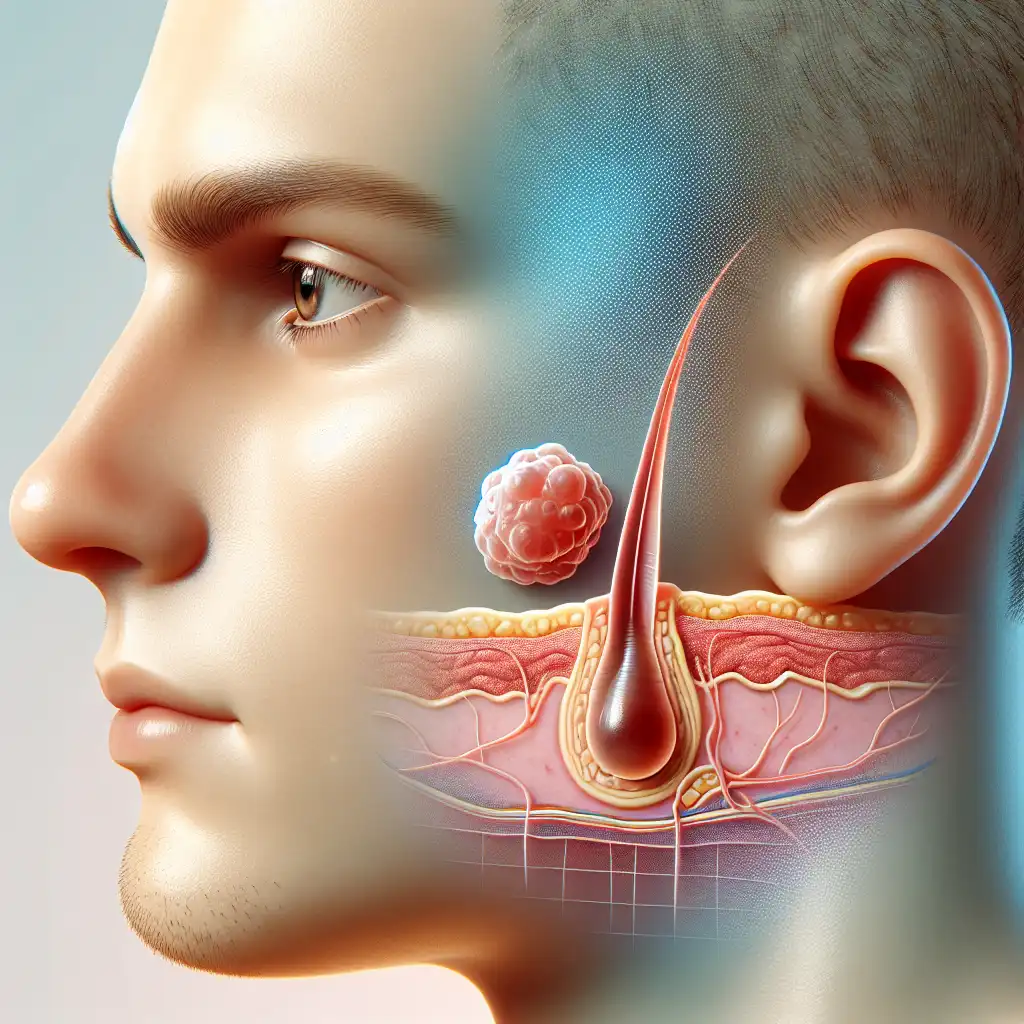
Related to oil or fat, especially from a gland in the skin.
A sebaceous cyst is a small lump or bump under the skin.
sebaceous
sɪˈbeɪʃəs
Chargement…
sɪˈbeɪʃəs
Related to oil or fat, especially from a gland in the skin.
A sebaceous cyst is a small lump or bump under the skin.
Impossible de charger l’audio. Réessayez plus tard.
The word 'sebaceous' is usually used to describe things related to oil or grease that is produced naturally by our skin or hair. For example, we have sebaceous glands that produce this oil which helps to keep our skin and hair healthy. We might use the word 'sebaceous' when talking about skincare, haircare or medical conditions related to these glands.
Adipose and sebaceous are both scientific terms used to describe different types of tissue in the human body.
Adipose tissue, also known as fat tissue, is found throughout the body and serves as a storage site for energy. It helps to insulate and cushion the body and provides a layer of protection for organs.
Adipose tissue can increase in size if someone consumes more calories than they burn, resulting in weight gain.
Adipose is related to fat tissue in the body and sebaceous is related to oil-producing glands in the skin.
Adipose can affect weight and insulation, while sebaceous can affect skin health.
Ouvrir le mot: Adipose →Both fatty and sebaceous refer to types of skin glands, but fatty is a layman's term that can refer to any type of tissue with a high fat content, while sebaceous specifically refers to glands that produce sebum, an oily substance that lubricates the skin and hair.
Fatty is a broader term that can be used in many contexts, while sebaceous is a more specific term used in biology and medicine to refer to glands that produce sebum.
Ouvrir le mot: Fatty →Both greasy and sebaceous refer to materials or substances that contain or produce oil or grease.
However, greasy is a more general term that can apply to any material that is slippery or oily, regardless of the source.
Ouvrir le mot: Greasy →Both oily and sebaceous relate to the production of sebum, which is an oily substance produced by the skin. The difference between the two is that oily refers to a surface condition, while sebaceous refers to the gland responsible for producing the oil.
When we say something is oily, we mean that it has a shiny or greasy appearance. This can describe anything with a slick or shiny surface, such as an oily film on water or an oily pizza crust.
The oily surface may be caused by the presence of sebum, but it can also be due to other factors such as cooking oil or lubricants.
Oily describes a surface condition that may or may not be caused by sebum, while sebaceous refers to the gland responsible for producing sebum.
Ouvrir le mot: Oily →The words oleaginous and sebaceous both refer to things related to oil or grease, but they are used in slightly different contexts.
Oleaginous refers to something oily or fatty in texture or appearance, and can describe food (such as an oily sauce) or a person's complexion (if their skin looks shiny or greasy).
So, while both words relate to oiliness or greasiness, oleaginous is a broader term that can be used more generally, while sebaceous is more specific and usually used in a medical context.
Ouvrir le mot: Oleaginous →Slick refers to something that is smooth, shiny, and often slippery. This term is more commonly used in everyday language to describe things like a slick road, a slicked-back hairstyle, or a slick marketing campaign.
Sebaceous has to do with bodily oils, while slick refers to a smooth, polished surface or appearance.
Ouvrir le mot: Slick →Unctuous, on the other hand, means oily or greasy in a way that's unpleasant or insincere. It's often used to describe people who are overly flattered or insincere in their mannerisms.
Sebaceous applies specifically to skin and oil production, while unctuous can apply to a variety of situations where something or someone is uncomfortably oily or slimy.
Ouvrir le mot: Unctuous →The science of skin -...
Voir sur YouTube ↗A few dozen changes to the genome of a modern elephant - to give it subcutaneous fat, woolly hair and sebaceous glands - might suffice to create a variation that is functionally similar to the mammoth. Returning this keystone species to the tundras could stave off some effects of warming.
Safari Live - Day 27 %\PIPE%...
Voir sur YouTube ↗The appendages of the skin are the nails, the hairs, the sudoriferous and sebaceous glands, and their ducts. The nails and hairs are peculiar modifications of the epidermis, consisting essentially of the same cellular structure as that membrane.
Shifting the visual...
Voir sur YouTube ↗I went on Accutane, which is very strong. Your sebaceous glands dry up, you can't exercise, and you have very dry lips. But it was a miracle, and it worked.