
lateral
adjective lateral
ˈlætərəl
At the side of something, or moving in a direction towards the side.
Use the lateral emergency exit in the event of a fire.
lateral
ˈlætərəl
加载中…
ˈlætərəl
At the side of something, or moving in a direction towards the side.
Use the lateral emergency exit in the event of a fire.

ˈlætərəl
Thinking in a creative or unusual way instead of using traditional or expected methods.
Lateral thinking can help to develop innovative solutions for complex problems.

ˈlætərəl
A pass made from one player to another in a sideways direction.
The quarterback made a quick lateral to the running back.

ˈlætərəl
A branch of a main stem or line.
The water supply comes from a lateral off the main pipe.
ˈlætərəl
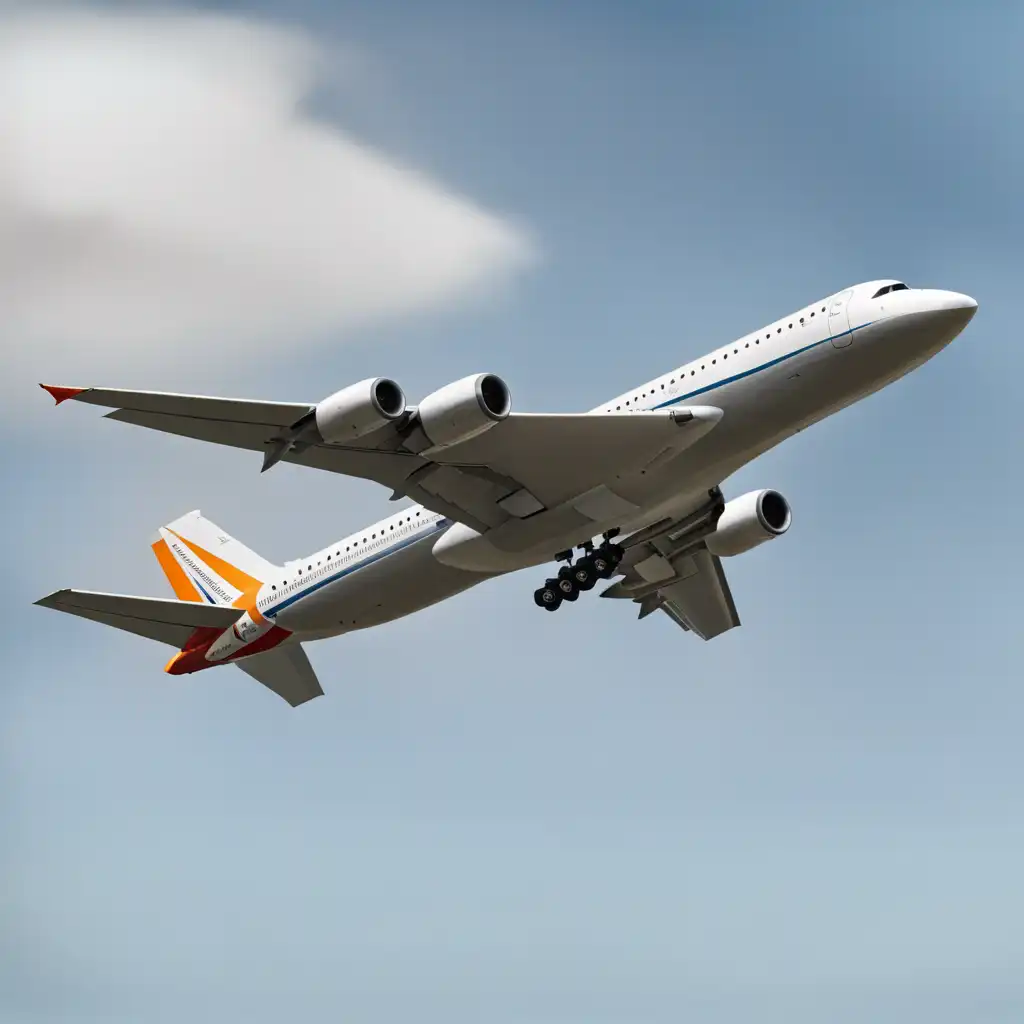
Moving or extending side to side, or from side to side.
The lateral stabilizer on the aircraft helps control its motion.
音频无法加载,请稍后再试。
The word 'lateral' is used to describe something that is situated or located on the side. For example, if you are talking about a lateral view of a building, you are referring to the view from the side. In sports, the word 'lateral' is often used to describe a movement that goes from side to side instead of forward or backward. So, if a football player makes a lateral pass, they are passing the ball to a teammate who is positioned next to them rather than in front of them. Overall, the word 'lateral' is used to describe something that is parallel or adjacent to something else.
Angular refers to something having sharp angles or corners, while the word lateral refers to something being situated or oriented to the side or away from the center.
In simpler terms, angular describes something that has sharp points or edges, while lateral describes something that is positioned to the side.
For example, a triangular shape is angular because it has three sharp corners. A car's side-view mirrors are lateral because they are situated on the side of the car.
打开单词: Angular →Both words refer to the direction of something, but there is a slight difference in their usage. Horizontal refers to something that is parallel to the ground or along the horizon.
For example, a horizontal line is a straight line that is parallel to the ground, whereas a lateral line is a line that runs along the side of an object or body.
A horizontal plane is a flat plane that is parallel to the ground, whereas a lateral plane is a plane that is perpendicular to the main direction or axis.
Horizontal describes things that are flat or level, while lateral describes things that are on the side or at an angle.
打开单词: Horizontal →Both lateral and oblique are words used to describe something that is tilted or angled in some way.
Oblique usually means something that is at an angle or diagonal to the ground. For example, if you tilt a book so that it is neither vertical nor horizontal, it is in an oblique position.
In anatomy, the term oblique is frequently used to describe certain muscles and connective tissues, such as the external oblique muscles of the abdomen.
So, in short, lateral describes something that is straight or parallel to a surface, while oblique describes something that is tilted or slanted.
打开单词: Oblique →Perpendicular describes something that intersects another thing at a 90-degree angle. For instance, when you draw a line that meets another line at a right angle, you are drawing a perpendicular line.
Lateral refers to movement or placement on the side of something, while perpendicular refers to something that is at a right angle or intersecting with something else.
打开单词: Perpendicular →Sidelong refers to something that is directed or turned to one side, but also implies a sense of suspicion or sneaking.
It is often used to describe a glance or a look that is not direct or straightforward, such as a sidelong glance.
Lateral is a more neutral and technical term describing a position to the side, while sidelong has a more negative connotation and is often used to describe a look or action that is suspicious or sneaky.
打开单词: Sidelong →Sideways refers to movement or position that is to the side perpendicular to the original point. For example, if you are standing and move to the left, that is a sideways movement.
Lateral refers to a side movement that is still in the same direction, while sideways refers to a side movement perpendicular to the original point.
打开单词: Sideways →Lateral refers to something that moves or is situated sideways, while the word skew means something that is not straight or is not aligned with another object.
For example, in sports, a lateral pass is a pass made sideways to another player, whereas a skew shot in golf is a shot that is hit at an angle to the target.
Lateral is used more to describe movement or position in a horizontal direction, while skew describes an irregular or oblique alignment.
打开单词: Skew →Transverse describes a line, plane, or movement that goes across or perpendicular to a certain axis. For example, if you draw a line across a circle, that's a transverse line.
In medicine, transverse sections refer to images that are taken across the body, from side to side.
Lateral refers to side-to-side or outside-to-inside movements or positions, while transverse refers to something that crosses a certain axis or goes across something else.
打开单词: Transverse →So it spends cognitive energy as efficiently as possible, using assumptions about visual information to create a tailored edited vision of the world. Imagine your brain calling out these edits on the "Okay those squares could be objects. Let's enhance that black-white contrast on the sides with lateral inhibition.
在 YouTube 上观看 ↗I think the commercial world is a lateral step from features. Some people see it as a step down, but I've never understood that.
these mini currents are picked up by the lateral line of other fish and this helps them swim is a coordinated sure it detects predators to a touch sense a warning shot
在 YouTube 上观看 ↗I'm a big proponent of playing all sports when you're growing up. I think they all help you from a competitiveness standpoint to a movement standpoint. Certainty with tennis, you get the lateral quickness more than anything.
and an adjacent area called the lateral occipital complex, that is especially attuned to processing objects. In addition, attractive faces activate parts of our reward and pleasure centers in the front and deep in the brain, and these include areas that have complicated names,
在 YouTube 上观看 ↗The tag that I was too small and too slow just made me work that much harder. Besides, quickness is more important than flat-out speed. How often does a receiver run 40 yards straight down the field? Not very often. Lateral speed is what counts. How quickly can you get in and out of a cut? I can do that as well as anyone.
after I worked up all the lengths of all these bones and I would have the fossils in front of me I worked up a scheme for this dinosaur in lateral view and in dorsal view and what I wanted to show was something about I wanted the bones to speak to tell me something about its life even though it's not going to move channel goes off that way and it sort of
在 YouTube 上观看 ↗Isolated incidents have lateral, lasting implications.
and instead put it on a new format as a lateral flow system so I began designing lateral flow test here's just an initial prototype with dyes and then I actually went on the computer and started designing it with exact dimensions and this is
在 YouTube 上观看 ↗Anthony Davis' lateral movement is one of a kind.
and hold the plant in place. Even its single deepest root the taproot, extends less than one meter into the ground. After a rain the lateral roots respond in real time, rapidly growing and spreading. They produce ephemeral rain roots that quickly take up the available water.
在 YouTube 上观看 ↗I have really good lateral movement. I've always had quick lateral movement.
was diagnosed with a rare neuromuscular disorder called amyotrophic lateral sclerosis or ALS. Gradually he lost the ability to walk, use his hands, move his face, and even swallow.
在 YouTube 上观看 ↗When you pass laterally, you screen away.
which has never quite happened in the way it's happening now. But let's talk about the shifts of power that are occurring to the world. And what is happening today is in one sense frightening because it's never happened before. We have seen lateral shifts of power --
在 YouTube 上观看 ↗A lot of the weaknesses we have are based on a lack of lateral movement, which can set you up for injury. When you exercise in multiple planes, you see improvements in balance, mobility, and function.
fashion in fact what happens is the neurotransmitters spill out in three dimensions laterally vertically up and down in the spinal cord and they start interacting with other adjacent cells these cells called glial cells where once thought to be unimportant
在 YouTube 上观看 ↗I've moved laterally, as opposed to vertically. I was never a superstar. I've always had to move between a couple of years of unemployment, where offers are not provocative enough to take, and seasons where I work nonstop for a year.
in fact what happens is the neurotransmitters spill out in three dimensions -- laterally vertically up and down in the spinal cord -- and they start interacting with other adjacent cells. These cells called glial cells, were once thought to be unimportant structural elements of the spinal cord
在 YouTube 上观看 ↗You look at the skills involved, especially with things like lateral movement or change of direction, and there's definitely a strong correlation between playing basketball and playing tight end.