arable
adjective arable
ˈærəbl
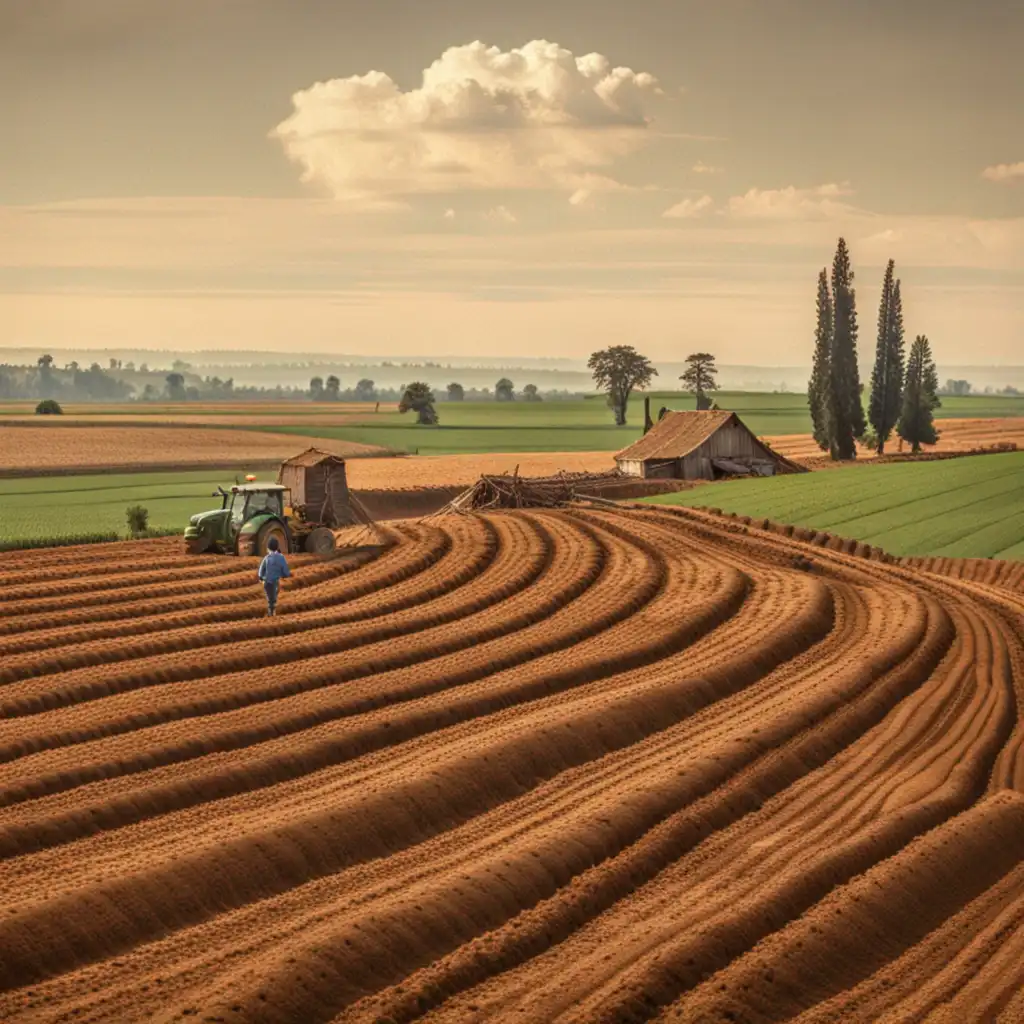
Suitable for growing crops
The arable land was prepared for planting wheat.
arable
ˈærəbl
読み込み中…
ˈærəbl
Suitable for growing crops
The arable land was prepared for planting wheat.
音声を読み込めませんでした。しばらくしてからもう一度お試しください。
The word 'arable' refers to land that is suitable for growing crops. In other words, it is land that is fertile and can be used for farming. You might use this word when talking about agriculture or farming, for example, "This area has a lot of arable land, so it's great for growing crops." It is important to note that not all land is arable, as some areas may be too rocky or dry to support farming.
Arable land is land that is suitable for growing crops, whereas cultivable land is land that can be prepared and made ready for growing crops.
In other words, arable land is already fertile and capable of producing crops whereas cultivable land may require a lot of work before it can be used for farming.
Cultivable land may require additional steps before it can be used for farming. This may include clearing vegetation, leveling the ground, and improving soil quality through fertilization or other means.
Cultivable land may be found in areas with poorer soil quality or where the natural landscape has been disturbed, such as in urban or suburban areas.
The difference between arable and cultivable land is that arable land is already capable of producing crops, while cultivable land needs work to make it capable of growing crops.
単語を開く: Cultivable →In other words, it is land that is suitable for farming. Fertile refers to soil that is rich in nutrients and minerals necessary for plants to grow.
So, while arable land can be used for farming, it may not necessarily be fertile enough to yield a bountiful crop.
Similarly, land may be fertile but not considered arable if it is not conducive to farming due to other factors like terrain or access to water sources.
単語を開く: Fertile →Arable refers to land that is suitable for growing crops while productive refers to land that produces a high yield of crops or other goods.
Arable land is land that is suitable for planting crops, regardless of whether or not it actually contains crops. Productive land is land that is currently being used to produce a high yield of crops, livestock, or other goods.
Arable land can be converted into productive land through proper management and cultivation practices.
単語を開く: Productive →Arable refers to land or soil that is suitable for growing crops, while rich can refer to many things such as wealth, color, or diversity.
Arable is applicable when talking specifically about land that can be used for farming, while rich can describe a variety of different qualities or characteristics.
For example, you might say that a piece of land is arable if it has good soil and enough water to sustain crops, while you might say that a painting is rich in color if it has a wide range of vibrant hues.
単語を開く: Rich →Workable refers to something that can be worked on or with, that is practical or feasible to use. So, when something is called workable, it means that it can be easily worked on or used for a particular purpose.
The word arable describes land that is good for growing crops, while workable describes something that is practical or feasible to use.
単語を開く: Workable →Bilal Bomani: Plant...
YouTube で見る ↗There are no more new worlds. The unoccupied arable lands of the earth are limited, and will soon be taken.
The danger of science...
YouTube で見る ↗In a world of growing food demand, Africa is home to two-thirds of the world's unexploited arable land.
A Story of Community and...
YouTube で見る ↗We live on a finite planet. We have finite resources, and we're running out of good, arable land.
“She Does Not Know Her...
YouTube で見る ↗Viewed from a holistic ecological perspective, some meat - such as conscientiously hunted animals - involves less suffering and environmental damage than arable agriculture, while both of these are significantly less harmful than indiscriminately purchasing meat on the market.
The danger of science...
YouTube で見る ↗Farmers can't plant much more land because almost every accessible acre of arable soil is already in use. Nor can the use of fertilizer be increased: it is already being overused everywhere except some parts of Africa, and the runoff is polluting rivers, lakes, and oceans.
Paul Romer: Why the...
YouTube で見る ↗With 10 per cent of Nigeria's total land mass, 80 per cent of which is arable, Niger state symbolises the hope and greatness of Nigeria and has potential to feed the continent.
A lesson in turning...
YouTube で見る ↗Land ownership in Guatemala is more unequal than anywhere else in Latin America. Roughly 90 percent of Guatemalan farms are too small to support a family. A tiny group of Guatemalans owns a third of the country's arable land; more than 300,000 landless peasants must scrounge a living as best they can.
Carolyn Steel: How food...
YouTube で見る ↗The ethnic differences among Filipinos are very real. The paucity of arable land, for instance, explains the industry of the Ilokanos and the Cebuanos.
Magnus Larsson: Turning...
YouTube で見る ↗Jackie Savitz: Save the...
YouTube で見る ↗