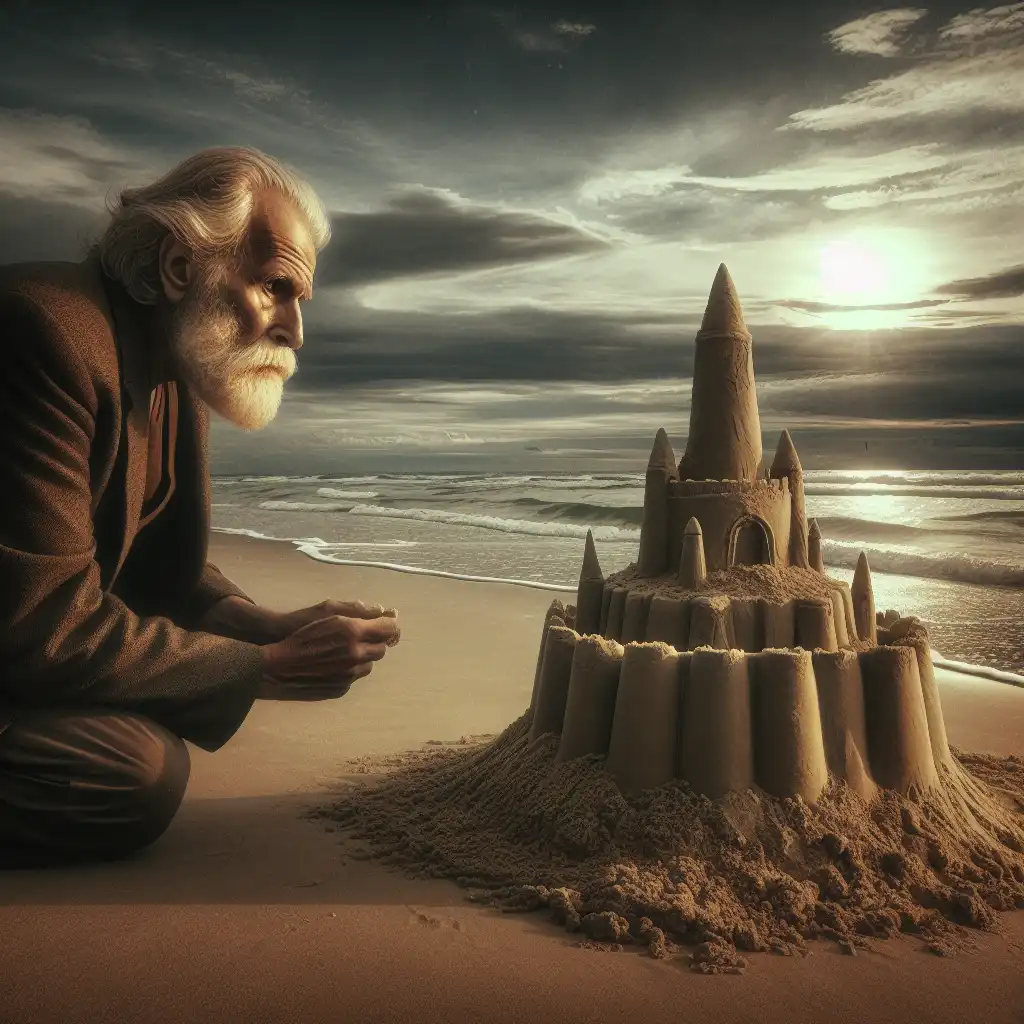
transience
noun transience
ˈtrænʃəns
The state of not lasting or staying for a long time
His art captures the transience of human life.
transience
ˈtrænʃəns
Cargando…
ˈtrænʃəns
The state of not lasting or staying for a long time
His art captures the transience of human life.
No se pudo cargar el audio. Inténtalo de nuevo más tarde.
Transience refers to something that is temporary or short-lived. It can be used to describe something that only lasts for a short time, such as a passing feeling or a temporary situation. For example, the beauty of a sunrise is often admired for its transience, as it only lasts for a few minutes before fading away. In everyday language, you might hear someone say "life is full of transience" to convey the idea that nothing lasts forever and that we must learn to appreciate the fleeting moments in life.
Fickle means that someone or something is not reliable and changes their mind or behavior frequently.
For example, a person who is fickle might change their opinion on something easily, while a job with a high turnover rate is an example of transience.
Essentially, fickle refers to someone or something that lacks consistency or stability, while transience means that something is temporary and short-lived.
Abrir palabra: Fickle →Both the words - impermanence and transience, refer to the nature of things that don't last forever. In simpler terms, they mean that everything in this world is temporary and subject to change.
However, there is a subtle difference between these words. Impermanence refers to the idea that everything is in a constant state of change and flow, but that change doesn't necessarily mean that everything is constantly coming and going or disappearing.
Impermanence is applicable when one wants to express a feeling of continuous change in the world, while transience is more suited to express a feeling of fleetingness or brevity.
Abrir palabra: Impermanence →Inconstancy refers to a lack of reliability or consistency in behavior or beliefs. It means that someone or something is prone to change frequently and unpredictably, often without a clear reason or explanation.
Inconstancy is applicable when referring to people, especially in their actions and opinions, or to things that are inconsistent in quality or performance.
Inconstancy refers to inconsistency in behavior or beliefs, while transience refers to the quality of being temporary or short-lived.
Abrir palabra: Inconstancy →Instability refers to something that is not steady, secure, or stable. It suggests a state of unpredictable or unreliable conditions, often involving sudden or frequent changes.
Instability can refer to anything from weather patterns to economies, relationships, or mental states.
Instability refers to something that is unstable or unreliable, while transience refers to something that is temporary or fleeting.
Instability is applicable to situations where sudden or frequent changes occur, while transience is applicable to situations that are impermanent or passing.
Abrir palabra: Instability →Mutable means that something can be changed or altered easily. For example, a mutable rule can be changed at any time.
Mutable is applicable when something can be adjusted or modified, while transience is applicable when something has a short lifespan or is only meant to be temporary.
Abrir palabra: Mutable →Jason Silva's Origin...
Ver en YouTube ↗Belief is so valuable and living that it infuses with life everything it enters! It transforms the fleeting glimmer of transitory life into eternal life, dispelling the transience in it.
Shea Hembrey: How I...
Ver en YouTube ↗Without accepting the fact that everything changes, we cannot find perfect composure. But unfortunately, although it is true, it is difficult for us to accept it. Because we cannot accept the truth of transience, we suffer.
Transience is one of the fundamental characteristics both of the human condition and of the political order.
Surely the glory of journalism is its transience.
I like the transience of Klimt paintings.
The real problem with happiness is neither its pursuers nor their books; it's happiness itself. Happiness is like beauty: part of its glory lies in its transience.
Without accepting the fact that everything changes, we cannot find perfect composure. Unfortunately, although it is true, it is difficult for us to accept it. Because we cannot accept the truth of transience, we suffer.