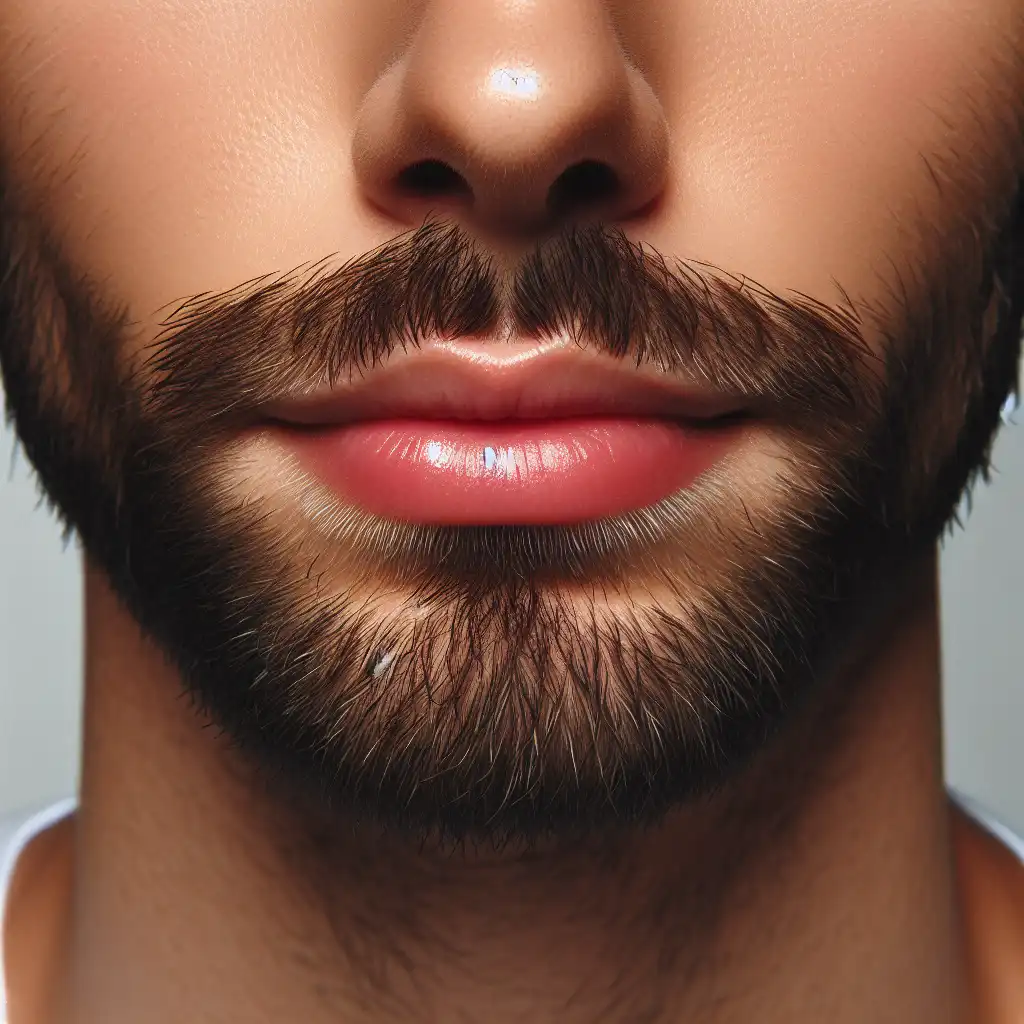
stubbly
adjective stubbly
ˈstʌbli
Having short, prickly hair or bristles growing on the skin
After not shaving for three days, he had a stubbly beard.
stubbly
ˈstʌbli
Cargando…
ˈstʌbli
Having short, prickly hair or bristles growing on the skin
After not shaving for three days, he had a stubbly beard.
No se pudo cargar el audio. Inténtalo de nuevo más tarde.
The word 'stubbly' is used to describe someone who has short, rough hair growth on their face, usually after not shaving for a few days. It's often used to describe a man's face, but can also be used to describe a woman's face if she has this type of hair growth. You might hear someone say, "He looked tired and a bit stubbly today." It's a casual and informal word and is mostly used in a social or relaxed setting.
A beard is a full growth of hair on a man's chin and cheeks, usually kept neat and trimmed.
Stubbly refers to short and rough hair growth that remains after a man has shaved. The hair is too short to be considered a beard but too long to be completely smooth.
Beard is applicable when a man has a full growth of hair on his face that he has intentionally grown and shaped.
Abrir palabra: Beard →Bristly describes something that has stiff, short hairs or prickly fibers, similar to a brush or a porcupine.
This word is typically used to describe the texture of an object or surface, like a bristly beard or a bristly brush.
Bristly describes the texture of something while stubbly describes the appearance of something.
Abrir palabra: Bristly →Bushy describes something that has a lot of hair, fur, leaves or branches that are thick and dense.
Bushy describes something that is thick and dense while stubbly describes something that has short, stiff hair or bristles that are just starting to grow.
Abrir palabra: Bushy →Fleecy generally means soft and fluffy, like the wool of a lamb.
To summarize, fleecy refers to something soft and fluffy, while stubbly refers to something rough or bristly. Each word is applicable in different contexts depending on the texture being described.
Abrir palabra: Fleecy →Hairy generally refers to having a lot of hair on a particular part of the body, such as on the head or arms.
Hairy refers to a lot of longer hair on the body, while stubbly refers to short, coarse hair on the face or body after a few days of growth.
Abrir palabra: Hairy →Prick refers to a sharp or pointed sensation, often associated with pain or discomfort.
Prick is applicable when describing a sharp or uncomfortable sensation, while stubbly is applicable when describing short, rough hair growth on the face or body.
Abrir palabra: Prick →Rough means uneven or not smooth.
It can describe a surface, texture, or feeling. For example, a rough road or a rough piece of wood.
Rough refers to an uneven or not smooth surface, while stubbly refers to short, stiff hair or bristles on a surface, typically in reference to facial hair.
Abrir palabra: Rough →Whiskered refers to longer, thicker hair growth on a person's face, usually around the cheeks and jawline. It is applicable when referring to a person who has grown a substantial amount of facial hair or a beard.
Stubbly refers to short, rough hair growth while whiskered refers to longer, thicker hair growth on a person's face. They are applicable depending on the amount of facial hair a person has grown.
Abrir palabra: Whiskered →Why do we have hair in...
Ver en YouTube ↗It is no fun lining up in your own building - as the hockey players say - and touching the hands of fellow stubbly louts who have just sent you off to the proverbial cabin on the lake.
Who Was Jesus? %\PIPE%...
Ver en YouTube ↗When I was 13, I began relaxing my hair, and that meant when I turned 18 it began to crack and fall off, and when I began anchoring, I had short, stubbly pieces of hair. And trying to report in San Francisco with fog meant my hair swelled.
The evolution of the...
Ver en YouTube ↗