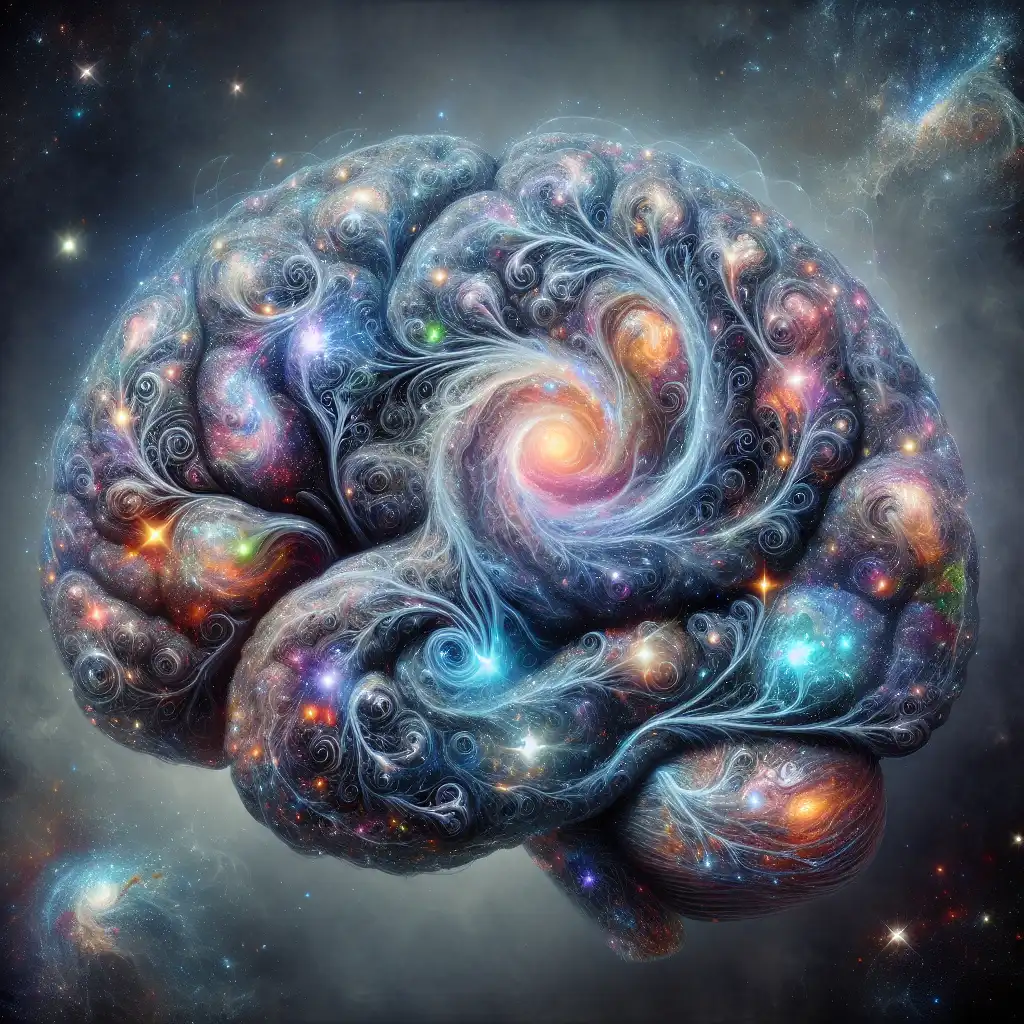
Monism is a big word that means there is only one fundamental substance or principle that everything in the universe is made up of. For example, some people believe that everything in the world is made up of energy or that the universe is just one conscious entity. It is often used when discussing philosophy or religion.
Homogeneity means the state of being the same or uniform. It refers to things or people being similar in nature or characteristics.
Homogeneity is applicable in situations where we need to distinguish between things that are different or similar. For example, when sorting objects by color or size, we can use the concept of homogeneity to group similar objects together.
Integrate means to bring together different parts into a unified whole.
While integrate is applicable in many different contexts, from social interactions to scientific research, monism is primarily a philosophical concept that is used to explain the fundamental nature of reality.
Oneness is a spiritual concept that suggests that all things are part of a universal consciousness or a higher power. Oneness is applicable to spirituality and religion, where it describes the interconnectedness and unity of all beings and things.
In short, while monism suggests that everything in the universe is ultimately one thing, oneness suggests that everything is connected and part of a universal consciousness.
Singleness refers to the state of being solitary, separate, or unique. It is an adjective used to describe something that is not multiple, but a solitary entity or element.
While monism is usually used in a philosophical context to describe the nature of reality, singleness can be used more broadly to describe anything that is unvarying or unique, such as a particular individual's character or a single item in a collection.
Monism is a philosophical idea that everything is unified and indivisible, while singleness describes something as being solitary, separate, or unique.
Uniformity refers to the state of being uniform or consistent, without variation. It is applicable to various fields such as science, mathematics, and engineering, where consistency and predictability are important.
In simpler terms, monism is about finding the underlying unity in the universe, while uniformity is about maintaining consistency and predictability.
Monism and unity are similar concepts, but they have different applications.
Unity refers to the state of being united or coming together. It implies that there are different things or individuals that are coming together to form a whole.
Unity is often used in the context of social or political movements to describe the coming together of people with different backgrounds or beliefs to work towards a common goal.
It can also be used more generally to describe the feeling of togetherness and community.
Monism is an idea about the fundamental nature of reality, while unity is a description of the state of coming together or being united.
Monism is often used in discussions of spirituality and metaphysics, and it is applicable when considering the nature of reality and the universe as a whole.
Whole generally refers to something that is complete or unbroken, or to the entirety of something.
It can refer to physical objects, such as a whole cake or a whole person, or to abstract concepts, like a whole society or a whole system.
Whole is a more everyday word that is applicable in many different contexts, such as describing a complete set of instructions or a full day of activities.
Monism is a philosophical concept that relates to the fundamental nature of reality and unity, while whole is a common word that refers to something that is complete or unbroken in various contexts.