
senescent
adjective senescent
sɪˈnesnt
Getting old; Aging
The senescent professor retired after giving one last lecture.
senescent
sɪˈnesnt
불러오는 중…
sɪˈnesnt
Getting old; Aging
The senescent professor retired after giving one last lecture.
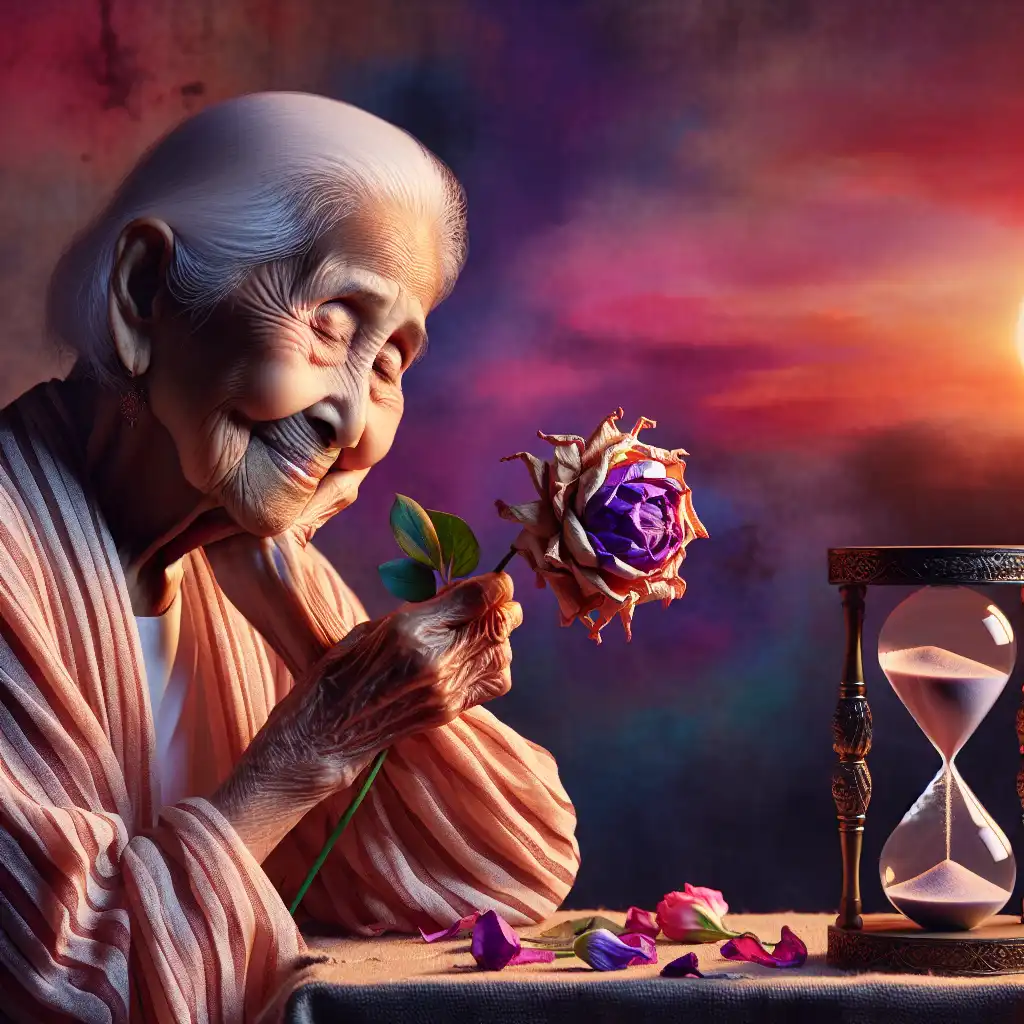
sɪˈnesnt
Cell or body that is losing its power of division and growth
Senescent cells play an important role in the body's aging process.
오디오를 불러오지 못했어요. 잠시 후 다시 시도해 주세요.
The word 'senescent' is used to describe something that is getting old or gradually losing its ability to function properly due to age. It can be used to describe living things such as plants, animals, and humans, as well as non-living things such as buildings and machines. For example, a senescent plant is one that is nearing the end of its life cycle and may not be able to produce fruit or flowers anymore. Similarly, a senescent person may have reduced physical or mental capabilities due to old age. The word can also be used in a more general and abstract sense to describe something that is becoming outdated or obsolete.
Age refers to the number of years a person has lived, while senescent refers to the biological process of aging and the physical and mental changes that come with it.
For example, a person can say, "I am 50 years old" to state their age. A scientist can say, "The senescent cells in this organism are accumulating, leading to a decline in overall health," to describe how the aging process is affecting a living thing's body.
In simpler terms, age is about the number of years a person has been alive, while senescent is about the changes that happen in a living organism as it grows older.
단어 열기: Age →Decay refers to a process of gradual deterioration or decomposition of something over time, usually as the result of natural processes.
Senescent refers to something that is showing signs of age or decline, but it may not necessarily be in the process of actual decay.
Decay describes an active process of deterioration, while senescent describes a state of being indicative of age or decline.
단어 열기: Decay →Decline refers to a gradual decrease or deterioration of something, for example, a person's health or a business's profits.
Decline means something is getting worse over time, while senescent refers to the natural process of aging in living things.
단어 열기: Decline →Deteriorate refers to the process of gradually becoming worse or less valuable over time.
It can be used in many contexts, such as physical objects, relationships, health, or the environment. For example, a building can deteriorate over time due to weather, while a person's health can deteriorate due to aging or disease.
The main difference between deteriorate and senescent is that the former refers to a general process of decline or degradation, while the latter refers specifically to the effects of aging on living organisms or cells.
단어 열기: Deteriorate →Fade means to gradually lose brightness or color over time, and it can be applicable to many things like colors, memories, or even people's abilities.
For example, a flower may fade after several days, or a person's skills may fade if they don't practice.
So, while something can fade without being senescent, senescence means that an object has entered a stage of decline due to age.
단어 열기: Fade →Obsolescent means that something is becoming outdated or out of use, but it is not quite obsolete yet. For example, a certain technology may be obsolescent if it is being replaced by newer and better technology, but it is still being used in some places.
Obsolescent describes something that is becoming outdated, while senescent describes the natural process of aging and decline in living organisms.
단어 열기: Obsolescent →Senescent refers to the process of aging or becoming old, while wane refers to the gradual decrease in something, such as power or influence.
Senescent can describe a person or animal that is growing old or experiencing physical or mental decline due to age, while wane can describe the decrease in popularity, impact, or strength of something, like the waning popularity of a trend or the waning power of a political figure.
In simpler terms, senescent is about getting old, while wane is about something getting weaker or less popular.
단어 열기: Wane →Senescent and weaken both refer to something that is becoming less strong or effective, but they have slightly different meanings.
Weaken can apply to a wider range of things. It generally means to become less strong or less effective, but it can happen for many different reasons.
Something might weaken because it's been damaged or worn down, because it's been under stress, or because it's been neglected.
For example, a rope might weaken if it's exposed to sunlight for too long or if it's repeatedly bent back and forth.
Senescent specifically refers to the process of aging and deterioration, while weaken is a more general term for becoming less strong or effective.
단어 열기: Weaken →Why do our bodies age? -...
YouTube에서 보기 ↗The world does not get to be a better or a worse place; it just gets more senescent.
Yes, we are looking into gene therapies for immune cells to target senescent cells.