hebraic
adjective hebraic
hiˈbreɪɪk
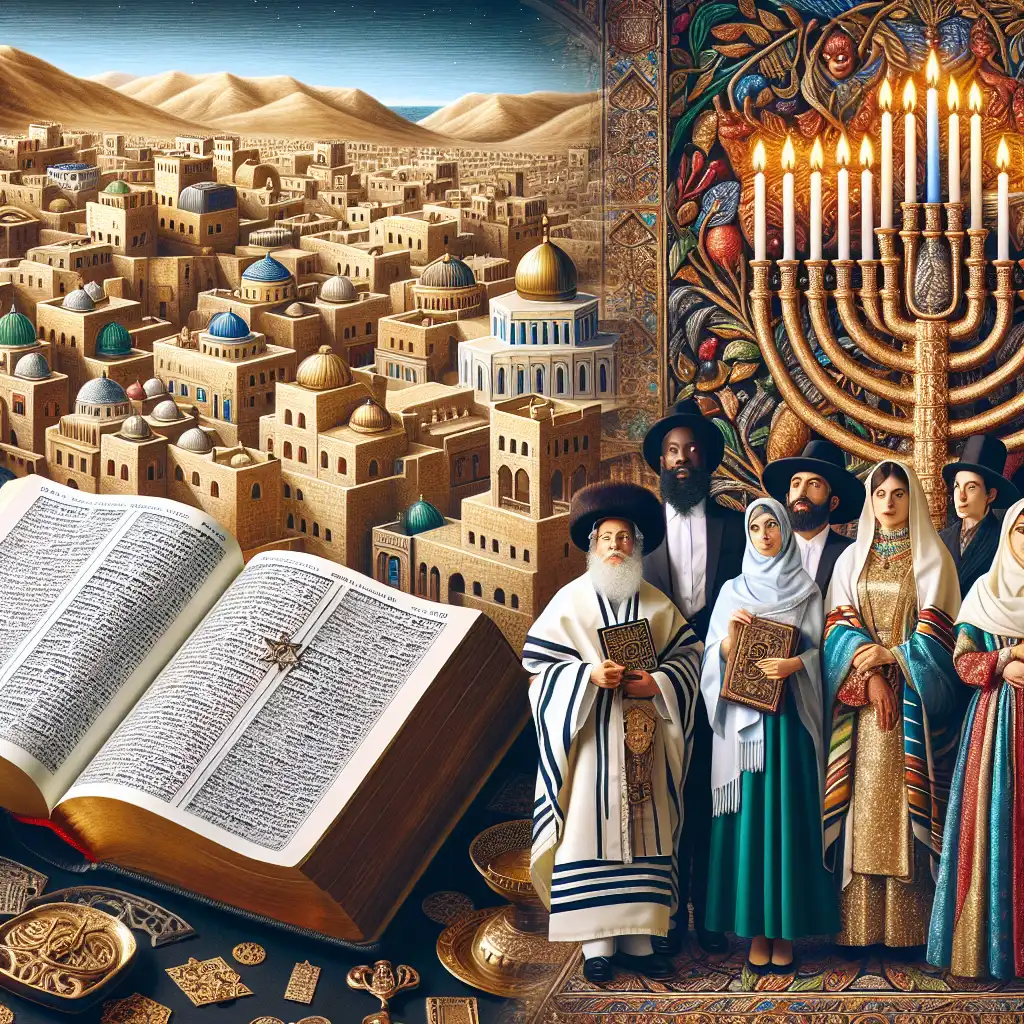
Related to Hebrew culture, language, or Jewish people in general.
Several English words have Hebraic origins.
hebraic
hiˈbreɪɪk
불러오는 중…
hiˈbreɪɪk
Related to Hebrew culture, language, or Jewish people in general.
Several English words have Hebraic origins.
오디오를 불러오지 못했어요. 잠시 후 다시 시도해 주세요.
The word 'hebraic' is used to describe things that are related to the Hebrew language or culture. It can be used when talking about Jewish traditions or history, or to describe writings or texts that are written in Hebrew. For example, you might say that a book is written in hebraic script, or that a particular custom is part of the hebraic tradition. It's not a word that is commonly used in everyday conversation, but it can be useful when describing something that is specifically related to Hebrew language or culture.
Israelite refers to someone who belongs to the ancient Israelite people, who were the ancestors of the Jewish people today.
It can also describe something related to the history or culture of the Israelites.
In summary, Hebraic refers to the language and culture of the Hebrews, while Israelite refers to the people and their history.
단어 열기: Israelite →Hebraic generally refers to the culture and language of the Hebrew people, while Jewish refers to the religion and cultural identity of the Jewish people.
Hebraic could be applicable in a historical or linguistic context, while Jewish could refer to someone's religion or cultural heritage.
단어 열기: Jewish →The terms Hebraic and Judaic both refer to aspects of Jewish culture, but they are used in different contexts. Hebraic usually refers to the language, literature, and ancient history of the Hebrews, while Judaic generally refers to the religion, beliefs, and practices of the Jewish people.
You might say that a person is studying Judaic law in order to become a rabbi.
단어 열기: Judaic →Mosaic refers to a particular kind of art form where small pieces of colored glass or stone are arranged to create a larger image or pattern.
For example, "the mosaic of cultures in New York City" or "the mosaic of different religions in India".
단어 열기: Mosaic →Semitic is a broader term that includes not only the Hebrews but also Arabs, Assyrians, and other related peoples.
You would use Hebraic when talking specifically about Hebrew culture or language, and Semitic when talking about any of the peoples who are related to the Hebrews.
For example, you might say that the Hebrew language is Hebraic, while Arabic and Aramaic are both Semitic languages.
단어 열기: Semitic →Both hebraic and talmudic relate to Judaism and Jewish culture, but they have slightly different meanings. Hebraic refers to the Hebrew language and the Bible's Hebrew text, as well as general Jewish cultural practices originating from Hebrew sources.
Talmudic specifically relates to the Talmud, a central text in Jewish law and commentary that was written in Aramaic and Hebrew.
So, for example, a discussion about the linguistic origins of Jewish prayer could be described as hebraic, while a discussion about the laws and interpretations of prayer found in the Talmud would be considered "talmudic."
In essence, hebraic applies more broadly to Jewish culture, while talmudic is a more specific term relating to a particular Jewish text.
단어 열기: Talmudic →