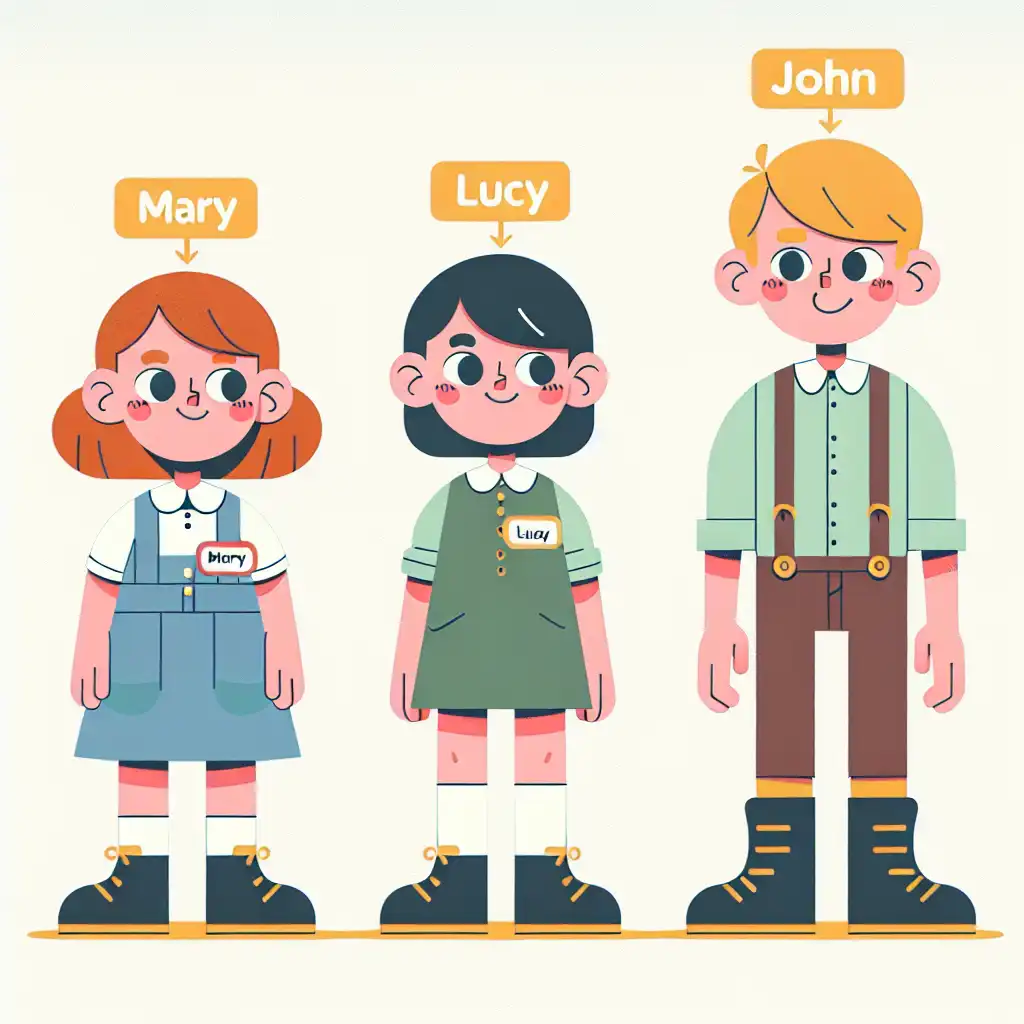
In mathematics, a relation is transitive if whenever an element a is related to an element b, and b is related to an element c, then a is also related to c.
If John is taller than Mary, and Mary is taller than Lucy, then John is also taller than Lucy. 'Being taller than' is a transitive relation.
In grammar, the word 'transitive' is used to describe a verb that takes a direct object. A direct object is the noun or pronoun that receives the action of the verb. For example, in the sentence "I ate the apple", the verb 'ate' is transitive because it requires a direct object, which is 'the apple'. It is important to know whether a verb is transitive or intransitive because it affects how the sentence is structured. Transitive verbs are usually followed by a direct object, while intransitive verbs do not require a direct object. For example, "He laughed" is an intransitive verb because it does not require a direct object. Knowing which verbs are transitive and which are intransitive can help you form correct sentences and communicate your ideas effectively.
The words ambiguous and transitive are completely different in meaning.
Ambiguous means something that can have more than one interpretation or meaning. For example, if someone says "I saw her duck", it is unclear whether they saw the woman duck down or saw a duck that belongs to the woman.
Ambiguous refers to something that is unclear or can be interpreted in different ways, while transitive refers to a specific grammatical requirement in the English language.
Clear refers to something that is easy to understand, see through or without obstacles. It is applicable in various contexts such as clear instructions, clear view, clear water, etc.
For example, in the sentence "I ate an apple", "ate" is a transitive verb and "an apple" is its direct object. It is applicable in the study and use of language and is important for constructing clear and effective sentences.
Explicit refers to something that is clearly stated or expressed without any ambiguity or confusion. This could refer to a statement, an idea, or even a picture.
Explicit describes something that is clear and unambiguous, while transitive describes a specific grammatical structure in a sentence.
The words intelligible and transitive are completely different from each other.
Intelligible means something that can be easily understood or comprehended. For example, if someone speaks clearly and logically, they are making their message intelligible to their audience.
Intelligible means easily understood, whereas transitive refers to verbs that require a direct object to complete their meaning.
The words lucid and transitive are not really related to each other, so it's not a matter of applicability.
Lucid means clear or easily understood. It describes something that is expressed in a simple and straightforward way, making it easy for someone to comprehend.
For example, a lucid speech would be one that is easy to follow and understand.
To summarize: lucid refers to clarity and ease of understanding, while transitive is a grammatical term relating to verbs that require a direct object.
Understand means to comprehend or grasp the meaning of something. It is applicable in situations where someone is trying to make sense of information, instructions, or concepts.
For example, if you are trying to understand a difficult math problem or a complicated book, you are trying to comprehend the meaning behind it.
Transitive is a term used in grammar while understand is a verb used in everyday language.
Transitive describes a type of verb while understand describes a mental process of comprehending something.
Unequivocal refers to something that is clear and unambiguous. For instance, if someone gives an unequivocal answer, they are giving an answer that leaves no doubt or confusion.
To summarize, transitive is applicable when talking about verbs that require an object to complete their meaning, while unequivocal describes something that is clear and unambiguous.
Personality is less a finished product than a transitive process. While it has some stable features, it is at the same time continually undergoing change.
I do think that once you remove the limitations of the page, once you turn text transitive, meaning it can be clicked away from, the forward movement of text can be interrupted. But I don't think this is just a function of technology. It's also a function of cultural preference.
Active creation is conceived as a transitive action in which there is always presupposed an object about which the agent is concerned; it is virtually but not formally transitive because it makes, not presupposes, an object.