pillage
verb pillage
ˈpɪlɪdʒ
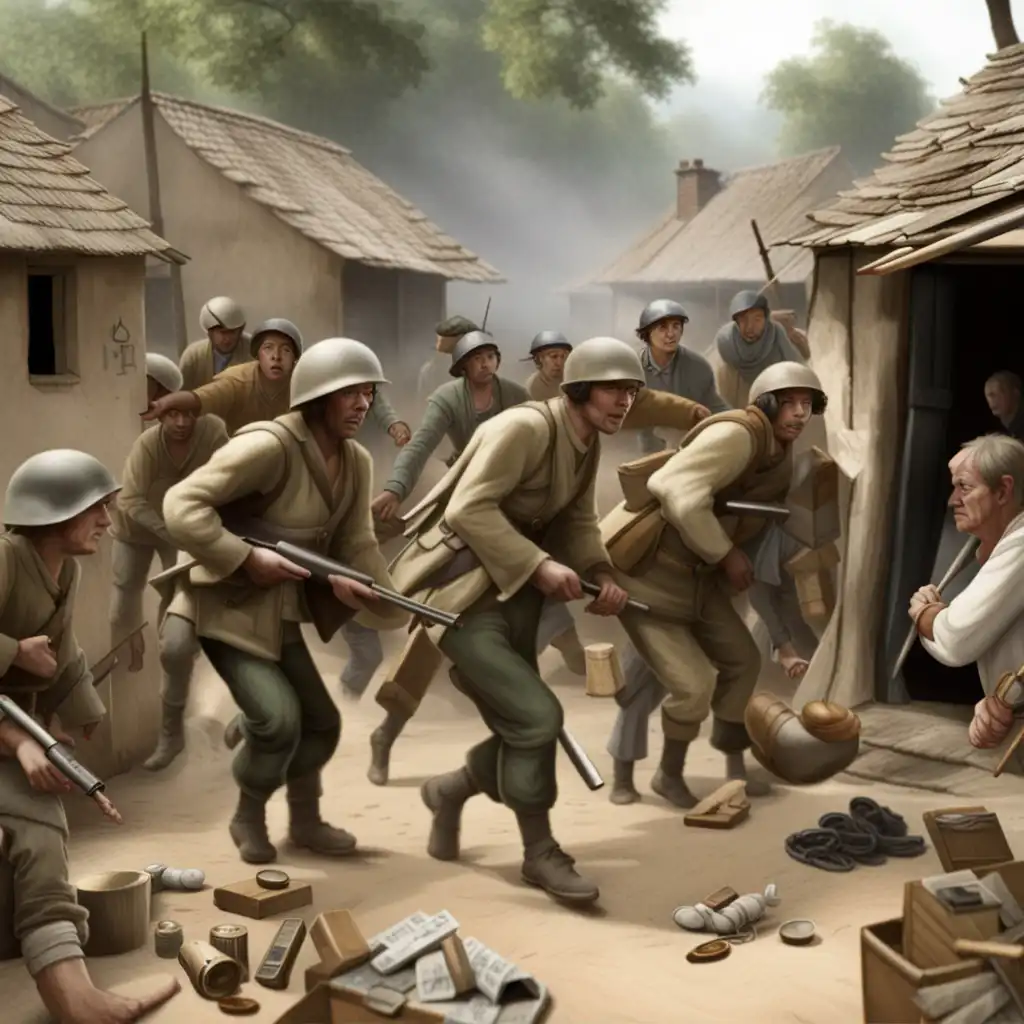
To rob or steal things from a place or person, often using force and especially during war or conflict
The soldiers were accused of pillaging villages and towns during the war.
pillage
ˈpɪlɪdʒ
Chargement…
ˈpɪlɪdʒ
To rob or steal things from a place or person, often using force and especially during war or conflict
The soldiers were accused of pillaging villages and towns during the war.
ˈpɪlɪdʒ
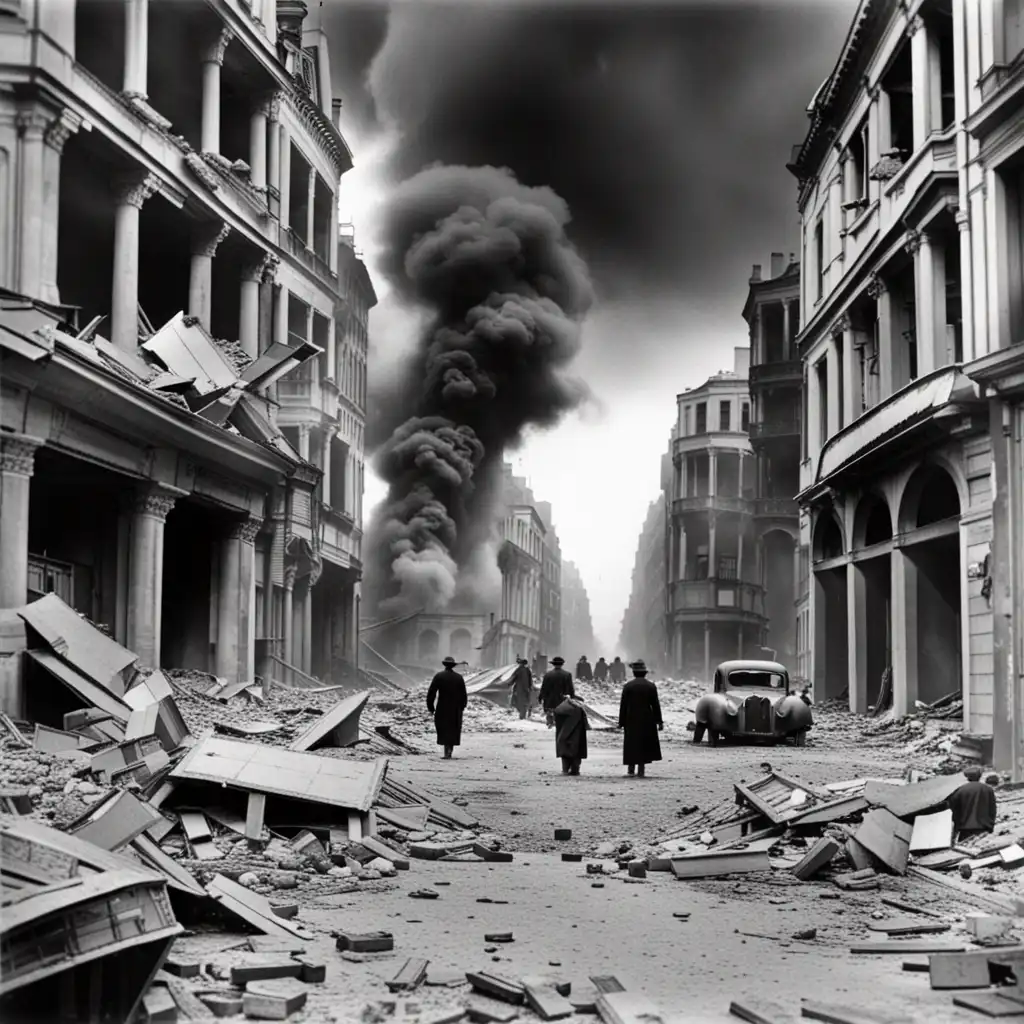
The act of robbing or stealing things from a place or person, often using force and especially during war or conflict
The pillage and destruction of the city was witnessed by horrified civilians.
Impossible de charger l’audio. Réessayez plus tard.
Pillage means to steal or take things by force, usually from a community or a place that has been defeated in a war. It is often associated with violent and destructive behavior. The word pillage is not commonly used in everyday conversation, but it may be used to describe the actions of raiders, looters, or conquerors in historical events or in stories.
Desolate means something is barren, empty or deserted. It describes a place that looks abandoned, sad or depressing. For example, a deserted street after a disaster or a building that has been vacant for a long time.
Desolate refers to the state of a place or a situation that feels empty or abandoned. While, pillage is an action that involves taking things away by force.
Ouvrir le mot: Desolate →Both despoil and pillage mean to take something by force, but there is a slight difference in their usage.
Despoil usually implies taking something valuable or prized from a place or person, often involving destruction or damage.
For example, looters might despoil a museum of its treasures during an invasion.
Despoil is more specific and implies deliberate destruction, while pillage is generally broader and more chaotic.
Ouvrir le mot: Despoil →Devastate means to cause great damage or destruction to something, such as a city, area, or community. This usually refers to a natural disaster or something that was unintentional.
For example, an earthquake could devastate a city.
Devastate relates to unintended destruction, while pillage relates to intentional destruction and theft.
Ouvrir le mot: Devastate →Both loot and pillage refer to taking something that isn't yours.
However, loot generally means taking something valuable from a specific location, such as a store or a bank. Pillage, on the other hand, refers to the act of taking goods, resources, or valuables by force or violence, usually from a community or area rather than a specific location.
Loot is usually used in the context of theft or robbery from a specific place, while pillage is used more broadly to describe the taking of resources through violent means.
Ouvrir le mot: Loot →Pillage and plunder both refer to the act of stealing or taking valuables by force, but pillage often specifically refers to the act of stealing or destroying things during a war or conflict, while plunder can refer to stealing or taking valuables in any context.
For example, soldiers might pillage a village during a war, but pirates might plunder a ship or a town.
Ouvrir le mot: Plunder →Both pillage and ransack refer to the act of stealing or looting during a raid or war.
However, pillage usually describes the act of stealing property, goods or valuables with the intention of making a profit or gain, while ransack typically means searching a place thoroughly, often in a destructive or violent way, in order to find something valuable or important.
If someone breaks into a house and rips apart everything looking for money, jewelry, or other valuables, it is considered ransack.
Ouvrir le mot: Ransack →Pillage and ravage have similar meanings but are used differently in different contexts.
Ravage generally refers to the destruction or damage caused by something, such as a natural disaster, disease, or wild animals.
For example, a tornado might ravage a town by tearing down buildings and causing widespread damage.
Pillage describes the act of taking things by force, while ravage describes the damage caused by a force.
Ouvrir le mot: Ravage →Rob is the act of taking property from a person or place through the use of force or threat of force.
Pillage describes the violent theft of resources from an entire area, while rob describes the theft of property from individuals or specific locations.
Ouvrir le mot: Rob →Both pillage and sack refer to the act of looting or plundering a place, but there is a subtle difference in their usage.
Sack often refers to a more chaotic, unorganized approach to looting.
Pillage is more commonly used in historical or military contexts, while sack is more often used in modern contexts.
Ouvrir le mot: Sack →Strip means to remove or take away something. This can refer to taking off clothing, but it can also refer to taking something away from a location.
For example, if a thief breaks into a house and steals all the valuable items, they are stripping the house of its valuables.
The main difference between these two words is that pillage implies violence and forceful taking of something, while strip simply means removing or taking something away.
Pillage is typically used in the context of war or invasion, while strip can refer to any kind of taking or removal.
Ouvrir le mot: Strip →I was heavily protected, and I lived in luxury. But my obligations to my nation were always superior. Millions of fellow citizens were either displaced or fleeing the violence and pillage of war.
Voir sur YouTube ↗A rapidly growing number of nation states have determined that cyberespionage is a highly valuable tool not only to steal national and military secrets but also to pillage the most valuable business information from international competitors and pass it on to domestic industries to help them out-innovate and out-negotiate their rivals.
I'm hoping that we can learn to coexist with our planet and to cooperatively enjoy its benefits it seems impossible for us not to concur but I'd like to believe in that now we no longer have to pillage the world in order to use it as
Voir sur YouTube ↗To govern means to pillage, as everyone knows.
and Chinese dynasties rose and fell. Even Mongolian hoards known for pillage and plunder, actively protected the trade routes rather than disrupting them. But along with commodities these routes also enabled the movement of traditions innovations ideologies and languages.
Voir sur YouTube ↗A soldier of fortune with twisted tongue will come to pillage the sanctuary of the gods; To the heretics he will open the gate, thus stirring up the Church militant.
And it occurred to me then that we do not get to choose the histories that we inherit. Museum curators today did not pillage ancient graves or steal spiritual objects, but we can accept responsibility for correcting past mistakes.
Voir sur YouTube ↗Mubarak was oppressing and pillaging his own people. He was an enemy to the Palestinians and an accomplice of Israel, the sixth nuclear power on the planet, associated with the war-mongering NATO group.
I find it amazing that the only group of people who are not fighting and not killing and not pillaging and not burning and not raping, and the group of people who are mostly -- though not exclusively -- who are keeping life going in the midst of war,
Voir sur YouTube ↗Why do people want to kill and maim and pillage? We're all in it together.
But it would not remain a church for long. Weakened by the Crusades Constantinople fell to the Ottomans in 1453 and would be known as Istanbul thereafter. After allowing his soldiers three days of pillage, Sultan Mehmed the Second entered the building.
Voir sur YouTube ↗My assistant says I'm an eBay auction waiting to happen. I have a very large collection of T-shirts... about 4,000 now. Maybe I'll pillage it someday. I have resisted the offers to do a line of T-shirts.
that the roots of the modern concept of vandalism were planted. At that time a barbaric tribe known as the Vandals swept through Rome, pillaging and destroying the city. But it wasn't until centuries later that the term vandalism was actually coined
Voir sur YouTube ↗Dictatorships do cut down on rape, and pillage, not to mention sexual harassment, by the simple expedient of sending people to labour camps for life or cutting off their hands without a trial.
such as lying and theft as just or unjust. Euthydemus confidently categorizes them as injustices, but this only prompts another is it just for a general to deceive or pillage a hostile army?
Voir sur YouTube ↗The autumn wind is a pirate. Blustering in from sea with a rollicking song he sweeps along swaggering boisterously. His face is weather beaten, he wears a hooded sash with a silver hat about his head... The autumn wind is a Raider, pillaging just for fun.
Life within the Mongol Empire wasn't just war pillage and destruction. Once the Mongols conquered a territory they left its internal politics alone and used local administrators to govern for them.
Voir sur YouTube ↗Where is the justice of political power if it executes the murderer and jails the plunderer, and then itself marches upon neighboring lands, killing thousands and pillaging the very hills?
where his followers would be free. But his vast army had grown brash. Many wanted to continue pillaging, while others dreamed of marching on Rome itself. In the end the rebel army turned south– forgoing what would be their last chance at freedom.
Voir sur YouTube ↗I imagine an America that can actually change. That we become a nation that prospers again but without pillaging the resources of nations that make their people hate us. That we become a nation that, as the constitution says in its preamble, its very first paragraph, 'promotes the general welfare' of its people.