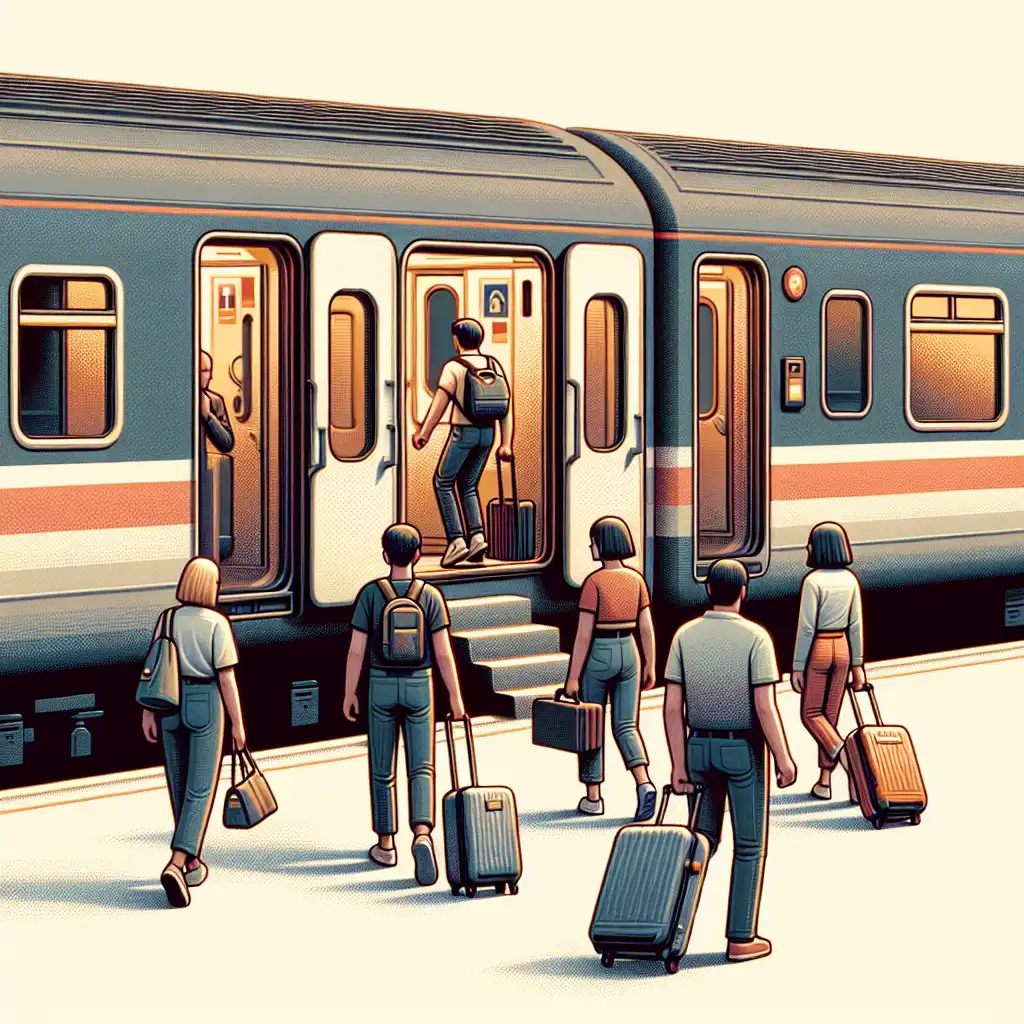
detrain
verb detrain
ˌdiːˈtreɪn
To get off a train
The passengers had to detrain at the next station due to a technical fault.
detrain
ˌdiːˈtreɪn
読み込み中…
ˌdiːˈtreɪn
To get off a train
The passengers had to detrain at the next station due to a technical fault.
音声を読み込めませんでした。しばらくしてからもう一度お試しください。
The word 'detrain' means to get off of a train. You can use it when you are traveling on a train and need to get off at your destination. You can say "I need to detrain at the next station" or "Please detrain at the end of the line".
Both these words refer to getting off a vehicle, but alight is generally used for buses or trains and detrain is specifically used for getting off a train.
So, when you get off a bus, you can say "I alighted from the bus" whereas when you get off a train, you can say "I detrained from the train".
単語を開く: Alight →The phrase come out refers to getting out of any kind of transportation, like a car, bus, or train. It is a common phrase used in everyday situations like "Come out of the car" or "Come out of the train".
Detrain specifically means to get out of a train. It is only used when someone is travelling by train and needs to get off at a particular station.
Come out applies to getting out of any transportation, while detrain applies only to getting out of a train.
単語を開く: Come out →Descend means to move from a higher level to a lower level, either vertically or horizontally. For example, a person can descend a staircase or a hill.
Descend refers to moving downwards in any direction, while detrain specifically refers to getting off of a train or other mode of transportation.
単語を開く: Descend →Both detrain and disembark mean to get off a train, plane, or other mode of transportation.
However, detrain is specifically used for getting off a train, while disembark can be used for any mode of transportation.
For example, you would say "We will detrain at the next station" when you are on a train, but you would say "We will disembark from the plane" when you are on an airplane.
単語を開く: Disembark →Exit means to leave a building, vehicle, or other enclosed space. It is a more general term and can be used in various situations such as leaving a movie theater or getting out of a car.
Detrain is used when you want to refer to getting off a train specifically, while exit is a more general term that can be used in various situations.
単語を開く: Exit →Both detrain and get off mean leaving a train or any other public transportation.
However, detrain is usually used in more formal settings, such as instructional manuals, official announcements, or etiquette guides.
Get off is a more casual and commonly used term.
For instance, if you were to hear an announcement in a train, they might say "Please detrain at this station," whereas a friend might say "Let's get off at the next stop."
To sum up, detrain is more formal while get off is more casual.
単語を開く: Get off →Leave is more general and can be used in many contexts. It generally means to depart or go away from a particular place or situation.
It is applicable in many situations, such as leaving a building, leaving a party, or leaving a job.
Detrain refers specifically to getting off a train, while leave is a more general term that can be used in many different situations.
単語を開く: Leave →The words detrain and step down are both used to describe getting off of a mode of transportation such as a train, bus or airplane.
Detrain is typically used when referring to getting off of a train, while step down is more commonly used when referring to getting off of a bus or airplane.
Both words are interchangeable in certain situations, but it's important to note that detrain is not commonly used in everyday language, and step down can also refer to resigning from a high-level position in a company or organization.
単語を開く: Step down →