mandrill
noun mandrill
ˈmændrɪl
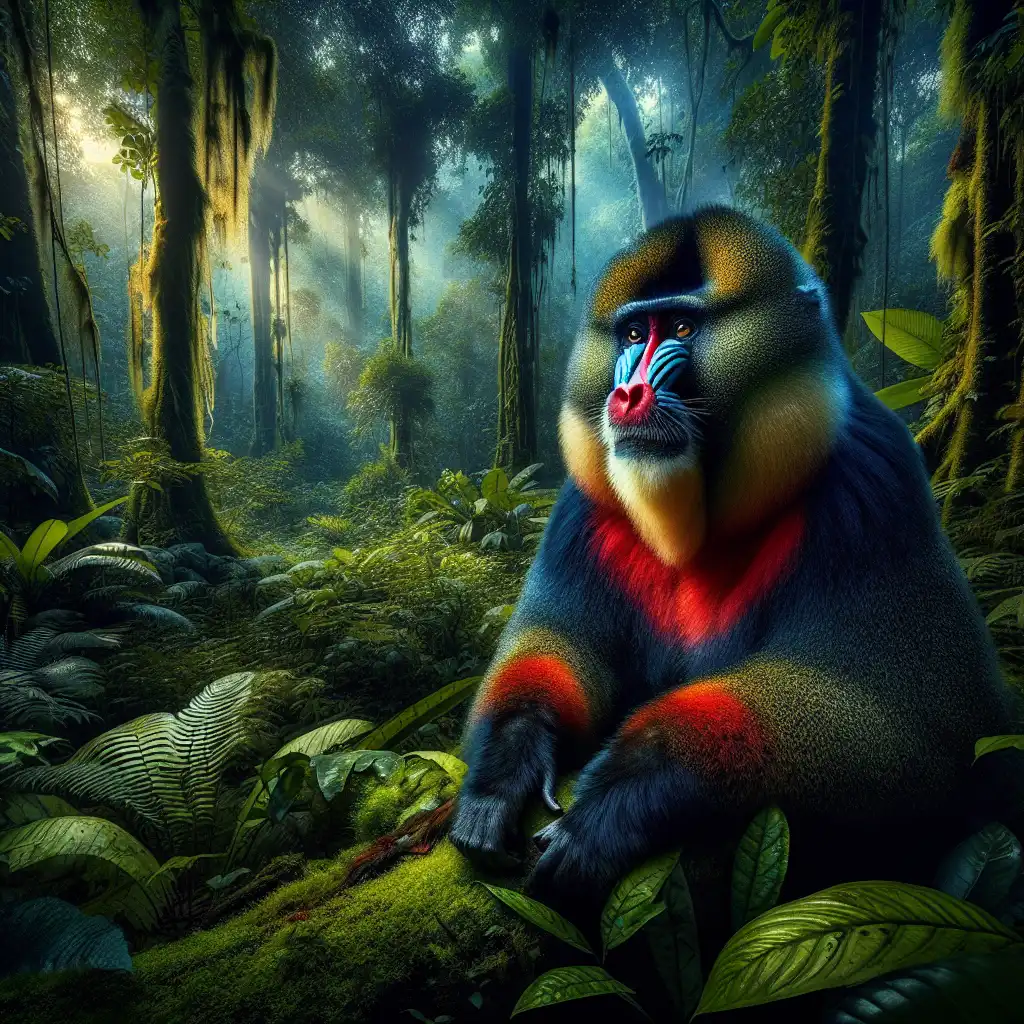
A large primate with bright blue and red face and butt, native to Central African rainforests.
The mandrill is among the most colorful primates.
mandrill
ˈmændrɪl
Đang tải…
ˈmændrɪl
A large primate with bright blue and red face and butt, native to Central African rainforests.
The mandrill is among the most colorful primates.
Không tải được âm thanh. Vui lòng thử lại sau.
Mandrill is the name of a type of monkey that lives in parts of Africa, particularly in rainforests. It is a very colorful monkey, with a blue and red face and a bright red nose. The mandrill is known for being very intelligent and social, and it is often studied by scientists who want to understand more about primate behavior. The word "mandrill" might come up in discussions about animals or biology, so it's helpful to know what it means.
Anthropoid refers to a group of primates that includes apes, gibbons, and humans. It is a scientific term used to classify these types of animals.
So to summarize, anthropoid is a general term that refers to a group of primates, while mandrill is a specific type of primate within that group.
Anthropoid is used in scientific contexts while mandrill is specific to this particular species of monkey.
Mở từ: Anthropoid →Ape is a general term used to describe a group of primates that includes humans, chimpanzees, gorillas, orangutans, and gibbons.
Ape has a tail-less body structure, larger brains and is typically found in the tropical forests of Africa and Southeast Asia.
Ape is more general and can refer to many types of primates, while mandrill specifically refers to a type of monkey found in Central Africa.
Mở từ: Ape →Baboons and mandrills are both types of primates, but they are different species. Baboons are more commonly found in Africa and are known for their distinctive snouts and long tails.
Baboons are social animals that live in groups and have a hierarchy with dominant individuals. Mandrills are often found in rainforests in Central and West Africa.
They are known for their brightly colored faces and impressive size. Mandrills are also social animals that live in groups, but they are not as common or well-known as baboons.
In general, baboons are more adaptable to different environments and are often seen in zoos and safari parks. Mandrills, meanwhile, are more specialized and are usually found only in the wild.
Mở từ: Baboon →Mandrill is a type of primate that belongs to the family of Old World monkeys. They are known for their colorful faces and being the largest species of monkeys.
Monkeys are a broad term used to describe any primate that belongs to the suborder Haplorhini. They come in various shapes and sizes and can be classified into different groups based on physical and behavioral characteristics.
In general, mandrills are a specific type of monkey whereas monkeys are a larger group that encompasses many different species.
Mandrills are found primarily in Central Africa, while monkeys can be found in different parts of the world. Mandrills are known for their unique facial colors, while monkeys can have different physical and behavioral characteristics depending on their species.
Mở từ: Monkey →A mandrill is a specific type of primate that is found in Africa. It is known for its colorful face and rump. Primate is a broader term that refers to a group of mammals that includes monkeys, apes, and humans.
While a mandrill is a primate, not all primates are mandrills. Primate is a more general term that can be used to refer to any type of monkey, ape or human.
Mở từ: Primate →Mandrill is a specific type of monkey found in Africa, known for its colorful face and rear end. Simian refers to a larger group of primates that includes mandrills, as well as apes, monkeys, and lemurs.
Mandrill is more specific and refers only to that one type of monkey, while simian is broader and encompasses a wider range of primates.
Mở từ: Simian →TIL: Why Do These...
Xem trên YouTube ↗